As a supplier of PE Film Printing Machines, I often encounter inquiries from customers regarding the machine's ability to print on PE films with different mechanical properties. This topic is not only crucial for our customers to understand the capabilities of our machines but also essential for us to provide the best solutions for their printing needs.
Understanding the Mechanical Properties of PE Films
PE, or polyethylene, is a widely used plastic material known for its versatility and durability. PE films come in various types, each with distinct mechanical properties. These properties include tensile strength, elongation at break, tear resistance, and stiffness. Tensile strength refers to the maximum stress a film can withstand before breaking under tension. Elongation at break measures how much a film can stretch before it ruptures. Tear resistance indicates the film's ability to resist tearing, while stiffness relates to the film's rigidity.
For example, low-density polyethylene (LDPE) films are known for their high flexibility and elongation at break, making them suitable for applications such as food packaging and shrink wrap. On the other hand, high-density polyethylene (HDPE) films have higher tensile strength and stiffness, making them ideal for heavy-duty applications like industrial packaging.
Can a PE Film Printing Machine Print on Different PE Films?
The short answer is yes, a well-designed PE Film Printing Machine can print on PE films with different mechanical properties. However, several factors need to be considered to ensure optimal printing results.
Printing Pressure and Tension Control
One of the key factors in printing on PE films with different mechanical properties is the ability to control the printing pressure and tension. Films with different stiffness and flexibility require different levels of pressure to ensure proper ink transfer and adhesion. For instance, a more flexible LDPE film may require less pressure to prevent stretching or distortion during printing, while a stiffer HDPE film may need higher pressure to ensure the ink penetrates the surface effectively.
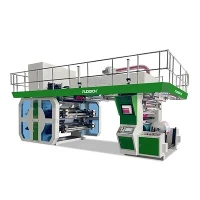
Our Plastic Film Printing Machine is equipped with advanced pressure and tension control systems. These systems allow operators to adjust the printing pressure and tension according to the specific mechanical properties of the PE film being printed. This ensures consistent and high-quality printing results across different types of PE films.
Ink Compatibility
Another important consideration is the compatibility of the ink with the PE film. Different types of PE films have different surface energies, which can affect the adhesion of the ink. For example, LDPE films have a relatively low surface energy, making it more challenging for the ink to adhere compared to HDPE films.


To address this issue, we offer a range of inks specifically formulated for different types of PE films. Our inks are designed to have good adhesion properties and can be easily adjusted to suit the surface energy of the film. This ensures that the printed images and text are sharp, vibrant, and long-lasting.
Printing Speed
The mechanical properties of the PE film can also affect the printing speed. Films with higher flexibility and lower stiffness may require slower printing speeds to prevent stretching or wrinkling. On the other hand, stiffer films can handle higher printing speeds without compromising the quality of the print.
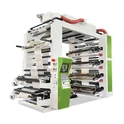
Our Stack Press is designed to offer adjustable printing speeds, allowing operators to optimize the speed based on the mechanical properties of the PE film. This flexibility ensures that we can meet the diverse printing requirements of our customers while maintaining high productivity.
Applications of Printing on Different PE Films
The ability to print on PE films with different mechanical properties opens up a wide range of applications.
- Food Packaging: PE films with high flexibility, such as LDPE, are commonly used for food packaging. Printing on these films allows for the inclusion of product information, branding, and marketing messages. Our Pp Woven Bag Printing Machine can be used to print high-quality graphics and text on these food packaging films, enhancing the product's visual appeal and marketability.
- Industrial Packaging: HDPE films with high tensile strength and stiffness are used for industrial packaging. Printing on these films can provide important information such as handling instructions, product specifications, and safety warnings. Our Slitter Stack Type Flexo Printing Machine is capable of printing large-scale graphics and text on industrial packaging films, ensuring clear and visible communication.
- Labeling and Decoration: PE films of various mechanical properties are used for labeling and decoration purposes. Our 8 Colour Flexo Printing Machine can print high-resolution, multi-color images on these films, creating eye-catching labels and decorations for a wide range of products.
Conclusion
In conclusion, a well-designed PE Film Printing Machine can indeed print on PE films with different mechanical properties. By considering factors such as printing pressure and tension control, ink compatibility, and printing speed, we can ensure high-quality printing results across a variety of PE films. Whether you are in the food packaging, industrial packaging, or labeling industry, our range of printing machines can meet your specific needs.
If you are interested in learning more about our PE Film Printing Machines or have any questions regarding printing on PE films with different mechanical properties, please feel free to contact us. Our team of experts is ready to assist you in finding the best printing solution for your business.
References
- ASTM International. (2023). Standard Test Methods for Tensile Properties of Plastics. ASTM D638 - 14e1.
- Goodship, V. (ed.). (2018). Plastics: Materials Science and Engineering. Springer Nature.
- Throne, J. L. (1996). Thermoforming. Marcel Dekker.