If you’ve ever walked a flexographic printing floor at full production, you’ve felt the hum of dozens of presses running in lockstep—each one spitting out packaging, labels, or woven goods at hundreds of feet per minute, with barely a misaligned mark or uneven color band in sight. But behind that smooth, high-speed output is a critical metric that makes that consistency possible: printing speed stability. For press owners, production managers, and anyone shopping for flexo equipment, this isn’t just a technical detail—it’s the difference between a batch that meets customer specs and hits deadlines, and one that wastes hundreds of pounds of substrate, thousands of dollars in ink, and risks a client contract. As a flexo printing machine supplier, I’ve spent years walking our clients through what speed stability actually means, how it varies across press models, and why choosing the right press isn’t just about top-end speed—it’s about reliable speed over long runs.
First, let’s define what “printing speed stability” actually is, because it’s a term that gets thrown around a lot without a clear working definition. In flexo, speed is measured in linear feet per minute (fpm) or meters per minute (m/min), but stability refers to how closely the actual running speed matches the set target speed—over time, across varying loads, and through small interruptions like substrate thickness fluctuations, ink viscosity changes, or even a minor press adjustment. A stable press won’t jump from 400 fpm to 450 fpm mid-run, or slow to 320 fpm for no obvious reason. Those speed fluctuations cause a chain reaction in flexo that’s hard to reverse: they throw off register (the alignment of color layers, which is make-or-break for packaging), stretch or compress substrates like film or woven polypropylene unevenly, and lead to inconsistent ink coverage that makes finished goods get rejected in QC.
To understand how different flexo press designs impact stability, it helps to break down the most common configurations, because not all presses are built the same. The oldest, and still widely used, design is gear-driven flexo presses, which use precision interlocking gears to sync the movement of print cylinders, anilox rollers, and the substrate web. For years, gear-driven presses were the gold standard for stability, because gears provide almost immediate, consistent motion with zero lag between components. But they come with a catch: gear wear over time causes backlash—tiny gaps between gear teeth that grow as the press ages, leading to micro-fluctuations in speed that build up over a long run. For short runs (under 10,000 feet) on simple substrates like paper labels, that wear might not be noticeable, but for long runs (over 100,000 feet) on PP woven bags, even small backlash can lead to register drift that ruins 5-10% of output. That’s why many of our clients moving to high-volume PP woven production often look at specialized models like this Pp Woven Bag Flexo Printing Machine, which is built with modified drive systems tailored to thick, stretch-prone substrates and designed to minimize long-term speed variation.


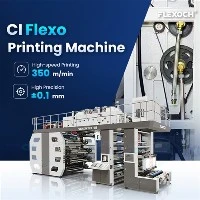
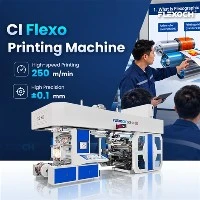
As flexo technology evolved, central impression (CI) presses emerged as a game-changer for stability, especially for mid-to-high volume, high-quality print jobs. Unlike in-line flexo presses that have multiple print stations along a straight frame, CI presses wrap the entire substrate web around a single large impression drum, with all print stations mounted around that drum. This design eliminates the mechanical variation that comes with syncing separate print stations along a long frame, because every component moves relative to one central, massive drum. The result is far more consistent speed across all stations, because the drum’s inertia acts as a flywheel, damping out small speed spikes or dips. CI presses also use closed-loop servo drives instead of traditional gear drives in many cases, which adjust speed in real time to keep it within a 0.1% tolerance of the set point—something gear-driven presses simply can’t match over long runs. When clients ask us about the most stable CI-based options, we point them to resources on CI Type Flexo Printing Machine and Central Impression Flexo Press, both of which are engineered for industries like food packaging where every label needs to be identical, no matter how long the run.
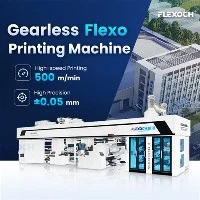
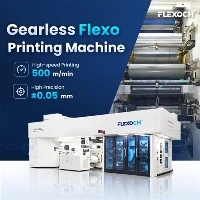
Recently, the biggest leap in speed stability for flexo has come from gearless servo-driven presses, often called gearless flexo printing press. If you’ve seen a press run at 800 fpm or higher, with zero noise from grinding gears, that’s likely a gearless design. Instead of using metal gears to sync all components, gearless presses use individual servo motors for each print station, controlled by a central computer that syncs their position and speed down to the millisecond. The key here is that there’s no physical gear backlash to wear down over time—so stability stays consistent even after 10 or 15 years of operation, not just in the first few years. The servo system also responds instantly to changes in substrate tension, which is one of the biggest causes of speed variation. For example, if a thin plastic web pulls slightly tight at a guide roller, the servo motors adjust their speed in less than a tenth of a second to keep the web moving at the set target, instead of slowing down or speeding up to compensate. Our gearless presses have a speed stability tolerance of ±0.05%, which is unheard of in traditional gear-driven models, and that translates directly to less waste, lower downtime, and higher-quality finished goods.
Now, it’s important to separate factory testing speed stability from real-world performance. Many press manufacturers will tout a “top speed of 1,000 fpm” in their specs, but that’s almost always a peak speed under ideal conditions—using a perfectly thin, uniform substrate, with fresh ink, and no stops or starts during the run. What actually matters is stability at operating speed, which is the speed you run the press 90% of the time for production. For example, a press that has a peak speed of 1,000 fpm might only be able to maintain 0.5% speed stability at 700 fpm, while a gearless CI press will maintain that same stability at 750 fpm, its typical operating speed. This is where many new buyers get tripped up: they focus on peak speed in specs, not on the stability metrics at their actual production speed. As a supplier, we always ask clients to share their average run length, substrate type, and required print quality, because that tells us which design will give them the best long-term stability, not just the highest number on a spec sheet.
There are also common factors that affect speed stability across any press, no matter the design, that press operators can control. First is tension control: uneven web tension is the single biggest cause of speed fluctuation in flexo. If the web is too tight, it can stretch, and the press will speed up to compensate; if it’s too loose, it can slip, causing the press to slow down. Modern presses, especially CI models and gearless presses, have automated tension systems that adjust in real time, but operator training is still critical. Another factor is maintenance: even the best gearless press will lose stability if servo motors are not calibrated regularly, or if web guides are worn. For gear-driven presses, checking gear backlash every 6 months is non-negotiable for maintaining stability. We tell all our clients that a press is only as stable as its last maintenance check, and we include ongoing support and calibration services with every machine we sell, because we know that long-term stability is what drives their business.
For niche applications, press design can also be tailored to boost stability. For example, drum flexo printing machine designs are often used for smaller format jobs, like labels for personal care products or small consumer goods. Their smaller impression drums have less inertia than large CI drums, so they can respond faster to speed changes, but if you’re running a long label run at consistent speed, you can adjust the servo settings to match CI-level stability. For jobs that require high-resolution print, like brand packaging that’s visible on shelves, stability is even more important: a 0.2% speed fluctuation can cause a fine line of text to blur, or a color band to shift by a quarter of a millimeter, enough to make a product look unprofessional. Our data shows that clients who prioritize speed stability over peak speed see a 12-15% reduction in waste, and a 8-10% reduction in rework, over the course of a year—numbers that add up quickly in a high-volume production environment.
Let’s address a common myth I hear all the time: “Gear-driven presses are cheaper, so they’re better for stability.” That might have been true 20 years ago, but today’s gearless and CI presses offer better stability, lower long-term maintenance, and higher overall value. Yes, the upfront cost of a gearless flexo printing press is higher than a basic gear-driven model, but the savings from less waste, fewer downtime events, and lower long-term maintenance usually pay for the difference in 2-3 years, depending on run volume. For small businesses running short runs on thick paper labels, a well-maintained gear-driven press might be sufficient, but for mid-sized to large operations running thousands of feet of substrate weekly, the consistent stability of a CI or gearless press is a no-brainer.
Another point to consider is how stability integrates with Industry 4.0 technology, which is becoming standard in modern flexo presses. Smart presses use sensors to monitor speed, tension, and register in real time, and they can alert operators to small fluctuations before they become a problem. For example, a press might detect a 0.3% speed dip, which is below the threshold that would cause a QC issue, and adjust a servo motor to fix it automatically, without operator intervention. This level of connectivity only works with presses that have digital drive systems—gear-driven presses can’t integrate with these smart tools, because their sync is based on physical gears, not digital controls. That’s another reason why many of our clients upgrading their presses choose models with digital, servo-driven systems, because stability isn’t just a performance metric anymore—it’s a way to future-proof their operations.
At the end of the day, the question of flexo printing speed stability isn’t just about technical specs—it’s about reliability for your business. Whether you’re running PP woven bags for agricultural supply companies, high-end food packaging, or small retail labels, the last thing you want is a press that can’t keep a consistent speed mid-run, leading to lost revenue and damaged customer relationships. As a supplier, our job isn’t just to sell a flexo machine—it’s to help clients choose a press that fits their specific needs, balancing speed, stability, cost, and application requirements. If you’re looking to upgrade or replace your current flexo press, taking the time to ask about stability metrics at your operating speed, the maintenance requirements of different designs, and how the press handles tension fluctuations will save you a lot of headaches down the line.
If you’re ready to learn more about how our flexo printing machines can deliver the speed stability your production needs, we’re here to help you find the right solution. Whether you’re interested in the efficiency of a gearless flexo printing press, the high-quality consistency of a CI Type Flexo Printing Machine, or a specialized Pp Woven Bag Flexo Printing Machine for your unique substrate needs, our team can walk you through specs, real-world performance data, and answer all your questions.
References
- Flexographic Technical Association. (2022). Speed Stability Metrics for Modern Flexographic Presses. FTA Technical Report Series.
- Printing Industries of America. (2023). CI vs. Gear-Driven Flexo: Long-Term Performance and Stability Comparisons. PIA Production Best Practices Guide.
- Kodak Flexibles. (2021). Servo-Drive Technology and Its Impact on Flexo Speed Consistency. Technical Whitepaper.
- International Organization for Standardization. (2020). ISO 15758:2020 - Graphic Technology - Flexographic Printing - Performance Requirements for Presses. ISO Standards.
- Smith, J. (2022). "Waste Reduction in Flexo: The Role of Speed Stability in High-Volume Production." Flexo Magazine, Vol. 48, No. 3, pp. 22-27.