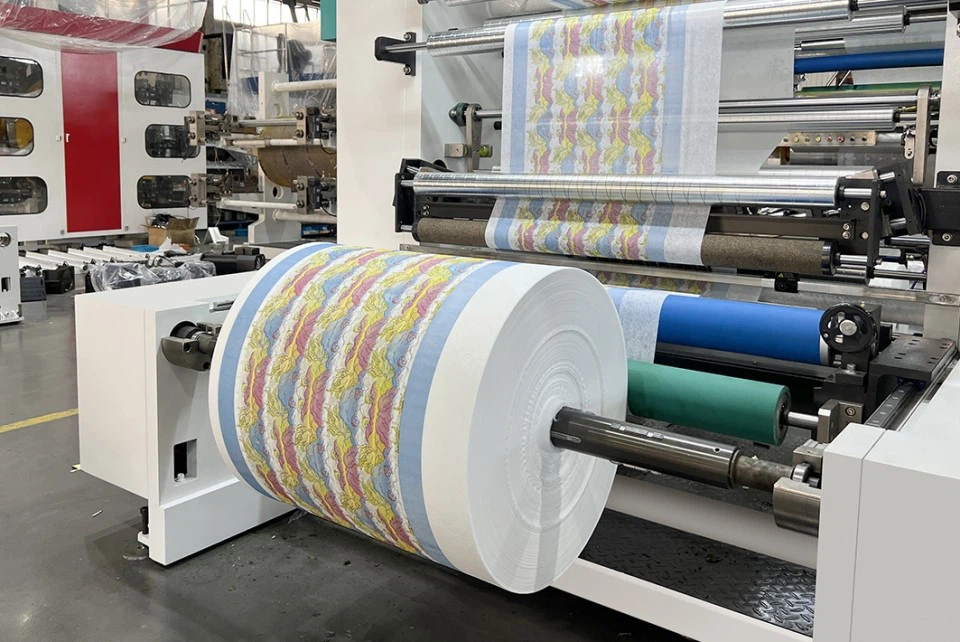
The demand for nonwoven products is increasing in areas such as hygiene packaging, medical supplies, shopping bags and eco-friendly packaging. Compared with film and paper, nonwoven materials have a softer structure and different surface properties, so stable web handling and consistent printing become more critical in production.
Changhong flexographic printing presses are built for these requirements, working with different nonwoven materials and helping maintain stable print quality and steady production efficiency.
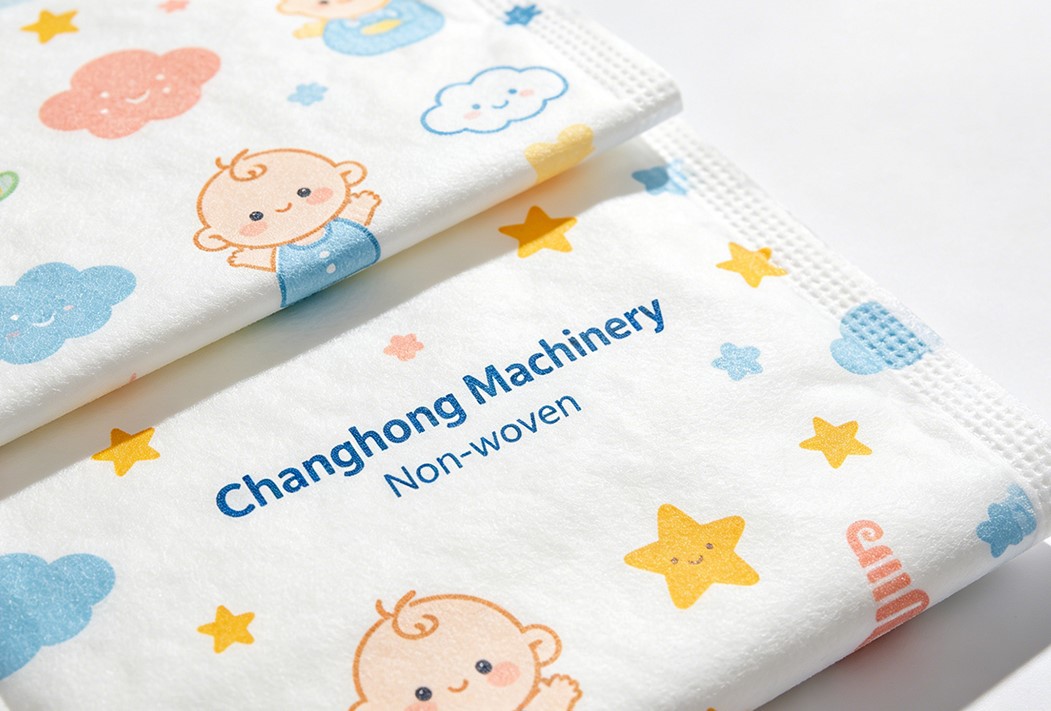

Nonwoven Bag

Wet Wipes

Shopping Bag

Diaper

Face Mask

Flour Bag
Nonwoven Flexo Printing Solutions
Changhong flexographic printing presses are suitable for different nonwoven fabric printing applications and support materials from 12–350gsm. The flexo machines run stably on different nonwoven structures and help ensure smooth material feeding as well as consistent printing performance during production.
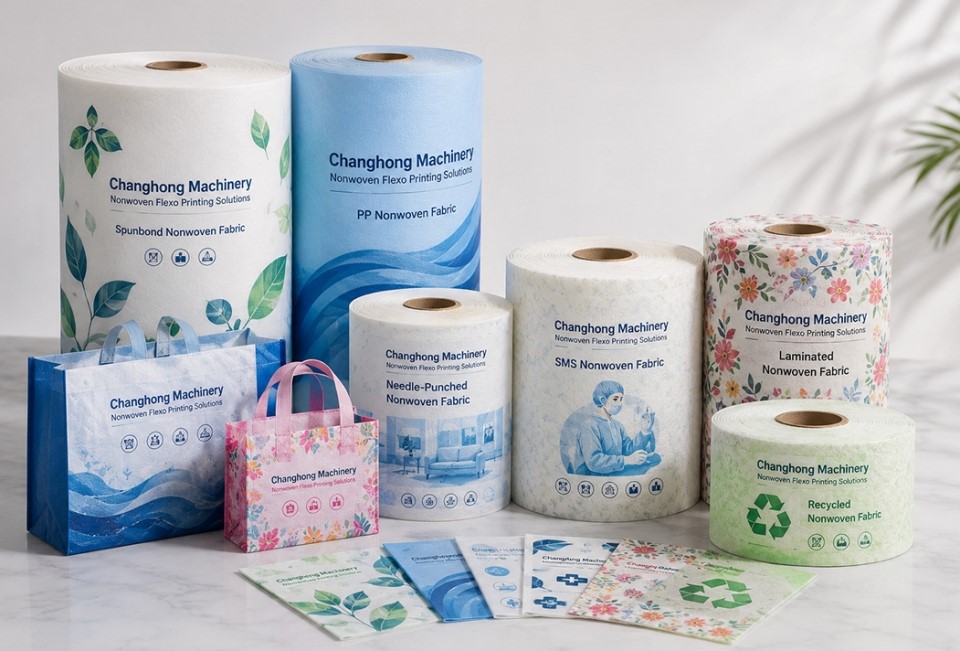
Spunbond Nonwoven Fabric
Often used for shopping bags, packaging bags and disposable products, with good strength and stable printing performance.
PP Nonwoven Fabric
Lightweight and breathable, commonly seen in hygiene products, medical packaging and reusable bags.
SMS Nonwoven Fabric
Soft material with good barrier performance, widely used in medical and sanitary product packaging.
Needle-Punched Nonwoven Fabric
Durable structure suitable for industrial packaging, filtration materials.
Laminated Nonwoven Fabric
Added film or coating layers help improve moisture resistance and surface printing performance.
Recycled Nonwoven Fabric
Used for reusable and eco-friendly packaging products, requiring stable web transport during printing production.
Main Challenges in Nonwoven Printing
- Different nonwoven fabrics have varying fiber structures, which may affect ink transfer and printing consistency.
- Soft nonwoven materials can deform more easily during high-speed flexographic printing production.
- Fiber texture may lead to uneven ink transfer and reduced print sharpness.
- Lightweight nonwoven materials are more likely to wrinkle or shift during web transport.
- Static electricity can attract dust and affect printing cleanliness and quality.
- Water-based ink drying speed may affect overall production efficiency on absorbent nonwoven surfaces.
Advantages of Changhong Nonwoven Flexo Printing Solutions
-
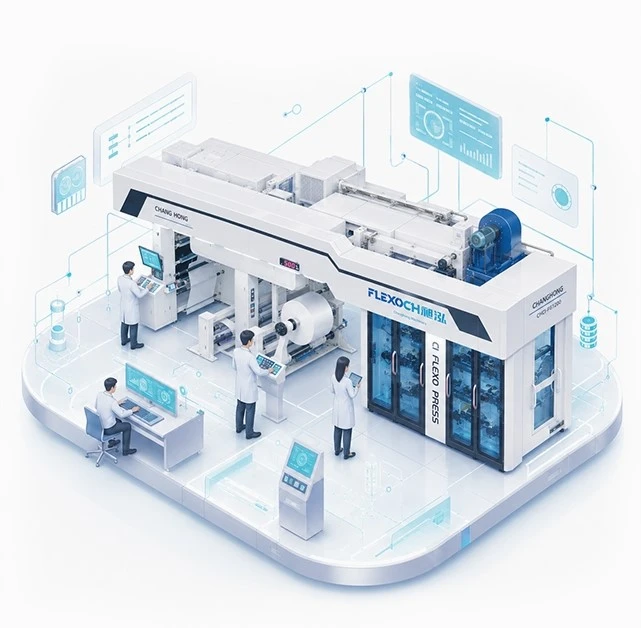
Stable Tension Control SystemHelps maintain smooth material transport and reduce deformation during high-speed printing.

-
Reliable Registration PerformanceMaintains stable color alignment during continuous multi-color nonwoven printing jobs.

-
Compatible with Water-Based Ink PrintingSupports environmentally friendly printing processes for hygiene and packaging industries.

-
 High-Efficiency Drying SystemImproves ink curing speed and reduces smudging or blocking issues.
 -

Wide Material Adaptability
Suitable for different nonwoven thicknesses and surface structures. -
 Stable High-Speed ProductionDesigned for continuous industrial production with consistent printing quality.
Model Comparison
|
Machine Type |
Core Advantages |
Typical Applications |
|
Gearless Flexographic Printing Press |
Independent servo drive, stable registration, fast job changes |
High-quality printing for medical nonwoven fabrics, eco bags and premium packaging products. |
|
CI Flexo Printing Press |
Stable high-speed printing, good registration control |
Large-volume production of shopping bags, hygiene packaging and disposable products. |
|
Stack Flexo Printing Machine |
Compact structure, lower cost, double-sided printing |
Small-to-medium batch production for general nonwoven bags and packaging materials. |

Recommended Models
We recommend the following flexo printing presses for nonwoven fabric applications, covering different production requirements from high-quality printing to cost-effective production solutions.
Gearless Flexographic Printing Press
Gearless flexographic printing press is built with full-servo gearless drive and sleeve system, mainly used for high-end nonwoven printing. The closed-loop tension control works during running to limit material stretch and keep registration more stable at high speed.
- Machine speed: 500m/min
- Registration accuracy: ±0.05mm
- Color stations: 4–10 colors (customizable)
- Applicable substrates: 12–350g/m² various nonwoven fabrics and laminated nonwoven materials
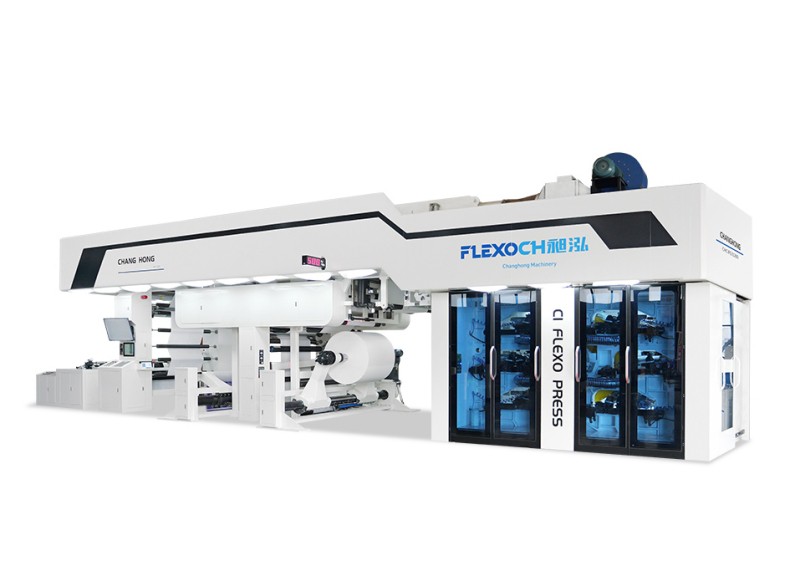
CI Flexo Printing Press
CI flexo printing press uses a central impression drum, which helps reduce registration shift during continuous nonwoven printing. Drying unit supports ink curing during production, helping reduce color variation on absorbent materials.
- Machine speed: 200–350m/min
- Registration accuracy: ±0.1mm
- Color stations: 4–10 colors (customizable)
- Applicable substrates: 12–200g/m² PP nonwoven fabric, spunbond fabric and laminated nonwoven materials
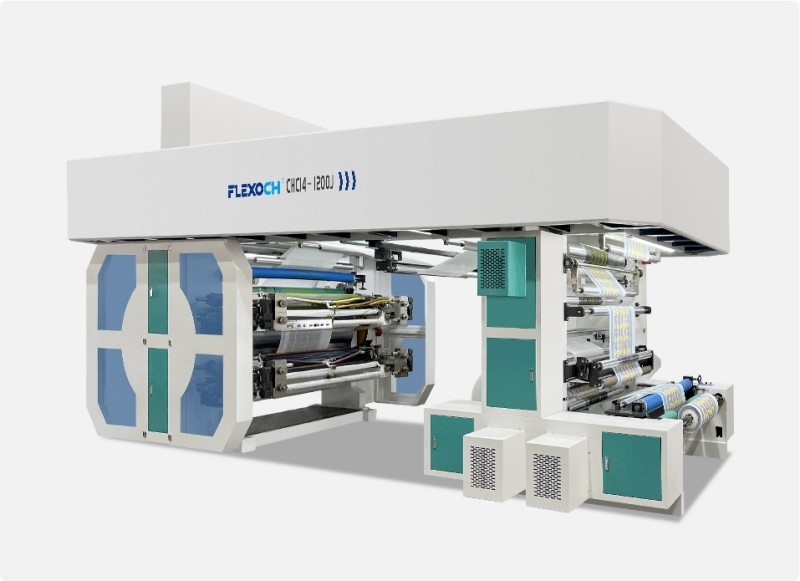
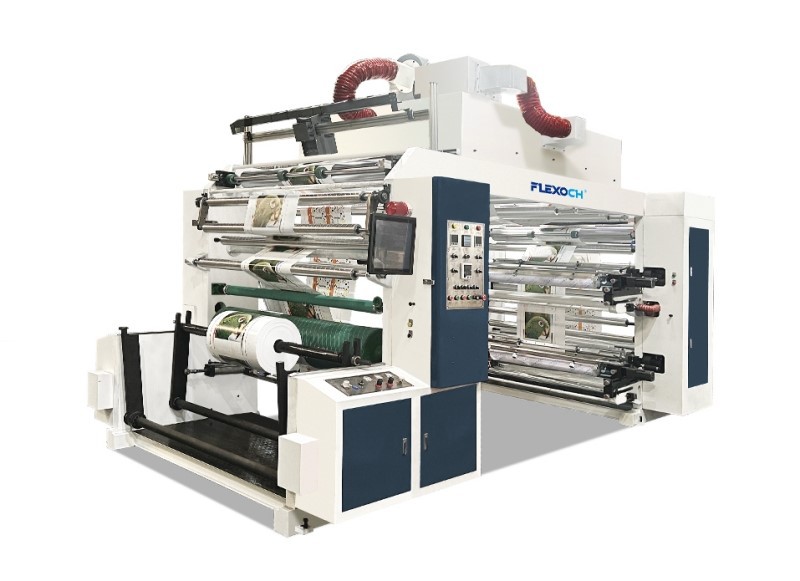
Stack Flexo Printing Machine
Stack flexo printing machine has a compact frame structure and is relatively simple to operate and maintain. It supports flexible configuration and used for small to medium nonwoven production runs.
- Machine speed: 100–120m/min
- Registration accuracy: ±0.15mm
- Color stations: 2–10 colors (customizable)
- Applicable substrates: 30–200g/m² various nonwoven fabrics and composite materials
Why Choose Changhong Nonwoven Flexo Printing Machines
Changhong focuses on flexographic printing machine manufacturing for nonwoven fabric applications. By improving material handling stability, registration control, drying performance and high-speed production capability, the machines help maintain stable printing quality and smooth production performance for different nonwoven packaging and converting applications.
Optional Configurations for Nonwoven Printing
- Double-sided printing: Keeps both-side printing more stable on nonwoven materials
- Friction rewind system: Provides smoother rewinding for different nonwoven fabric rolls
- Pneumatic loading system: Reduces manual loading work and improves operating efficiency
- Automatic loading system: Makes roll replacement faster for continuous production jobs
- Servo control system: Keeps machine running more stable during high-speed printing production