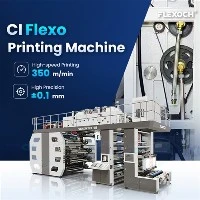
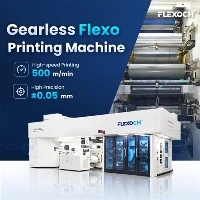
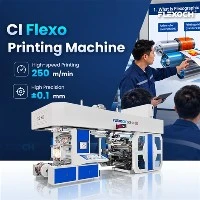
Hey there! As a supplier of Film Flexo Printing Machines, I'm super excited to take you on a deep - dive into the main components of these amazing machines. Film Flexo Printing Machines are widely used in the packaging industry, and understanding their components can help you make a better purchasing decision. So, let's get started!
Unwinding Unit
The unwinding unit is where the whole process begins. It holds the roll of film that's going to be printed on. This unit needs to ensure a smooth and consistent supply of the film. It has a tension control system, which is crucial. You see, if the tension is too high, the film might break. On the other hand, if it's too low, the film can wrinkle, and you'll end up with a messy print job.
There are different types of unwinding units. Some are manual, where an operator has to adjust the tension and other settings. But most modern Film Flexo Printing Machines, like the ones we offer at our Film Flexo Printing Machine line, come with automatic unwinding units. These use sensors to detect the film's tension and make real - time adjustments, ensuring a hassle - free start to the printing process.


Printing Units
The printing units are the heart of a Film Flexo Printing Machine. Each printing unit is responsible for applying a single color to the film. In most machines, you can have multiple printing units, allowing you to create multi - colored designs on the film.
A typical printing unit consists of a few key parts. First up is the anilox roller. This roller has tiny cells on its surface, and it's used to transfer the ink from the ink fountain to the printing plate. The size and density of these cells determine how much ink is transferred, which in turn affects the print quality.
Next is the printing plate. It's usually made of a flexible material like rubber or plastic. The image or design you want to print is engraved on the plate. When the anilox roller transfers the ink to the plate, the ink sticks to the raised parts of the design, and then it's transferred to the film.
There's also an impression roller. This roller presses the film against the printing plate, ensuring that the ink from the plate is properly transferred to the film. The pressure applied by the impression roller needs to be carefully adjusted to get a clear and sharp print.


Drying System
After the film passes through the printing units and gets the ink on it, it needs to be dried quickly. That's where the drying system comes in. The drying system in a Film Flexo Printing Machine can use different methods, such as hot air drying or infrared drying.
Hot air drying works by blowing hot air over the printed film. The hot air evaporates the solvents in the ink, leaving the pigment on the film. Infrared drying, on the other hand, uses infrared radiation to heat the ink directly, which also helps in quick drying.
A good drying system is essential because if the ink doesn't dry properly, it can smudge when the film is rolled up or when it goes through further processing. Our machines, like the Servo Stack Flexo Printing Machine, are equipped with state - of - the - art drying systems that ensure fast and efficient drying of the printed film.


Rewinding Unit
Once the film has been printed and dried, it needs to be rewound into a neat roll. The rewinding unit is responsible for this task. Similar to the unwinding unit, the rewinding unit also has a tension control system.
It ensures that the printed film is rewound at the right tension so that the roll is tight and doesn't have any loose or wrinkled parts. A well - functioning rewinding unit is important for the final appearance and storage of the printed film. If the rewinding is not done properly, the film can get damaged during storage or transportation.


Control Panel
The control panel is like the brain of the Film Flexo Printing Machine. It allows the operator to control all the functions of the machine, such as the speed of the machine, the tension in the unwinding and rewinding units, the ink flow in the printing units, and the temperature in the drying system.
Modern control panels are usually touch - screen based, which makes them easy to use. They also have built - in diagnostic systems that can detect any problems with the machine and display error messages. This helps in quickly identifying and fixing issues, reducing downtime.


Registration System
In multi - color printing, it's crucial that the different colors are printed exactly on top of each other in the right position. This is where the registration system comes in. The registration system uses sensors to detect the position of the printed colors on the film and makes adjustments to ensure that the colors are properly aligned.
There are two main types of registration systems: mechanical and electronic. Mechanical registration systems use gears and cams to make the adjustments, while electronic registration systems use sensors and motors. Electronic registration systems are more accurate and faster, and most of our machines, including the Wide Web Flexo Printing Machine, are equipped with advanced electronic registration systems.
Ink Circulation System
The ink circulation system is responsible for supplying the right amount of ink to the printing units. It consists of an ink fountain, pumps, and pipes. The ink fountain holds the ink, and the pumps circulate the ink through the pipes to the anilox rollers in the printing units.
This system needs to be clean and well - maintained to ensure a consistent supply of ink and to prevent clogging. In our machines, we use high - quality pumps and pipes that are resistant to corrosion and can handle different types of inks.
Slitting and Cutting Unit (Optional)
Some Film Flexo Printing Machines, like our Slitter Stack Type Flexo Printing Machine, come with an optional slitting and cutting unit. This unit is used to cut the printed film into different widths and lengths according to the customer's requirements.
It has sharp blades that can make precise cuts. The slitting and cutting unit is very useful if you need to produce different - sized printed films or if you want to separate the film into smaller rolls.
Types of Films Suitable for Printing
Before wrapping up, it's important to mention that different types of films can be used in Film Flexo Printing Machines. Common films include polyethylene (PE), polypropylene (PP), and polyethylene terephthalate (PET). Each film has its own properties, such as flexibility, transparency, and durability. The choice of film depends on the end - use of the printed product, like if it's for food packaging or industrial applications.
Conclusion
So, there you have it! These are the main components of a Film Flexo Printing Machine. Each component plays a vital role in ensuring high - quality printing. Whether you're in the business of plastic bag printing, like our Plastic Bag Flexo Printing Machine is designed for, or need to print on wide web films, we have the right machine for you.
If you're interested in purchasing a Film Flexo Printing Machine or have any questions about our products, don't hesitate to reach out. We're here to help you find the perfect solution for your printing needs. Let's start a great partnership and take your printing business to new heights!


References
- Packaging Machinery Handbook: Covers general information about different types of printing and packaging machines.
- Flexographic Printing Technical Association Publications: Provides in - depth knowledge about flexographic printing technology and machine components.