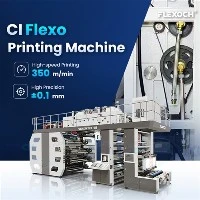
Hey there! As a supplier of Plastic Bag Flexo Printing Machines, I'm super excited to dive into the topic of the tension control system in these machines. It's a crucial part that often goes unnoticed but plays a huge role in the overall printing quality and efficiency.
So, what exactly is the tension control system of a Plastic Bag Flexo Printing Machine? Well, in simple terms, it's all about keeping the right amount of tension on the printing material as it moves through the machine. You see, the printing process involves feeding a continuous roll of plastic film or other materials through various printing units, and maintaining consistent tension is key to getting sharp, clear prints.


Let's break it down a bit further. The tension control system has two main functions: to control the unwinding tension at the beginning of the process and to manage the rewinding tension at the end. When the material is unwound from the roll, the system ensures that it comes off smoothly without too much or too little slack. This is important because if the tension is too low, the material might wrinkle or bunch up, leading to uneven prints. On the other hand, if the tension is too high, it could cause the material to stretch or even break, which is a major headache for any printer.
At the rewinding stage, the tension control system makes sure that the printed material is wound up neatly and tightly onto the take-up roll. This not only makes the finished product look professional but also helps in handling and storage. If the rewinding tension is off, the rolls might be loose or have uneven layers, which can cause problems during subsequent processing or when the bags are used.
Now, how does the tension control system actually work? There are several components involved, including sensors, controllers, and actuators. The sensors are like the eyes of the system. They constantly monitor the tension of the material at different points in the machine. For example, there might be sensors at the unwinding station, between the printing units, and at the rewinding station. These sensors send signals to the controllers, which are basically the brains of the operation.
The controllers analyze the signals from the sensors and compare them to the desired tension settings. If the actual tension is different from the set value, the controllers send commands to the actuators. The actuators are the muscle of the system. They can be things like motors or brakes that adjust the speed or force applied to the material to bring the tension back to the correct level.
One of the challenges in tension control is dealing with changes in the material properties. For instance, different types of plastic films have different stretch characteristics, and even within the same roll, the material might have slight variations. The tension control system needs to be able to adapt to these changes in real-time to maintain consistent printing quality. That's why modern machines are often equipped with advanced control algorithms that can automatically adjust the tension based on the feedback from the sensors.
Another important aspect is the integration of the tension control system with the rest of the printing machine. The system needs to work in harmony with the printing units, the ink supply, and other components to ensure a smooth and efficient printing process. For example, if the tension suddenly changes, it could affect the registration of the colors, which means the printed images might not line up correctly. So, the tension control system needs to communicate effectively with the other parts of the machine to make sure everything stays in sync.
Now, as a supplier of Plastic Bag Flexo Printing Machines, we offer a range of models that feature advanced tension control systems. For example, our Slitter Stack Type Flexo Printing Machine is designed to provide precise tension control for high-speed printing. It's equipped with state-of-the-art sensors and controllers that can handle even the most demanding printing jobs.
Our Stack Press also has a great tension control system. It's ideal for printing on a variety of plastic materials and offers excellent print quality and consistency. The system allows for easy adjustment of the tension settings, so you can fine-tune the machine to meet your specific printing requirements.
If you're looking for a machine with more colors, our 8 Colour Flexo Printing Machine is a great choice. The tension control system in this machine ensures that all the colors are printed accurately and without any smudging or misregistration. It's perfect for creating high-quality, multi-colored plastic bags.
For those who need a more compact and cost-effective solution, our 4 Colour Flexo Printing Machine is a popular option. It still has a reliable tension control system that provides good print results, making it suitable for small to medium-sized printing operations.
And if you're working with film materials, our Film Flexo Printing Machine is specifically designed to handle the unique challenges of printing on film. The tension control system in this machine is optimized to prevent film stretching and ensure smooth feeding and rewinding.
In conclusion, the tension control system is a vital part of a Plastic Bag Flexo Printing Machine. It's what ensures that you get high-quality prints, reduces waste, and improves the overall efficiency of your printing process. If you're in the market for a new printing machine, make sure to consider the quality and capabilities of the tension control system.
If you have any questions or are interested in learning more about our Plastic Bag Flexo Printing Machines, don't hesitate to reach out. We're here to help you find the right machine for your needs and provide you with the support and service you deserve. Let's start a conversation and see how we can work together to take your printing business to the next level.
References
- Flexographic Printing Technical Association (FTA) publications on printing machine technology.
- Industry whitepapers on tension control in flexo printing.