Flexography, a widely used printing process, has proven its versatility across various industries. As a leading flexo printing press supplier, I often encounter inquiries about the feasibility of printing on plastic films using flexo printing presses. In this blog post, I'll delve into the technical aspects, advantages, challenges, and best practices associated with printing on plastic films using flexo technology.
Technical Feasibility
Flexo printing presses are indeed capable of printing on plastic films. The process involves transferring ink from a flexible relief plate to the substrate, which in this case is the plastic film. The key components of a flexo printing press include an anilox roller, which meters the ink, a printing plate mounted on a plate cylinder, and an impression cylinder that applies pressure to transfer the ink from the plate to the substrate.
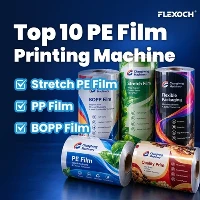
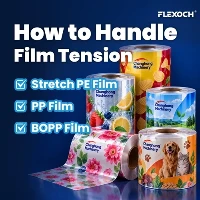
Plastic films come in various types, such as polyethylene (PE), polypropylene (PP), polyester (PET), and polyvinyl chloride (PVC). Each type of film has its own unique surface properties, such as surface energy, smoothness, and chemical composition, which can affect the printing process. However, with the right combination of inks, plates, and press settings, flexo printing presses can achieve high-quality prints on these films.
Advantages of Flexo Printing on Plastic Films
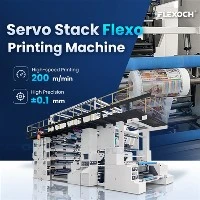
- High-Speed Printing: Flexo printing presses are known for their high-speed capabilities, making them suitable for large-volume production runs. This is particularly beneficial for industries that require high quantities of printed plastic films, such as the packaging industry.
- Versatility: Flexo printing can accommodate a wide range of ink types, including water-based, solvent-based, and UV-curable inks. This allows for printing on different types of plastic films with varying surface properties. Additionally, flexo printing can produce a variety of print effects, such as solid colors, gradients, and fine details.
- Cost-Effectiveness: Flexo printing is a relatively cost-effective printing method, especially for large production runs. The cost of plates and inks is relatively low compared to other printing processes, and the high-speed production capabilities of flexo presses can result in lower per-unit printing costs.
- Environmentally Friendly: Water-based inks, which are commonly used in flexo printing, are more environmentally friendly than solvent-based inks. They have lower volatile organic compound (VOC) emissions, which reduces air pollution and is safer for the operators and the environment.
-
Video Introduction
Challenges and Solutions
- Surface Treatment: Some plastic films have low surface energy, which can make it difficult for the ink to adhere to the surface. To overcome this challenge, the film surface can be treated using corona treatment or flame treatment. These treatments increase the surface energy of the film, allowing the ink to wet and adhere better.
- Ink Compatibility: Different types of plastic films require different types of inks. For example, water-based inks are suitable for some films, while solvent-based or UV-curable inks may be required for others. It is important to choose the right ink type that is compatible with the film substrate to ensure good adhesion and print quality.
- Registration Accuracy: Achieving high registration accuracy is crucial for multi-color printing on plastic films. Any misregistration can result in a poor-quality print. To ensure accurate registration, modern flexo printing presses are equipped with advanced registration systems, such as servo-driven systems and electronic cameras, which can detect and correct any misalignment in real-time.
- Drying and Curing: Plastic films have low heat resistance, which can make it challenging to dry and cure the ink quickly. Water-based inks require longer drying times compared to solvent-based or UV-curable inks. To address this issue, flexo printing presses are equipped with drying systems, such as hot air dryers or UV curing units, which can speed up the drying and curing process.
-
 Anilox Roller
 Central Drum
 Chamber Doctor Blade
 Ink Pump
Best Practices for Flexo Printing on Plastic Films
- Pre-Press Preparation: Proper pre-press preparation is essential for achieving high-quality prints on plastic films. This includes selecting the right film substrate, preparing the printing plates, and choosing the appropriate inks. It is also important to conduct test prints to ensure that the press settings and ink formulations are optimized for the specific film substrate.
- Press Setup: The press setup plays a crucial role in the printing process. The anilox roller should be selected based on the ink type and the desired ink coverage. The printing plates should be mounted accurately on the plate cylinder, and the impression pressure should be adjusted to ensure uniform ink transfer.
- Ink Management: Maintaining the proper ink viscosity and pH is important for consistent print quality. The ink should be filtered regularly to remove any contaminants, and the ink supply system should be cleaned periodically to prevent clogging.
- Quality Control: Regular quality control checks should be conducted during the printing process to ensure that the prints meet the required specifications. This includes checking the registration accuracy, color consistency, and ink adhesion. Any issues should be addressed immediately to prevent further production losses.
Our Flexo Printing Press Solutions
As a leading flexo printing press supplier, we offer a range of high-quality flexo printing presses that are suitable for printing on plastic films. Our Economical CI Printing Machine is a cost-effective solution for small to medium-sized production runs. It is equipped with advanced features, such as a servo-driven system and an automatic registration system, which ensure high-quality prints and efficient production.
Our Gearless flexo printing press is a state-of-the-art machine that offers high-speed printing and excellent print quality. It uses a gearless design, which eliminates the need for gears and reduces maintenance requirements. The press is also equipped with a UV curing system, which allows for fast drying and curing of UV-curable inks.
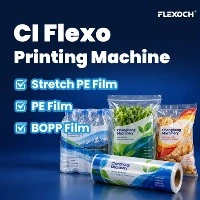
Our CI Flexo Machine is a versatile machine that can handle a wide range of substrates, including plastic films. It is designed for high-volume production runs and offers excellent print quality and efficiency. The press is equipped with advanced features, such as a central impression cylinder, which ensures uniform ink transfer and high registration accuracy.
Conclusion
In conclusion, flexo printing presses are capable of printing on plastic films, offering a range of advantages such as high-speed printing, versatility, cost-effectiveness, and environmental friendliness. However, there are also some challenges associated with printing on plastic films, such as surface treatment, ink compatibility, registration accuracy, and drying and curing. By following the best practices and using the right equipment and materials, these challenges can be overcome, and high-quality prints can be achieved.
If you are interested in flexo printing on plastic films and are looking for a reliable flexo printing press supplier, please feel free to contact us. Our team of experts will be happy to assist you in selecting the right press for your specific needs and providing you with the necessary support and training.


References
- "Flexography: Principles and Practices" by John C. Harvey
- "Plastic Films: Technology and Packaging Applications" by Rosato's Plastics Encyclopedia and Dictionary