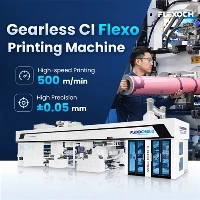
In the dynamic world of industrial production, the need for efficient and high - volume manufacturing solutions is ever - present. As a CI Machine supplier deeply involved in the industry, I've witnessed firsthand the pivotal role these machines play in various manufacturing processes. This blog aims to explore whether a CI (Central Impression) Machine can be effectively used for mass production.
Understanding CI Machines
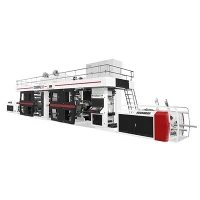
CI machines, also known as Central Impression Flexo Printing Machines, are a type of printing equipment widely used in the packaging industry. The central concept behind a CI machine is its large central impression cylinder. All the printing units in a CI machine are arranged around this central cylinder. This design offers several unique advantages that make it a candidate for mass - production scenarios.
One of the key features of CI machines is their ability to provide consistent and high - quality printing. The central impression cylinder ensures that the substrate (the material being printed on, such as paper, film, or woven bags) is held firmly and evenly during the printing process. This results in sharp, clear, and accurate prints, which is crucial for maintaining product quality in mass production.


Advantages of CI Machines for Mass Production
High - Speed Printing
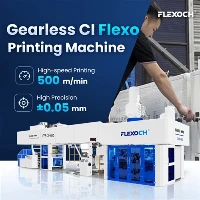
CI machines are capable of achieving high printing speeds, which is a fundamental requirement for mass production. The design of the central impression cylinder allows for a continuous and smooth printing operation. With advanced servo - motor control systems and precision engineering, modern CI machines can print at speeds of several hundred meters per minute. For instance, in the packaging of consumer goods, where large quantities of printed materials are needed in a short time, the high - speed printing capability of CI machines enables manufacturers to meet tight deadlines and high - volume orders efficiently.
Color Consistency
In mass production, maintaining color consistency across a large number of printed items is a significant challenge. CI machines excel in this aspect. Since all the printing units share the same central impression cylinder, the pressure and registration of the print are uniform across the entire printing process. This ensures that each printed item has the same colors and print quality, whether it is the first or the last in a large production run. For example, in the production of beverage labels, where brand identity is closely tied to color accuracy, CI machines can guarantee that all labels have the exact same color scheme, enhancing brand recognition and product appeal.
Versatility
CI machines are highly versatile and can be used to print on a wide range of substrates. Whether it is Sleeve Type CI Flexo Printing Machine for flexible packaging, PE Film Flexo Printing Machine for polyethylene films, Economical CI Printing Machine suitable for general packaging needs, Pp Woven Bag Flexo Printing Machine for woven plastic bags, or FFS Heavy - Duty Film Flexo Printing Machine for heavy - duty films, CI machines can adapt to different materials and printing requirements. This versatility makes them an ideal choice for mass - producing a variety of products in a single manufacturing facility.
Reduced Setup Time
In mass production, minimizing setup time is essential to increase overall productivity. CI machines are designed with quick - change systems for printing plates, ink systems, and other components. This allows operators to switch between different print jobs rapidly. For example, in a packaging plant that produces multiple product lines, the ability to quickly change the printing setup on a CI machine means that the production line can move seamlessly from one product to another, reducing downtime and increasing the number of units produced per hour.
Video Introduction
Challenges and Considerations
Initial Investment
One of the main challenges of using CI machines for mass production is the initial investment. CI machines are complex and technologically advanced pieces of equipment, and their purchase price can be relatively high. For small and medium - sized enterprises, this upfront cost can be a significant barrier. However, it's important to consider the long - term benefits. In the long run, the high - speed production, color consistency, and reduced waste associated with CI machines can lead to significant cost savings and increased competitiveness in the market.
Maintenance Requirements
CI machines require regular and proper maintenance to ensure optimal performance. The central impression cylinder, printing units, and other components need to be inspected, cleaned, and lubricated on a regular basis. Any malfunction in these components can lead to production downtime and reduced print quality. Therefore, manufacturers need to have a well - trained maintenance team or a service contract with a reliable supplier to keep the CI machine running smoothly during mass production.
Operator Skill Level
Operating a CI machine requires a certain level of skill and training. The operator needs to understand the machine's functions, settings, and troubleshooting procedures. In mass production, where the machine operates continuously, a skilled operator can ensure that the production process runs efficiently and that the quality of the printed products is maintained. Manufacturers need to invest in training their operators to maximize the potential of the CI machine.
Real - World Examples
In the food packaging industry, many large - scale manufacturers use CI machines for mass production. For example, a major snack food company uses CI machines to print the packaging for its various product lines. The high - speed printing capability of the CI machines allows them to produce thousands of packages per hour, meeting the high demand for their products. The color consistency ensures that the brand's logo and product information are printed accurately on every package, enhancing brand image.
Another example is in the pharmaceutical packaging sector. CI machines are used to print labels and packaging materials for medications. The strict quality requirements in the pharmaceutical industry, such as accurate color printing and clear text for dosage instructions, are easily met by CI machines. The ability to print on different substrates, such as paper and plastic films, also makes CI machines a versatile choice for this industry.
Conclusion
In conclusion, a CI machine can indeed be effectively used for mass production. Its high - speed printing, color consistency, versatility, and reduced setup time make it a powerful tool for manufacturers looking to produce large quantities of high - quality printed products. However, it's important to consider the challenges, such as the initial investment, maintenance requirements, and operator skill level.
As a CI Machine supplier, I am committed to providing high - quality CI machines and comprehensive support services to help manufacturers overcome these challenges and achieve successful mass production. If you are interested in exploring how a CI machine can enhance your mass - production capabilities, I encourage you to reach out for a detailed discussion. We can work together to find the most suitable CI machine solution for your specific needs and ensure a smooth transition to more efficient and productive manufacturing processes.


References
- "Flexographic Printing Technology Handbook" by the Flexographic Technical Association
- Industry reports on packaging and printing machinery from market research firms such as Smithers Pira.