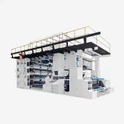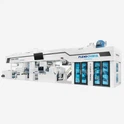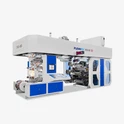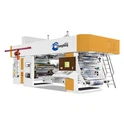
There are significant differences between flexo printing machines and offset printing machines in many aspects:
The principle is different: the flexo printing machine uses relief printing technology, which prints raised images on the printed matter, similar to the way relief leaves marks on the printed matter. The offset printing machine uses lithographic printing technology and uses the mutual repulsion of water and ink to complete printing. Specifically, the offset printing machine separates the image part from the non-image part through film separation, uses the mutually exclusive properties of water and ink to form a color image on the printing surface, and transmits the color image to the printed matter.
Different scopes of application: Flexo printing machines can print a variety of materials, including plastics, metals, paper, etc., and are especially suitable for printing a large number of simple patterns, such as trademarks, labels, etc. Offset printing machines are mainly used for printing paper materials, such as books, magazines, promotional materials, etc.
Different characteristics: Flexo printing machines can achieve high-speed printing and can print thousands of sheets of paper per minute, improving production efficiency. In addition, the printing quality of the flexo printing machine is also very high, which can achieve delicate and clear printing effects. At the same time, the equipment and consumables of the flexo printing machine are relatively low in cost, simple to operate, and suitable for small and medium-sized enterprises. Offset printing machines are known for their efficiency and high precision. They can produce very fine prints and solve the problems of blurred lines and positional deviations.
Different printing methods: Flexo printing machines use a special printing method to transfer ink to a roll, and then transfer the ink to the printing material. The offset printing machine uses a common printing method using a blanket as a transfer material to print graphics and text on the substrate.