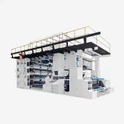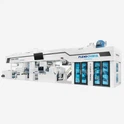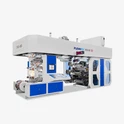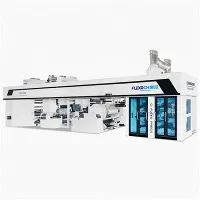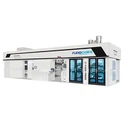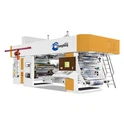
Photopolymer plates have become the go-to choice in wide web flexographic printer, particularly in high-performance roll to roll applications, due to their exceptional versatility and performance. These plates are crafted from a specialized polymer compound that cures under ultraviolet radiation, enabling precise image reproduction with sharp details and consistent print quality – a critical requirement for handling complex packaging designs or high-resolution graphics. Their engineered flexibility ensures seamless compatibility with dynamic production demands, adapting to diverse substrates like films, labels, and corrugated materials while maintaining structural integrity across extended print runs. This adaptability makes them indispensable in industrial-scale wide web flexographic printing, where uniform pressure distribution and plate resilience are paramount for maintaining registration accuracy on fast-moving webs.

Another key advantage lies in how photopolymer plates optimize the operational efficiency of flexographic printers. Their rapid imaging and development cycles align perfectly with the high-speed nature of modern Flexo printing machines, minimizing downtime between jobs. The plates' precise surface geometry enhances ink transfer dynamics in Flexo printing machines, ensuring vibrant color saturation and crisp edge definition even when printing intricate patterns or fine text at production speeds. This technical synergy is especially valuable in wide web Flexo printing machine, where consistent ink laydown across large-format substrates directly impacts output quality. Furthermore, their compatibility with advanced ink systems – from UV-curable to water-based formulations – allows flexo printer to meet evolving sustainability standards without compromising performance.

Moreover, photopolymer plates contribute to cost-effectiveness in flexographic printing. While the initial investment may be higher compared to traditional rubber plates, their longer lifespan and consistent performance lead to lower long-term costs. They also minimize waste by reducing the need for frequent plate changes and adjustments. As the flexo industry continues to prioritize sustainability, photopolymer plates stand out for their ability to support eco-friendly practices, such as reduced ink consumption and energy-efficient processing. These benefits make them an indispensable tool for modern flexographic machine, delivering both quality and efficiency in every run.
Products