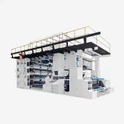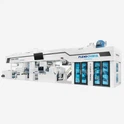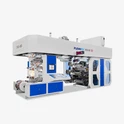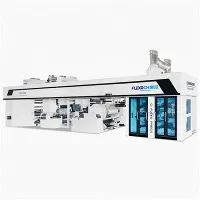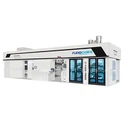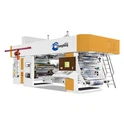
In the wide web flexo press industry, the selection of equipment width not only impacts production efficiency but also serves as a critical factor in corporate strategic planning. When evaluating flexo presses across specifications such as 800mm, 1000mm, 1200mm, and beyond, companies must conduct a holistic assessment grounded in real-world production scenarios, technical adaptability, and long-term development perspectives.
Business Needs Define Core Width: The competitive edge of flexo printing machine lies in its versatility across diverse applications. An 800mm press offers agile adaptability, efficiently handling frequent order changes while accommodating most wide-format substrates. In contrast, 1000mm+ web configurations maximize material utilization, slashing unit costs for high-volume standardized orders-particularly in film printing and similar processes. Companies should select a press configuration that balances current production demands with future scalability, guided by three critical factors: order structure, substrate specifications, and finished product dimensions.


Material Compatibility and Efficiency Trade-offs:The technical adaptability of wide web flexo printing machine impacts both product quality and resource efficiency. A 1200mm flexo press, for instance, minimizes material waste with industrial-grade roll compatibility, excelling in large-format applications like decorative films or eco-friendly paper bags. Yet larger widths require increased space, energy, and operational expertise. Companies must balance productivity and cost by assessing substrate widths, order lengths, and changeover frequency-prioritizing 800mm presses for agile short-run jobs, while 1000mm+ configurations drive economies of scale in high-volume production.
Video Introduction
Future-oriented Technical Scalability: The selection of web width for intelligent flexo machine requires technological foresight. Wider-format systems support modular upgrades, enabling transformation into smart production lines. With the rise of eco-friendly materials, broader web widths empower enterprises to tap into emerging markets like biodegradable packaging while ensuring market leadership through technological preparedness.
|
Model |
CHCI-600J-Z |
CHCI-800J-Z |
CHCI-1000J-Z |
CHCI-1200J-Z |
|
Max. Web Width |
650mm |
850mm |
1050mm |
1250mm |
|
Max. Printing Width |
600mm |
800mm |
1000mm |
1200mm |
|
Max. Machine Speed |
25m/min |
|||
|
Max. Printing Speed |
200m/min |
|||
|
Max. Unwind/Rewind Dia. |
Φ1200mm/Φ1500mm |
|||
|
Drive Type |
Central drum with Gear drive |
|||
|
Photopolymer Plate |
To be specified |
|||
|
Ink |
Water base ink olvent ink |
|||
|
Printing Length (repeat) |
350mm-900mm |
|||
|
Range Of Substrates |
Paper,Non Woven,Paper Cup |
|||
|
Electrical Supply |
Voltage 380V.50 HZ.3PH or to be specified |
|||
Example:This is the technical specifications of our economy-grade CI flexo printing mahcine for paper substrates. Featuring a modular architecture, our flexo presses empower businesses to select dedicated width configurations (800mm, 1000mm, or 1200mm) precisely aligned with their production scale.
Conclusion:Choosing a flexographic printing machine width is fundamentally a decision to translate technical parameters into production competitiveness. Whether prioritizing extreme scalability with 1200mm equipment or balanced adaptability with sub-1000mm solutions, the key lies in aligning equipment capabilities with operational demands. By focusing on efficiency while embracing technological advancements and market trends,Print providers can extract maximum lifecycle value from production line investments.
For tailored selection advice, contact our technical team to develop a full-process solution tailored to your production environment.
Printing sample