In the realm of flexo printing, ink viscosity stands as a crucial factor that significantly impacts the overall performance and quality of the printing process. As a trusted flexo printing press supplier, we have witnessed firsthand the profound effects that ink viscosity can have on the efficiency, precision, and output of flexo printing presses. In this blog post, we will delve into the intricacies of ink viscosity and explore its far-reaching implications for flexo printing.
Understanding Ink Viscosity
Viscosity is a measure of a fluid's resistance to flow. In the context of flexo printing, ink viscosity refers to the thickness or stickiness of the ink. It plays a pivotal role in determining how the ink is transferred from the printing plate to the substrate, as well as how it spreads and dries on the printed surface. The viscosity of ink is influenced by various factors, including the type of ink, its composition, temperature, and the presence of additives.

The Impact of Ink Viscosity on Print Quality
One of the most significant effects of ink viscosity on a flexo printing press is its impact on print quality. The viscosity of the ink directly affects the transfer of ink from the printing plate to the substrate. If the ink is too viscous, it may not flow smoothly onto the printing plate, resulting in poor ink transfer and uneven coverage. On the other hand, if the ink is too thin, it may spread too easily, causing blurring and loss of detail in the printed image.
In addition to affecting ink transfer, ink viscosity also plays a crucial role in determining the sharpness and clarity of the printed image. A higher viscosity ink tends to produce a more defined and precise image, while a lower viscosity ink may result in a softer, more diffused appearance. Therefore, finding the optimal ink viscosity is essential for achieving high-quality prints with sharp edges and vibrant colors.
The Effect of Ink Viscosity on Printing Speed
Another important aspect of ink viscosity is its impact on printing speed. The viscosity of the ink affects the rate at which it can be transferred from the printing plate to the substrate. A higher viscosity ink requires more pressure and time to transfer, which can slow down the printing process. Conversely, a lower viscosity ink can be transferred more quickly, allowing for higher printing speeds.
However, it is important to note that printing speed is not the only factor to consider when determining the optimal ink viscosity. While a lower viscosity ink may enable faster printing, it may also result in poor print quality if the ink spreads too easily. Therefore, a balance must be struck between printing speed and print quality to ensure efficient and effective printing operations.
The Role of Temperature in Ink Viscosity
Temperature is another critical factor that affects ink viscosity. As the temperature increases, the viscosity of the ink decreases, making it thinner and more fluid. Conversely, as the temperature decreases, the viscosity of the ink increases, making it thicker and more viscous.
In a flexo printing press, maintaining a consistent temperature is essential for ensuring stable ink viscosity and optimal print quality. Fluctuations in temperature can cause the ink to become too thin or too thick, leading to printing problems such as poor ink transfer, blurring, and uneven coverage. Therefore, it is important to monitor and control the temperature of the ink and the printing environment to ensure consistent and reliable printing results.

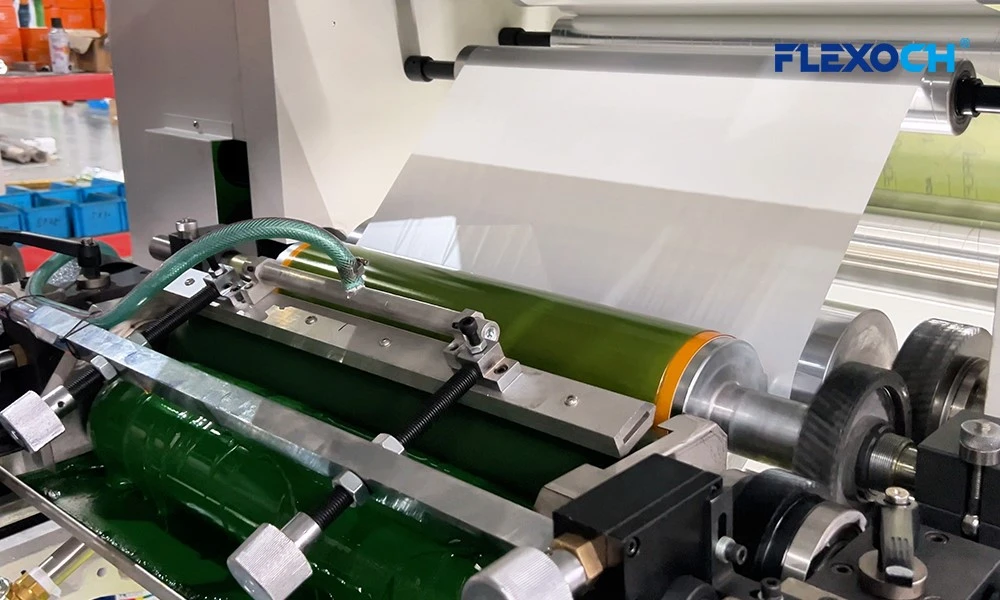
The Importance of Ink Viscosity Control
Given the significant impact of ink viscosity on print quality and printing speed, it is essential to implement effective ink viscosity control measures in a flexo printing press. This involves monitoring and adjusting the viscosity of the ink throughout the printing process to ensure that it remains within the optimal range.
There are several methods for controlling ink viscosity, including the use of viscosity controllers, temperature control systems, and ink additives. Viscosity controllers are devices that measure the viscosity of the ink and automatically adjust the flow of ink to maintain a consistent viscosity. Temperature control systems are used to regulate the temperature of the ink and the printing environment, ensuring that the ink remains at the optimal viscosity. Ink additives can also be used to modify the viscosity of the ink, depending on the specific requirements of the printing job.
Our Flexo Printing Press Solutions
As a leading flexo printing press supplier, we offer a range of high-quality flexo printing presses that are designed to deliver exceptional print quality and performance. Our High Speed Flexo Printing Machine is equipped with advanced technology and features that enable fast and efficient printing operations, while our Gearless flexo printing press offers precise control and high accuracy. Our Central Drum Flexo Printing Machine is ideal for large-scale printing projects, providing excellent print quality and consistency.
In addition to our high-quality printing presses, we also offer comprehensive support and training services to help our customers optimize their printing operations. Our team of experts is available to provide technical assistance, troubleshooting, and training on ink viscosity control and other aspects of flexo printing.


Conclusion
In conclusion, ink viscosity is a critical factor that significantly impacts the performance and quality of a flexo printing press. By understanding the effects of ink viscosity on print quality, printing speed, and other aspects of the printing process, and implementing effective ink viscosity control measures, flexo printers can achieve optimal results and enhance their competitiveness in the market.
If you are interested in learning more about our flexo printing press solutions or have any questions about ink viscosity control, please do not hesitate to contact us. We are committed to providing our customers with the highest level of service and support, and we look forward to working with you to meet your printing needs.
References
- Smith, J. (2018). The Science of Flexo Printing. Printing Press Publications.
- Johnson, A. (2019). Ink Viscosity and Its Impact on Printing Quality. Journal of Printing Technology, 25(3), 123-135.
- Brown, S. (2020). Temperature Control in Flexo Printing. Flexo Printing Magazine, 15(2), 45-52.