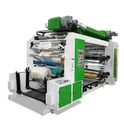
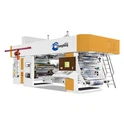
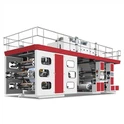
In the dynamic world of printing technology, businesses are constantly on the lookout for the most efficient and cost - effective methods to bring their designs to life. Two prominent players in the industry are Inline Flexo and Gravure printing. As an Inline Flexo supplier, I'm well - versed in the nuances of both technologies, and I'm here to break down the differences for you.
1. Printing Principle
Inline Flexo Printing
Inline flexo, short for Inline Flexographic printing, is a form of relief printing. In this process, an image is engraved onto a flexible printing plate, which is usually made of rubber or photopolymer. The plate is then mounted on a cylinder. Ink is transferred from an anilox roller, which has a pattern of tiny cells on its surface, to the raised areas of the printing plate. The substrate, such as paper, plastic, or cardboard, passes between the plate cylinder and an impression cylinder, and the ink on the raised areas of the plate is transferred to the substrate. This direct - contact, quick - release mechanism allows for high - speed printing. You can learn more about inline flexographic printing and its mechanisms on our website.
Video Introduction
Gravure Printing
Gravure printing, on the other hand, is an intaglio printing method. The image is etched into a copper - plated cylinder. The entire surface of the cylinder is flooded with ink, and then a doctor blade scrapes off the excess ink from the non - image areas, leaving ink only in the etched cells. As the substrate passes between the gravure cylinder and a pressure cylinder, the ink is transferred from the cells onto the substrate.
2. Print Quality
Inline Flexo Printing
Inline flexo has made significant strides in improving print quality over the years. Modern inline flexo presses, especially with advanced anilox roller technology and high - resolution digital plates, can produce sharp text, clear graphics, and a wide range of colors. It can achieve a dot gain of around 15 - 20%, which is quite acceptable for many packaging applications. The ability to adjust the ink volume easily and the flexibility of using different types of inks allow for a high level of customization. For instance, the inline flexo we offer can produce high - quality prints on paper cups, with vivid colors and accurate registration.
Gravure Printing
Gravure printing is known for its excellent print quality, particularly for continuous - tone images. It can reproduce very fine details and a smooth gradient of colors with minimal dot gain, usually around 5 - 10%. The consistent ink transfer from the engraved cells results in a high - fidelity reproduction of the original design. This makes gravure printing a preferred choice for high - end packaging, magazines, and wallpapers.
3. Cost Considerations
Inline Flexo Printing
When it comes to cost, inline flexo printing offers several advantages. The initial investment for an inline flexo printing press is relatively lower compared to a gravure press. The printing plates are also less expensive to produce and can be made relatively quickly. Additionally, inline flexo uses less ink and can work with a variety of substrates, which can help reduce material costs. For short - to medium - run lengths, inline flexo is often the more cost - effective option. Our Paper Bag Flexo Printing Machine provides a cost - efficient solution for businesses looking to print on paper bags in various quantities.
Gravure Printing
The upfront cost of a gravure printing press is significantly higher, and the engraving process for the cylinders is both time - consuming and expensive. This makes gravure printing more suitable for long - run jobs, where the cost per unit decreases over a large volume. Although the quality is high, the high setup costs can make it less economical for small - scale production.
4. Print Speed and Efficiency
Inline Flexo Printing
Inline flexo presses are designed for high - speed operation. They can print at speeds of up to several hundred meters per minute, depending on the complexity of the job and the type of press. The ability to print multiple colors in one pass, known as inline printing, further enhances the efficiency. Quick - changeover systems for printing plates and inks also minimize downtime between jobs, making it a great choice for businesses that require fast turnaround times.
Gravure Printing
Gravure presses also operate at high speeds, but the setup time is much longer due to the cylinder engraving process. Once up and running, they can maintain a consistent high - speed printing operation. However, for shorter runs, the long setup time can offset the benefits of high - speed printing.
5. Substrate Compatibility
Inline Flexo Printing
One of the major strengths of inline flexo printing is its wide substrate compatibility. It can print on paper, cardboard, plastic films, metallic foils, and even fabric. This versatility makes it suitable for a diverse range of applications, from food packaging to labels and promotional materials. The ability to use different types of inks, such as water - based, solvent - based, and UV - curable inks, further expands its substrate compatibility.
Printing Sample


Gravure Printing
Gravure printing also works well with a variety of substrates, including paper, plastic, and metal. However, it may require more specialized handling and adjustment for different substrates to achieve optimal results. For example, printing on flexible packaging materials may need precise control of the impression pressure to avoid ink smudging.
6. Environmental Impact
Inline Flexo Printing
Inline flexo printing is considered more environmentally friendly in many aspects. Water - based inks are commonly used in inline flexo, which emit fewer volatile organic compounds (VOCs) compared to solvent - based inks. The lower ink consumption and the ability to use biodegradable substrates also contribute to its eco - friendly profile.
Gravure Printing
Traditional gravure printing has been associated with higher VOC emissions due to the use of solvent - based inks. However, in recent years, there has been a move towards more environmentally friendly alternatives, such as water - based and UV - curable inks. Still, the engraving process of the cylinders and the higher energy consumption during setup can have a relatively larger environmental footprint compared to inline flexo.
Conclusion
In conclusion, both Inline Flexo and Gravure printing have their own unique strengths and weaknesses. Inline Flexo offers cost - effectiveness, high - speed printing, wide substrate compatibility, and a more eco - friendly option, especially for short - to medium - run jobs. Gravure printing, on the other hand, excels in delivering superior print quality for long - run applications.
As an Inline Flexo supplier, I'm confident that our technology provides an excellent solution for a wide range of printing needs. If you're interested in learning more about how inline flexo printing can benefit your business, or if you're considering purchasing a printing machine, I encourage you to reach out. Contact us to discuss your specific requirements and let's explore the possibilities together!
Detail Image


References
- Seymour, John. "Printing Technology Handbook." Taylor & Francis, 2018.
- Kipphan, Helmut. "Handbook of Print Media: Technologies and Production Methods." Springer, 2001.