As an inline flexo supplier, I'm often asked whether inline flexo can print on fabric. It's a question that has deep - rooted implications for both the printing industry and the textile industry. In this blog post, I'll delve into this topic, exploring the technical feasibility, advantages, challenges, and future prospects of using inline flexo for fabric printing.
Technical Feasibility
Inline flexographic printing, a method known for its high - speed and cost - effective printing on various materials, has traditionally been used on paper - based products such as those produced by Paper Bag Flexo Printing Machine. However, with advancements in printing technology and ink formulations, it is becoming increasingly possible to use inline flexo for fabric printing.
The basic principle of inline flexo involves transferring ink from a flexible relief plate to a substrate. This process requires the ink to be able to adhere well to the substrate. Specialized fabric - compatible inks have been developed, which are water - based, solvent - based, or UV - curable. Water - based inks are environmentally friendly and are suitable for natural fabrics like cotton. They penetrate the fabric fibers well, providing good color saturation. Solvent - based inks, on the other hand, dry quickly and offer good resistance to abrasion, making them a good choice for synthetic fabrics. UV - curable inks are cured instantly under UV light, reducing the risk of ink smudging and offering a high - gloss finish.

Advantages of Inline Flexo on Fabric
- High - speed Production: One of the most significant advantages of inline flexo is its ability to print at high speeds. This means that large quantities of fabric can be printed in a relatively short period. For textile manufacturers who need to meet high - volume orders, inline flexo can be a game - changer. It can significantly increase production efficiency compared to traditional fabric - printing methods such as screen printing.
- Cost - effectiveness: Inline flexo printing is generally more cost - effective than some other printing methods, especially for medium to large print runs. The initial investment in an inline flexo machine may be substantial, but the lower cost per print for large volumes offsets this initial cost. Additionally, the relatively simple setup and quick change - over times between jobs reduce production costs.
- Flexibility in Design: Inline flexo allows for a high degree of design flexibility. It can print detailed patterns, complex graphics, and even variable data on fabric. This is particularly useful for fashion designers and textile brands who want to create unique and custom - printed fabrics. The ability to print variable data can also be used for applications such as printing serial numbers or barcodes on fabric products.
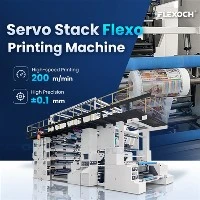
- Quality and Consistency: Modern inline flexo machines are capable of delivering high - quality prints with excellent color registration and consistency. The use of advanced printing technologies such as servo - driven systems ensures precise control over the printing process, resulting in sharp and clear prints on fabric.
Video Introduction
Challenges of Inline Flexo on Fabric
- Ink Adhesion and Durability: While specialized inks have been developed, achieving optimal ink adhesion and durability on fabric can still be a challenge. Different fabrics have different surface characteristics, and some fabrics may require pre - treatment to ensure good ink adhesion. Additionally, the printed fabric needs to withstand various environmental factors such as washing, rubbing, and exposure to sunlight without the ink fading or peeling.
- Fabric Handling: Fabrics can be more difficult to handle than paper - based substrates in an inline flexo printing process. They are often more flexible and prone to stretching, wrinkling, or shifting during printing. Specialized fabric handling systems need to be incorporated into the printing machine to ensure smooth and accurate feeding and printing of the fabric.
- Limited Color Range: Compared to some other fabric printing methods, inline flexo may have a relatively limited color range. The color gamut achievable through inline flexo printing is influenced by the ink formulations and the printing process itself. However, continuous advancements in ink technology are gradually expanding the available color options.
Future Prospects
The future of inline flexo printing on fabric looks promising. As technology continues to evolve, we can expect to see further improvements in ink formulations, fabric handling systems, and printing quality. The demand for sustainable and cost - effective fabric printing solutions is also driving the growth of inline flexo in the textile industry.
In addition, the integration of digital technology with inline flexo printing is likely to open up new possibilities. For example, the combination of digital pre - press and inline flexo printing can enable more efficient design changes and variable data printing. This will make inline flexo even more attractive for the customization - driven textile market.
How to Get Started
If you're interested in exploring the use of inline flexo for fabric printing, I encourage you to reach out to us. As an experienced inline flexo supplier, we can provide you with detailed information about our inline flexographic printing solutions, including machine specifications, ink options, and technical support.
Our team of experts can help you evaluate whether inline flexo is the right choice for your specific fabric - printing needs. We can also assist you in setting up a trial run to see the quality and performance of our printing solution firsthand. Don't hesitate to contact us to start a discussion about potential partnerships and how we can work together to take your fabric - printing business to the next level.
Conclusion
In conclusion, inline flexo printing can indeed be used for fabric printing, offering significant advantages in terms of speed, cost, design flexibility, and quality. While there are challenges to overcome, the future prospects are bright. As an inline flexo supplier, we are committed to driving innovation in this field and helping our customers make the most of this technology. Whether you're a small - scale textile boutique or a large - scale manufacturing enterprise, inline flexo could be the solution you need to enhance your fabric - printing capabilities and meet the demands of the ever - evolving market. Contact us today to explore how we can collaborate and bring your fabric - printing ideas to life.


References
- Smith, J. (2022). Advances in Flexographic Printing Technology. Journal of Printing Science, 35(2), 78 - 92.
- Johnson, A. (2021). Textile Printing: Trends and Innovations. Textile Industry Review, 42(3), 45 - 60.
- Williams, T. (2020). Ink Formulations for Different Substrates in Flexo Printing. Printing Technology Magazine, 18(4), 112 - 125.