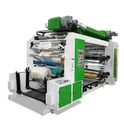
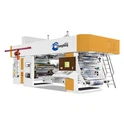
Hey there, fellow printing enthusiasts! As a supplier of stack flexo printing equipment, I've had my fair share of hands - on experience and customer interactions. One question that comes up a lot is, "What types of plastic films are suitable for stack flexo printing?" Today, I'm gonna break it down for you.
Let's start with understanding stack flexo printing. A stack type flexo printing machine works in a unique way. It stacks multiple printing units on top of each other, allowing for high - speed and multi - color printing on various flexible materials, especially plastic films.
1. BOPP Films
Biaxially Oriented Polypropylene (BOPP) films are like the go - to in the plastic film printing world, and for good reasons. First off, they've got great clarity. When you print on BOPP, the colors look vibrant and sharp, which is super important for product packaging that needs to catch the consumer's eye on the shelf.
BOPP films are also pretty tough. They have good resistance to moisture, which means your printed designs won't get all blurry or ruined if the product gets a bit wet. And since they're biaxially oriented, they have better tensile strength in both the machine and transverse directions. This helps in smooth feeding through the stack type flexo printing machine.
But here's the thing, BOPP films are non - polar. That means they need what we call surface treatment. Usually, a corona treatment is done before printing to make the surface more receptive to the ink. Once that's taken care of, you can achieve some really amazing print results on BOPP films.

2. PET Films
Polyethylene Terephthalate (PET) films are another popular choice. These films have excellent dimensional stability. That means during the printing process, they won't stretch or shrink too much. This is crucial when you're doing multi - color printing because any misalignment can mess up the whole design.
PET films also have high tensile strength, similar to BOPP, but they're even more heat - resistant. So, if your process involves some heat in drying the ink or for post - printing treatments, PET can handle it well.
The clarity of PET films is outstanding. They give a glass - like appearance which is great for luxury packaging where you want to show off the product inside. And just like BOPP, they can be surface - treated to improve ink adhesion.

3. PVC Films
Polyvinyl Chloride (PVC) films have their own niche in stack flexo printing. They're very versatile. You can get them in different thicknesses, from thin and flexible to thick and rigid. This makes them suitable for a wide range of applications, like labels, blister packs, and even some types of packaging for food products.
One of the cool things about PVC is its ability to hold color. The inks adhere well to PVC, and you can get really deep, rich colors. However, PVC has some environmental concerns. It contains chlorine, and when it's burned or disposed of in certain ways, it can release harmful chemicals. But if you follow the proper waste management procedures, it can still be a good option for printing.
4. PE Films
Polyethylene (PE) films come in two main types: Low - Density Polyethylene (LDPE) and High - Density Polyethylene (HDPE). LDPE films are soft and flexible. They're often used for things like food packaging, like bread bags or some types of shrink - wrap.
HDPE films, on the other hand, are more rigid and have better chemical resistance. They're used for heavier - duty packaging, like detergent bottles or some industrial packaging.
PE films are relatively easy to print on, but they also need surface treatment because they're non - polar. Once treated, they can accept inks well, and you can achieve good print quality.
Now, when you're choosing a plastic film for stack flexo printing, there are a few other factors to consider apart from the film type.
Printing Speed and Quality
If you're running a high - speed stack type flexo printing machine, you need a film that can keep up. Some films might be a bit more prone to wrinkling or tearing at high speeds, which can lead to production downtime and wasted material.
For high - quality, detailed prints, films with a smooth surface are better. A rough surface can cause the ink to spread unevenly, which ruins the sharpness of the design.
Ink Compatibility
Not all inks work well with all plastic films. Different films have different surface energies, and you need an ink that can bond properly with the film's surface. Some inks are formulated specifically for BOPP, others for PET. You need to make sure you're using the right ink for the film you've chosen.
Cost
Let's be real, cost matters. Some films, like PET, are generally more expensive than PE or PVC. You need to balance the cost with the quality and the requirements of your printing job. If you're printing a high - volume, low - cost product, you might lean towards a more affordable film like PE. But if it's a premium product with a high - end look, PET might be worth the extra cost.
Our Equipment Options
We also offer a Slitter Stack Type Flexo Printing Machine which combines the printing and slitting processes in one go. This can save you time and money, especially if you're making products in rolls that need to be cut to specific widths.
And of course, our Film Flexo Printing Machine is designed specifically for printing on plastic films. It's got advanced features that ensure high - quality prints on all the film types we've talked about.
If you're in the market for stack flexo printing equipment or have questions about which plastic film is right for your specific job, don't hesitate to reach out. We've got a team of experts who can guide you through the process and make sure you get the best results.
In conclusion, whether you're printing on BOPP, PET, PVC, or PE, stack flexo printing can give you high - quality, multi - color prints. Just make sure to consider all the factors like film characteristics, printing speed, ink compatibility, and cost. And if you're looking for reliable equipment, we're here to help you out.


References
- "Flexographic Printing Technology", McLauchlin, Joseph, et al.
- "Plastic Films: Technology and Packaging Applications", Pike, Kenneth S.