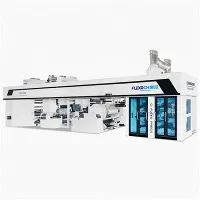
In today's printing industry where efficiency and precision are top priorities, double-sided register printing has long been a critical factor in boosting product value and production efficiency. Traditional printing methods, however, often fall short when it comes to high-quality double-sided printing-plagued by issues like poor register accuracy, low productivity, and overly complex equipment setups. The emergence of stack flexo printing machine offers a truly ideal fix for this age-old industry challenge.

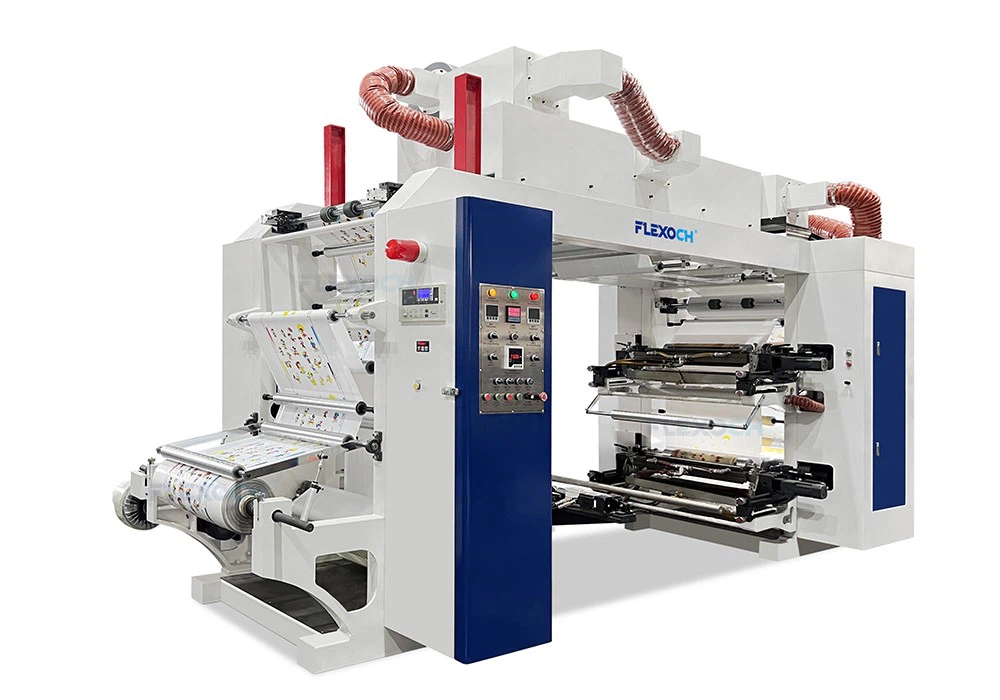
CH-B-Z 6 Color Stack Flexo Printing Machine For Paper 120 m/min
I. What is a Stack Type Flexo Printing machine?
A stack type flexog printing machine is a type of flexo equipment featuring vertically stacked printing units. Its core design arranges multiple printing units in an overlay fashion on a single frame; each unit operates independently while maintaining seamless coordination with the whole system.
Unlike traditional horizontal layouts, the stack design makes the most of vertical space-slashing the machine's floor footprint while keeping tension control steady across all printing units. This structure works well for single-sided multi-color printing and also acts as an ideal platform for high-precision double-sided printing.
Parameters
|
Model |
CHCI6-600B-Z |
CHCI6-800B-Z |
CHCI6-1000B-Z |
CHCI6-1200B-Z |
|
Max. Web Width |
650mm |
850mm |
1050mm |
1250mm |
|
Max. Printing Width |
560mm |
760mm |
960mm |
1160mm |
|
Max. Machine Speed |
120m/min |
|||
|
Max. Printing Speed |
100m/min |
|||
|
Max. Unwind/Rewind Dia. |
Φ1200mm/Φ1500mm |
|||
|
Drive Type |
Synchronous belt drive |
|||
|
Photopolymer Plate |
To be specified |
|||
|
Ink |
Water base ink or solvent ink |
|||
|
Printing Length (repeat) |
300mm-1300mm |
|||
|
Range Of Substrates |
Paper,Non Woven,Paper Cup |
|||
|
Electrical Supply |
Voltage 380V. 50 HZ.3PH or to be specified |
|||
II. Key Advantages of Stack Type Flexographic Printing Press
1.Compact & High-Efficiency Design:Vertical stacking drastically reduces the machine length. By cleverly arranging upper and lower printing units, it enables a streamlined "single-pass, double-sided completion" workflow. This not only saves floor space but also shortens the substrate travel path between printing units, minimizing tension fluctuations and boosting register accuracy.
2.Highly Flexible Configuration: Per production needs, the press can be flexibly fitted with 4–10+ printing units, smoothly handling both single-sided multi-color printing and simultaneous double-sided printing. Its modular design enables quick, hassle-free equipment upgrades and function expansions.
3.Energy-Saving & Eco-Friendly Performance:The shorter substrate path means less drying energy use. Paired with high-efficiency drying systems, overall energy consumption drops 20%–30%. Flexographic printing mostly uses water-based or energy-curable UV inks, cutting VOC emissions to ultra-low levels-fully aligning with global green printing trends and food packaging safety standards.
4.Strong Production Adaptability & Quick Changeover:The stack design lets the press react fast to order changes for different substrate sizes and materials. With quick sleeve-based plate changes, one-click recall of preset process recipes, and great compatibility with diverse substrates (thin paper, films, non-wovens included), it stays competitive in a market increasingly driven by short-run and customized printing.
5.Easy Operation & Maintenance:All printing units sit at a comfortable, operator-accessible height, simplifying plate mounting, cleaning, pressure adjustment, and daily inspections. This user-centric design slashes setup and troubleshooting time, boosting Overall Equipment Effectiveness (OEE).
Detail Image


III. Why Double-Sided Printing is Essential?
1.Double-sided printing is widely sought after in modern packaging printing, as it excels at cost control and meets diverse industry requirements. Its main uses fall into three areas:
Food Industry: Food packaging needs clear branding, ingredient lists, expiration dates, and anti-counterfeiting details. With double-sided printing, the front can feature eye-catching brand graphics to draw consumers, while the back holds detailed instructions and traceability data. This cuts extra material costs while keeping information complete and packaging attractive. For corrugated food transport cartons, it also satisfies shipping labeling and brand promotion needs.
2.Daily Chemical Industry: Packaging for laundry detergent, tissue bags, and other daily chemicals calls for both a premium look and full information. Double-sided printing puts product visuals and brand logos front and center, with ingredients, usage guides, and safety notes neatly listed on the back for a tidy layout. It also maximizes limited label space to add selling points or anti-counterfeiting codes, perfectly balancing visual appeal and practicality for the industry.
Specialized Sectors: Security printing, smart labels, and pharmaceutical packaging rely on double-sided printing to link front and back information for interactive anti-counterfeiting and smart sensing. This boosts product value and safety significantly, meeting the strict demands of high-end markets and specialized industries.
3.Food, daily chemical and other industries using double-sided printing can make the most of both sides of the substrate without extra material input. It fits more product info and brand content while cutting raw material use, which matches the current green printing trend. This practical, eco-friendly printing way is quickly becoming the top pick for more and more printing businesses.
Printing Sample


IV. Practical Applications of Stack Flexography in Double-Sided Printing
Aligned with the needs of the food and daily chemical industries, the stack flexo printing machine key advantage-"achieving high-precision double-sided register printing in a single pass"-delivers exceptional practical value in real-world scenarios. Take food packaging film printing as an example: the substrate enters the machine, undergoes front-side printing of core elements (such as brand graphics) via the upper printing units, then is smoothly flipped by the built-in turning mechanism, and finally has back-side information (including ingredient lists and traceability codes) printed by the lower units-all in a seamless, one-step process.
This integrated workflow eliminates register deviations associated with traditional two-pass printing, ensuring register accuracy within ±0.15mm to meet the strict quality standards of food and daily chemical packaging. At the same time, it drastically shortens production cycles and improves order response efficiency.
In comparison, CI (Central Impression) flexo printing presses require additional web turner devices to reverse the substrate direction for double-sided printing, leading to higher capital investment. Conventional inline flexographic presses, on the other hand, need two separate passes to complete double-sided printing, resulting in a more cumbersome production workflow.
Video Introduction
V.Industry Trends and Future Outlook
As digital tech and traditional printing blend more closely, stack flexo printing presses are shifting toward smarter, greener operations:
Intelligent Upgrades: IoT enables real-time equipment condition tracking and predictive maintenance. Paired with AI-tweaked printing parameters, this will further sharpen double-sided register accuracy and stability.
Personalization & Short-Run Edge: Demand for small-batch, custom products is on the rise. Stack type flexo machines' strengths in fast changeovers and simple setup will shine brighter-letting double-sided printing fit short-run production needs perfectly.
Printing-Post-Press Integration: To boost efficiency further, stack flexographic presses are trending toward "printing + post-press" integration. Via modular expansion, they can add post-press processes like die-cutting, laminating, and hot stamping, enabling direct post-processing right after double-sided printing. This cuts semi-finished product handling steps, forming a closed-loop line from raw materials to finished products-perfect for high-efficiency production in food, daily chemical, and other FMCG packaging.

Corona Treatment

Slitting Unit
VI.Conclusion
Thanks to its unique design and advanced technology, the stack flexo printing machine effectively addresses accuracy, efficiency, and cost challenges in double-sided register printing, offering a reliable optimal solution for the printing industry. Whether it's high-quality packaging printing or efficient commercial printing, its strong double-sided performance helps businesses stand out in the competitive market.
As tech advances and market needs grow more varied, stack flexography will unlock extra value in double-sided printing-pushing the whole industry toward a more efficient, precise, and sustainable path.
Other products