Introduction
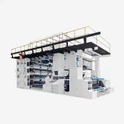
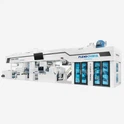
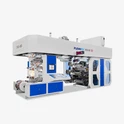
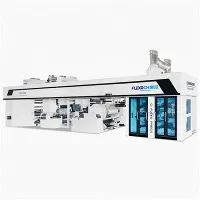
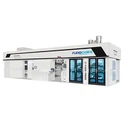
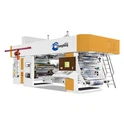
In the era of rapid upgrading of flexible packaging, the competitive focus of printing equipment has shifted from merely enhancing speed to the comprehensive strength of adaptability to various materials and the quality of finished products. Due to their diverse properties, materials such as plastic films, paper, non-woven fabrics and aluminum foil have always been the most challenging areas in printing manufacturing. In the past, they were confronted with problems such as difficult tension control, poor ink adhesion, easy deformation or wrinkling, which made it hard to improve the yield of finished products and kept production costs high. Nowadays, central impression flexo printing machines are providing brand-new solutions for the industry.
Plastic film: Overcoming the challenges of high tensile strength and registration accuracy
Plastic films such as PE, PET, BOPP, and CPP, due to their high tensile strength and heat shrinkability, are prone to uneven stretching, ink breakage, and registration deviations on traditional equipment. The problems of blurred image edges and unstable colors are more prominent during high-speed printing. The CI flexographic printing machine adopts a central large drum structure, allowing the film to closely adhere to the drum throughout the printing path, effectively suppressing oscillation and deformation. The thickness range that can be printed on plastic film is from 1 to 150 microns. Coupled with the closed-loop tension system and synchronous transmission technology, it can maintain extremely high registration accuracy and color consistency even under high-speed operation, and is widely used in high-quality application fields such as food soft packaging, beverage films, and Plastic bag packaging.
Main Pictures


Printing Sample


Paper material: A comprehensive improvement from speed to fine expression
Paper may seem ordinary, but due to its unstable fiber structure and significant humidity influence, it often experiences problems such as powder shedding, ink seepage, and ink smearing in traditional printing, resulting in insufficient picture layers and inability to accurately present details. The CI flexo printing equipment, through uniform pressure and precise ink volume control, ensures that the paper material maintains a stable structure during high-speed movement, making the ink transfer more delicate and clear. The paper weight that can be printed on is 20 - 400 gsm. Whether it is food paper bags, paper boxes, or paper bowls, the printed patterns can achieve a more full, sharper, and more visually impactful effect, helping brands achieve a leap in packaging.
Main Pictures


Printing Sample


Non-woven fabric: Solving the problem of softness and easy deformation
Non-woven fabric has long been regarded as a challenging substrate due to its softness and ease of stretching. Many printing equipment often encounter problems such as wrinkling, stretching deformation, and blurred text and images during the printing process. However, the machine impression flexo, by covering the supporting material with a central roller and combining a real-time tension feedback system, ensures that the non-woven fabric remains flat and stable at full speed. The printed patterns have a stronger three-dimensional effect and better color adhesion. Whether used for eco-friendly shopping bags, medical and health materials, or packaging for mother and baby products, it can achieve high-quality visual presentation, bringing greater market space to non-woven fabric packaging.
PP Woven Bag: Solving the problems of rough surfaces and inaccurate offset printing
The woven bags are made by interweaving PP flat threads. The surface is uneven with distinct patterns. Moreover, the material itself is prone to stretching, so it is very likely to encounter quality issues such as broken patterns, uneven colors, and offset printing deviations on traditional flexographic printing equipment. The central impression flexo printing machines adopt a central large drum structure, allowing the PP woven bags to remain tightly attached and stably supported during the printing process, avoiding deformation caused by swinging or stretching. At the same time, the pressure control and ink transfer of the equipment are more precise. Even in large areas of background color or fine text patterns, a more complete and full visual effect can be presented. Multi-color offset printing is more stable, with high color consistency, and the picture is clearer and cleaner. Whether it is feed bags, fertilizer bags, grain bags, or building materials packaging bags, they can achieve higher-end and more exquisite color printing quality, upgrading the woven bags from ordinary transportation packaging to a product with real brand display value.
Main Pictures


Printing Sample

Conclusion
Central impression flexo printing machines, with their strong adaptability to various materials and high-precision printing performance, not only help enterprises solve traditional printing problems, but also promote the comprehensive upgrade of packaging in terms of both visual and quality aspects. As the industry enters a new stage where multiple materials coexist, choosing more advanced equipment is choosing a more long-term competitive advantage.