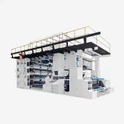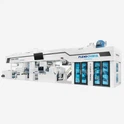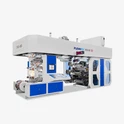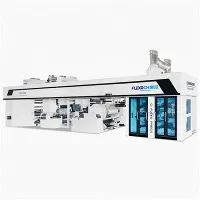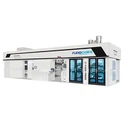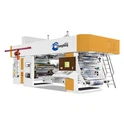
In recent years, the packaging and printing sector has been quietly undergoing a structural shift. As brand owners push for higher consistency, faster turnaround, and more sustainable production, equipment choices on the factory floor are being re-evaluated. Among the various technologies, compared with stack type flexo printing machine, the central impression drum flexo printing press is emerging as the preferred option for converters looking to upgrade both quality and efficiency.
We have presented four core advantages to explain why the CI flexo printing machines are taking the lead.


1. Consistent Registration, Even When the Press is Pushed Hard
The single large central drum changes the way the web behaves. Because the substrate stays supported from the first color to the last, there's far less opportunity for it to expand, drift, or flutter. Operators often comment that once a central drum flexo press locks into register, it simply stays there-it doesn't "chase" alignment the way some older systems do when the speed increases or the material warms up.
For plants running long shifts, this stability reduces interruptions and gives teams more confidence to run faster without sacrificing accuracy. It also brings a level of consistency that brand owners depend on, especially for packaging that must look identical across millions of units.
Central Drum's Pictures


2. A More Controlled Way to Handle Thin and Challenging Films
As packaging keeps moving toward thinner and more flexible materials, keeping the web stable has become a daily challenge. Films like PE, CPP, and new lightweight laminates can distort with the slightest tension variation. The CI flexographic press minimizes these risks by allowing the material to stay in direct contact with the central drum with limited unsupported travel.
This design gives operators a better chance at maintaining clean dots, strong white coverage, and smooth gradients. It's one of the reasons converters in food and Soft packaging for daily necessities-two sectors where visual standards keep rising-have shown strong interest in central impression drum flexo printing press. They simply make these delicate materials easier to print well.
Detail Image


3. Less Waste and Faster Turnarounds During Job Changes
Printers deal with short runs, constant versioning, and tight delivery windows. One of the practical advantages of a CI Flexo press is that it settles quickly after adjustments. Color returns to target faster, tension stabilizes sooner, and the amount of material needed before a job reaches sellable quality is noticeably lower.
Factories that have transitioned to CI flexo printing machine often mention that the savings come quietly but consistently. A few meters less waste per changeover, plus a few minutes saved each time, begins to make a real difference by the end of the week. Over the course of a year, that efficiency adds up to a meaningful cost advantage.
Video Introduction
4. Built for the Kind of High-Value Graphics Brands Now Want
Packaging design has become more ambitious, and converters are expected to keep up. High-definition plates, expanded-gamut printing, dense solids, and clean halftones all demand mechanical stability. The CI drum provides a steadier foundation, allowing these technologies to perform at their best without the vibrations or micro-movements that can appear in other configurations.
For converters aiming to move into more premium segments, the central drum flexographic printing machine opens doors. It handles 4, 6 or 8 color process work more comfortably, supports higher screen counts, and delivers the kind of visual impact that modern brands look for. In an evolving market landscape, this ability to produce higher-value print runs can become a decisive advantage.
Printing Sample


A Strategic Upgrade for an Evolving Market
In today's packaging landscape, staying competitive depends on much more than running fast or comparing basic machine parameters. Brand owners are pushing for stricter color control, quicker design rollouts, and production methods that leave a smaller environmental footprint. Meanwhile, regulatory standards are tightening, film and paper structures continue to change, and labor expenses show no signs of easing. With all these pressures converging, selecting new machine is no longer a simple refresh-it has become a deliberate, strategic choice that directly influences a machine's long-term positioning.
A central impression drum flexo printing press is essentially a rebuild of the plant's production foundation. Instead of addressing one bottleneck, it strengthens the whole workflow. The central drum's stability cuts down reprints and unscheduled stops; its steady handling of thin, sensitive films makes higher-margin jobs easier to run; and quicker changeovers help reduce waste and energy use. Its ability to deliver high-definition graphics also positions converters to compete in premium packaging where visual quality directly shapes brand perception.
For management teams, this isn't just a technical improvement-it's a shift in operating philosophy. CI systems help plants move from experience-driven production to a more controlled, data-oriented process. With less reliance on specialist operators and fewer quality swings, converters gain a stronger footing when dealing with major clients or long-term programs. Profitability becomes less about volume pressure and more about consistency, efficiency, and the ability to offer higher-value work.
As the market landscape evolves, choosing a CI flexo printing press has become a practical move toward future readiness. It lifts day-to-day efficiency while giving converters the control, consistency, and flexibility needed to meet the next wave of market requirements. For businesses looking to add capacity, keep print quality steady, or step into more demanding segments, the CI platform offers more than technical capability-it provides a return built on steady performance, dependable output, and a growth path that can hold up over time.