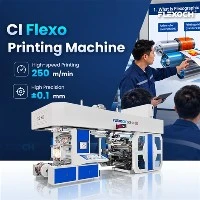
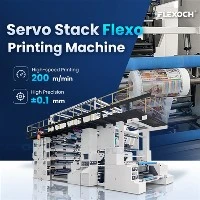
Hey there! As a supplier of Non Woven Flexo Printing Machines, I often get asked about the print quality inspection methods for these machines. So, I thought I'd share some insights on this topic in today's blog post.
First off, let's understand why print quality inspection is so important. In the world of non - woven printing, the quality of the print directly impacts the marketability of the final product. Whether it's for packaging, promotional materials, or other applications, customers expect sharp, clear, and consistent prints. A high - quality print not only looks good but also enhances the brand image of the end - user.
Visual Inspection
One of the most basic yet effective methods is visual inspection. This involves a trained operator simply looking at the printed non - woven material under proper lighting conditions. They check for obvious defects like smudges, streaks, color variations, and misregistration.
Smudges can occur when the ink doesn't dry properly or when there's some mechanical interference during the printing process. Streaks might be a sign of issues with the anilox roller, such as clogging or uneven wear. Color variations can be due to problems with the ink mixing or inconsistent ink supply. Misregistration, which means the different colors of the print are not aligned correctly, can ruin the overall look of the design.
When doing a visual inspection, it's important to have a good reference sample. This sample should represent the ideal print quality that the machine is supposed to achieve. By comparing the printed material with the reference sample, the operator can quickly spot any deviations.
Densitometry
Densitometry is a more technical method of print quality inspection. It measures the density of the ink on the printed surface. A densitometer is used to take readings at various points on the print.
The density of the ink affects the color intensity and the overall appearance of the print. If the ink density is too low, the colors will look faded. On the other hand, if it's too high, the print might look muddy and could also cause issues with drying.
By regularly measuring the ink density, we can ensure that the printing process is consistent. If the density readings deviate from the set standards, we can make adjustments to the ink supply, the pressure of the printing plate, or other relevant parameters.
Spectrophotometry
Spectrophotometry goes a step further than densitometry. It measures the spectral reflectance of the printed colors. This allows for a more accurate analysis of the color.
A spectrophotometer can determine the exact color coordinates of the print, such as the Lab* values. These values provide a precise way to describe the color in a three - dimensional space. By comparing the measured color coordinates with the target values, we can detect even the slightest color differences that might not be visible to the naked eye.


Spectrophotometry is especially useful when dealing with complex color matching requirements. For example, if a customer has a specific brand color that needs to be replicated on the non - woven material, a spectrophotometer can help ensure that the printed color is as close as possible to the desired one.
Automated Inspection Systems
In recent years, automated inspection systems have become increasingly popular. These systems use cameras and advanced image - processing software to detect print defects.
The cameras capture high - resolution images of the printed material as it moves through the machine. The software then analyzes these images to look for defects such as spots, scratches, and color variations. Automated inspection systems can work at high speeds, which means they can inspect large volumes of printed material in a short time.
They also provide a more objective and consistent inspection compared to manual visual inspection. Since they are not subject to human fatigue or bias, they can detect even the smallest defects with a high degree of accuracy.
Inspection of Print Resolution
Print resolution is another crucial aspect of print quality. It refers to the level of detail that can be reproduced in the print. A higher resolution means sharper and more detailed prints.
To check the print resolution, we can use test patterns. These patterns typically contain fine lines, dots, and other small elements. By examining how well these elements are reproduced on the non - woven material, we can assess the print resolution.
If the print resolution is low, it could be due to issues with the printing plate, such as a low - quality engraving, or problems with the printing pressure. Adjusting these factors can help improve the print resolution.
Inspection of Print Durability
The durability of the print is also an important consideration. The printed non - woven material might be exposed to various environmental conditions, such as sunlight, moisture, and friction.
We can conduct tests to evaluate the print durability. For example, a rub test can be done to check the abrasion resistance of the ink. In this test, a piece of fabric is rubbed against the printed surface with a certain amount of pressure for a specified number of times. If the ink starts to come off easily, it indicates poor abrasion resistance.
A lightfastness test can be used to assess how well the print withstands sunlight. The printed material is exposed to a controlled light source for a period of time, and then the color change is evaluated.
As a supplier of Non Woven Flexo Printing Machines, we offer a range of machines that are designed to meet high - quality print standards. Our machines are equipped with advanced features to ensure consistent and reliable printing. If you're in the market for a Non Woven Flexo Printing Machine, or if you're interested in our Pp Woven Bag Ci Printing Machine, CI Flexo Machine, or Central Drum Flexo Printing Machine, we'd love to have a chat with you. Contact us to discuss your specific requirements and let's work together to achieve the best print quality for your products.
References
- "Flexographic Printing Technology" by the Flexographic Technical Association
- "Printing Quality Control" by various industry experts in the printing field