Hey there! As a supplier of flexo printing presses, I've seen firsthand how crucial every component is in ensuring top - notch printing results. One such important part is the web guide. So, let's dig into what the role of the web guide in a flexo printing press is all about.
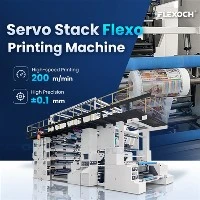
First off, let me give you a quick intro to flexo printing presses. We offer a variety of machines like the CI Flexo Machine, the Woven Sack Flexo Printing Machine, and the Drum Flexo Printing Machine. These machines are used to print on all sorts of materials, from paper to plastic films and even woven sacks.


Now, back to the web guide. In a flexo printing press, the web is the continuous strip of material that moves through the machine for printing. The web guide's main job is to keep this web in the right position as it travels through the press. You see, if the web isn't properly aligned, it can lead to a whole bunch of problems.
One of the key roles of the web guide is to correct any lateral movement of the web. During the printing process, the web might start to drift to one side or the other. This can happen due to various reasons, like uneven tension in the material, differences in the surface characteristics of the web, or even mechanical vibrations in the machine. If left uncorrected, this lateral movement can cause misregistration. Misregistration means that the different colors or printing elements on the web don't line up correctly, resulting in a blurry or distorted print. The web guide uses sensors to detect the position of the web and then makes adjustments to keep it centered.
Another important function is to maintain consistent tension in the web. Tension control is super important in flexo printing. If the tension is too high, it can stretch the web, which can also lead to misregistration and can even damage the material. On the other hand, if the tension is too low, the web might sag or wrinkle, causing printing defects. The web guide works in conjunction with other tension - control systems in the press to make sure the tension remains just right throughout the printing process.
The web guide also helps in reducing waste. When the web is properly guided and aligned, there's less chance of having to scrap printed materials due to misprints. This not only saves on the cost of materials but also increases the overall efficiency of the printing operation. In a high - volume printing environment, even a small reduction in waste can translate into significant savings over time.
Let's talk about how the web guide actually does its job. There are different types of web guides, but most of them use some form of feedback control system. The sensors in the web guide constantly monitor the position of the web. These sensors can be optical, mechanical, or ultrasonic, depending on the type of web guide and the requirements of the printing job.


Once the sensors detect a deviation in the web's position, they send a signal to a controller. The controller then calculates the necessary adjustment and sends a command to an actuator. The actuator, which could be a motor or a cylinder, moves a guiding element, like a roller or a belt, to correct the web's position. This whole process happens in real - time, ensuring that the web stays on track at all times.
In addition to keeping the web in position, the web guide also plays a role in the start - up and shut - down processes of the flexo printing press. During start - up, it helps to thread the web through the machine smoothly and get it properly aligned before the printing begins. When the printing job is finished and the press is shutting down, the web guide helps to wind up the remaining web neatly, preventing any tangles or damage.
Now, let's look at some of the challenges that the web guide has to deal with. Different types of materials have different properties, and these can affect how the web behaves. For example, a thin plastic film might be more prone to stretching and wrinkling compared to a thick paper. The web guide has to be able to adapt to these different materials and make the necessary adjustments to ensure proper guidance.
Another challenge is the speed of the printing press. As the press runs at higher speeds, the web moves faster, and any small deviation can quickly lead to big problems. The web guide has to be able to respond quickly and accurately to maintain the web's position, even at high speeds.
In conclusion, the web guide is an essential component of a flexo printing press. It ensures that the web stays in the right position, maintains proper tension, reduces waste, and helps with the overall efficiency of the printing process. Whether you're using a CI Flexo Machine, a Woven Sack Flexo Printing Machine, or a Drum Flexo Printing Machine, a good web guide can make a huge difference in the quality of your prints.
Video Introduction
If you're in the market for a flexo printing press or want to upgrade your existing machine with a better web guide system, we'd love to have a chat with you. Contact us to discuss your specific needs and how we can help you get the most out of your printing operations.
References
- "Flexographic Printing Technology" by various industry experts
- Technical manuals of our flexo printing press models