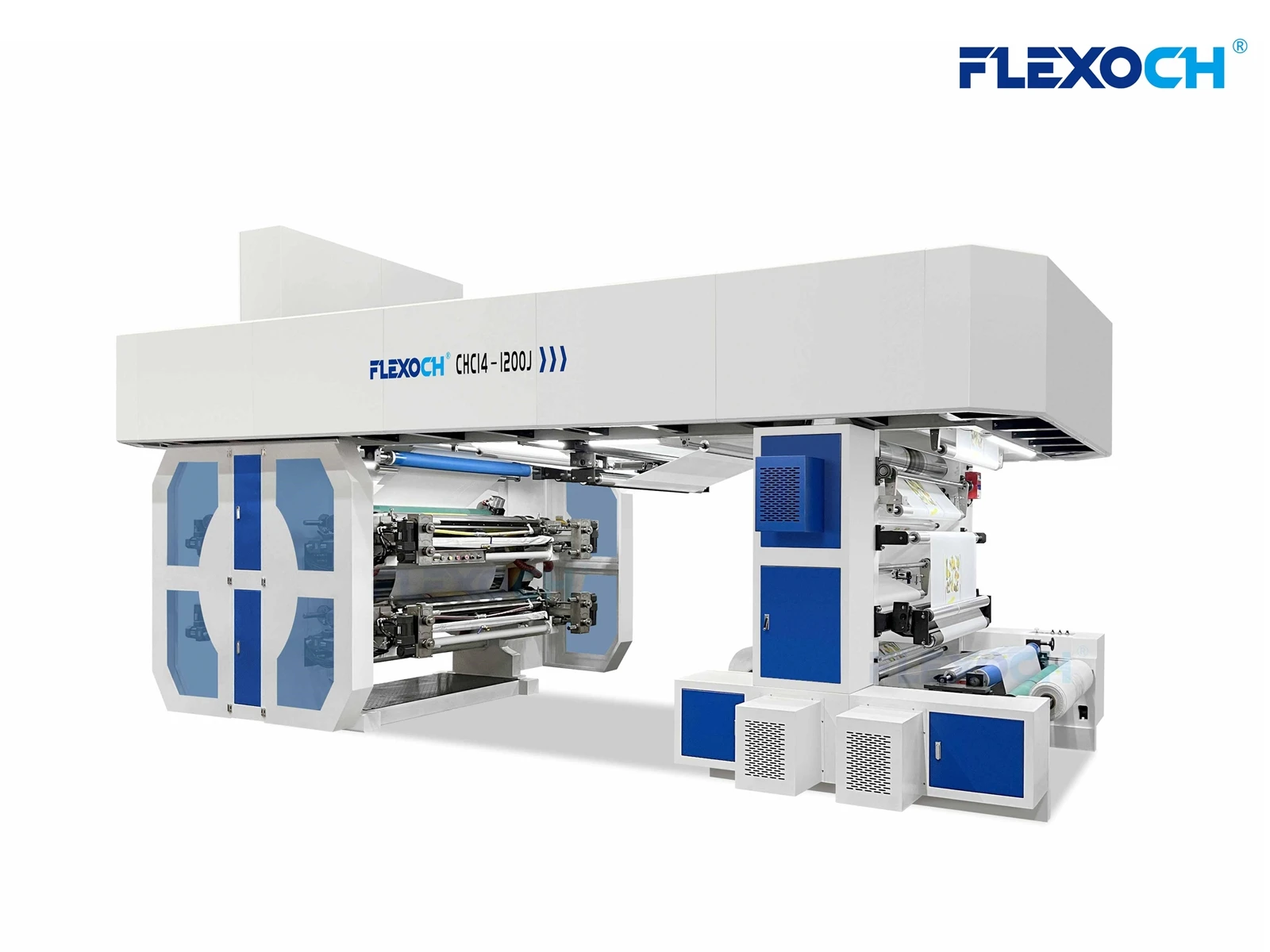
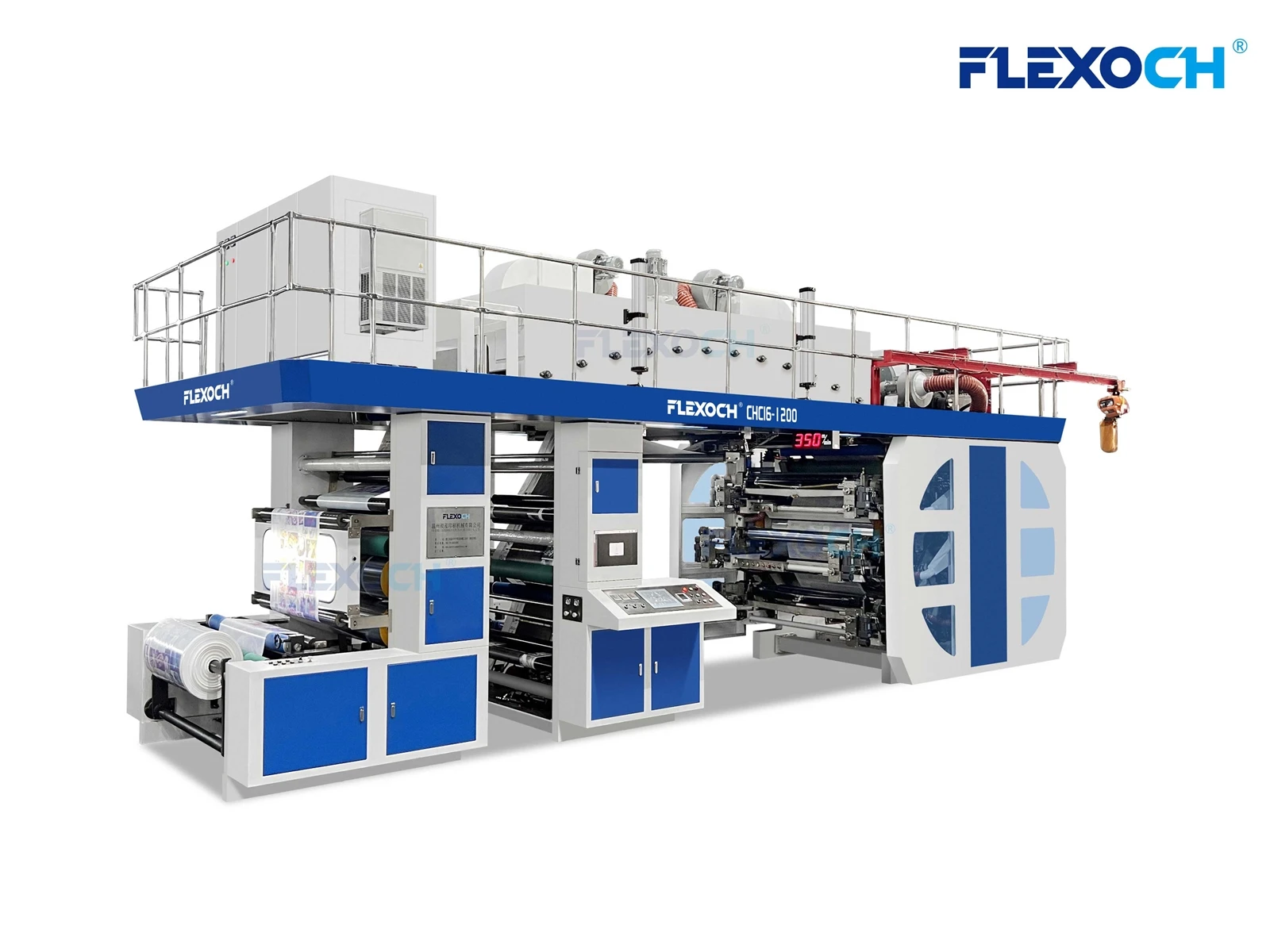
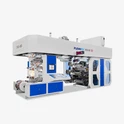
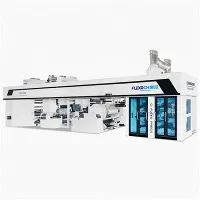
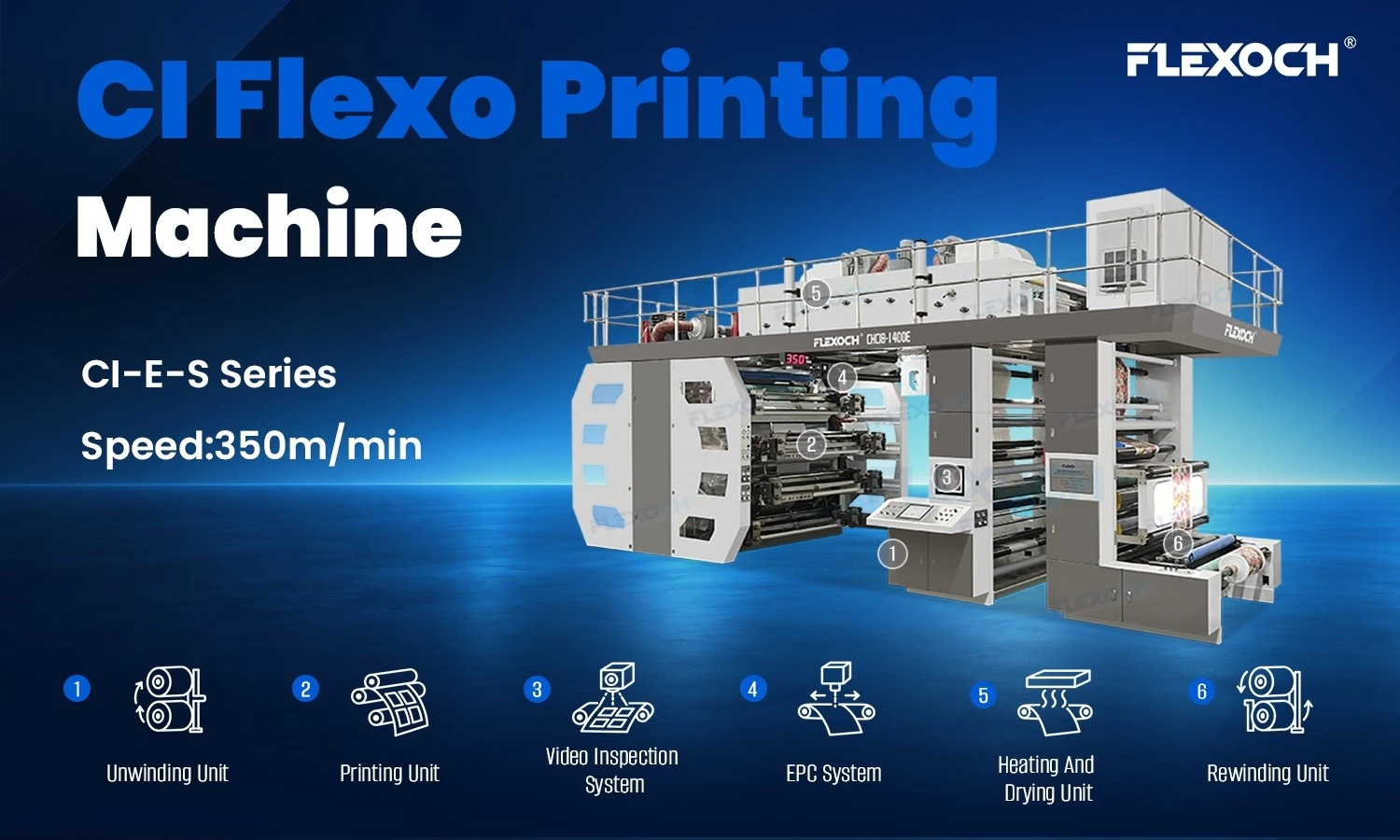
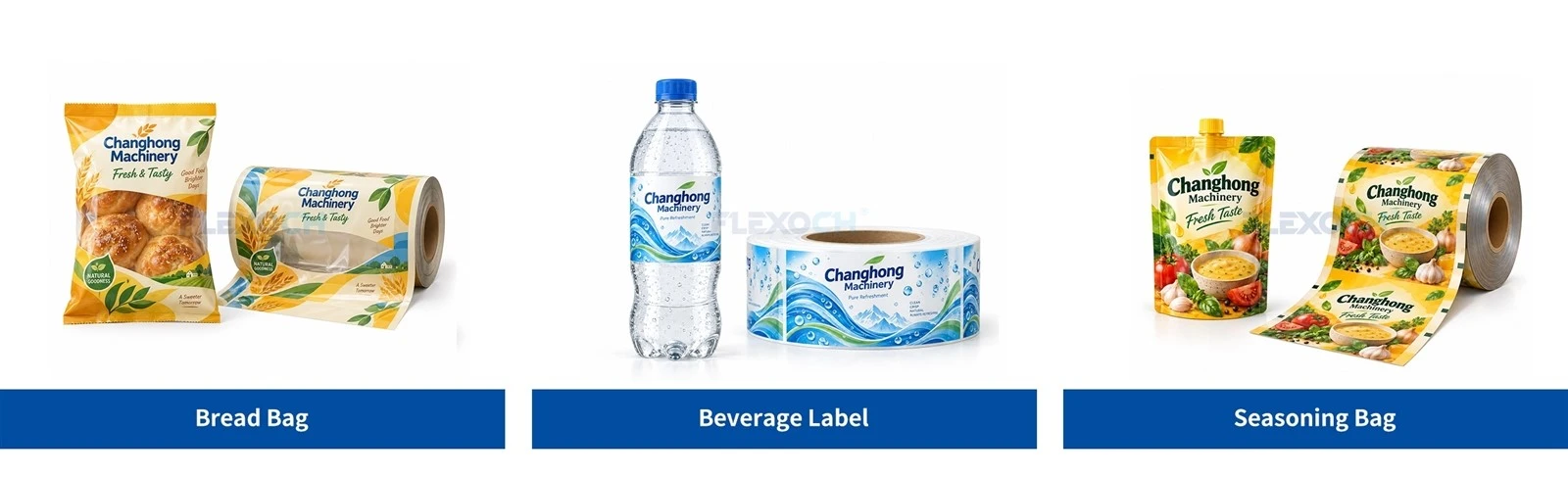
CI flexo printing machine are widely used for flexible packaging films such as BOPP, PE and PET. Plastic films are thin, highly stretchable, and sensitive to deformation. Coupled with the current packaging customers' demands for high speed, multi-color, short runs, eco-friendly inks, and composite quality, this brings multi-dimensional challenges to the equipment. Changhong Flexo Printing Machine Machinery Co., Ltd., as an experienced printing machine manufacturer, will explain in this presentation the challenges that central impression flexo printing machine faces when dealing with plastic films from aspects such as tension control, registration accuracy, substrate compatibility, drying and curing, mechanical structure, ink and corona, and production operation and maintenance.
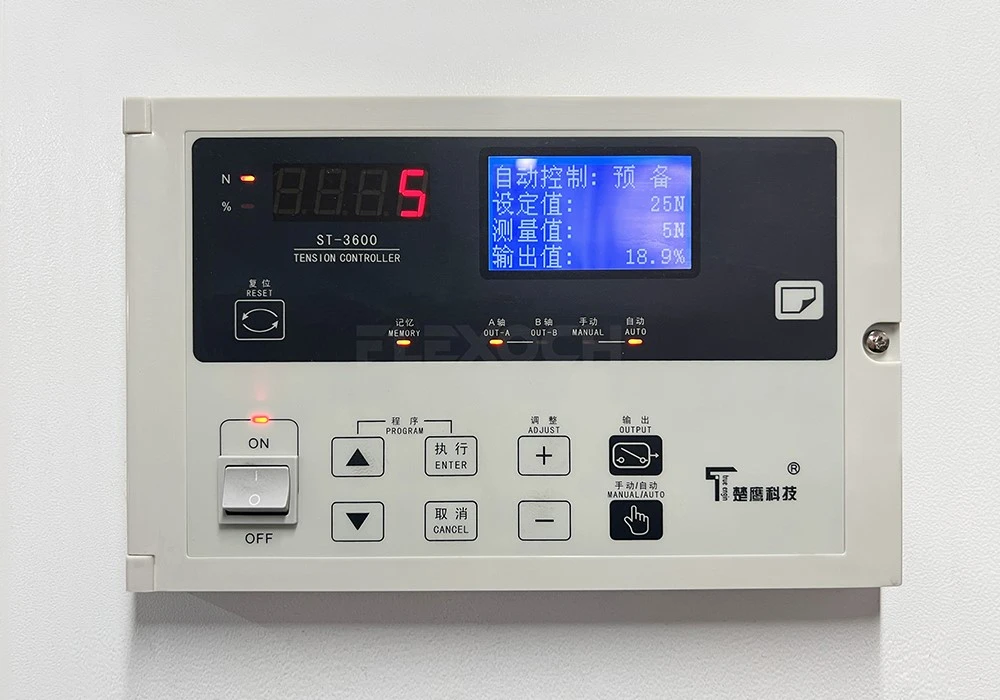
1.Tension control challenge, the core pain point of plastic film
The modulus of plastic film is low and its extensibility is strong. Even a slight fluctuation in tension can cause the film to elongate/contract, directly resulting in registration deviation, image elongation and edge curling.
1. Low-speed single-pass, material feeding, and continuous roll changing tension shock: PE film is particularly soft, and instantaneous tension changes are prone to stretching and deformation; traditional segmented tension is difficult to balance thin PE and high-strength BOPP.
2. Uniformity of full-width tension: The wider the film width, the greater the tension difference at the edges and the middle. This can lead to wavy edges, roll taper, and film surface wrinkles.
3. Tension attenuation in high-speed operation: During high-speed film movement, the friction between the film and the guide roller, as well as wind resistance, bring additional tension disturbances; all color groups of the CI flexo printing machine share a central pressure cylinder, and the free section of the film outside the pressure cylinder is very short, but the tension fluctuations entering and exiting the CI cylinder will be transmitted to all color stations, affecting the chain of multi-color offset printing.
New requirements: Full servo closed-loop tension, taper tension, pre-tension buffering are needed, and tension curves for different film materials (PE tension is much lower than BOPP) should be distinguished.
2. Registration Accuracy Challenges
The advantage of CI flexo printing Machine lies in the plate alignment. However, in the case of plastic film printing, the difficulties have escalated:
1.Dynamic registration drift caused by thermal expansion and contraction: The heat from drying ink and LED UV radiation will cause the plastic film to expand and contract. PE has the characteristics of a low melting point and being prone to softening and shrinking when heated. The drying temperature of the water-based ink cannot be too high; otherwise, the PE film will shrink and wrinkle.
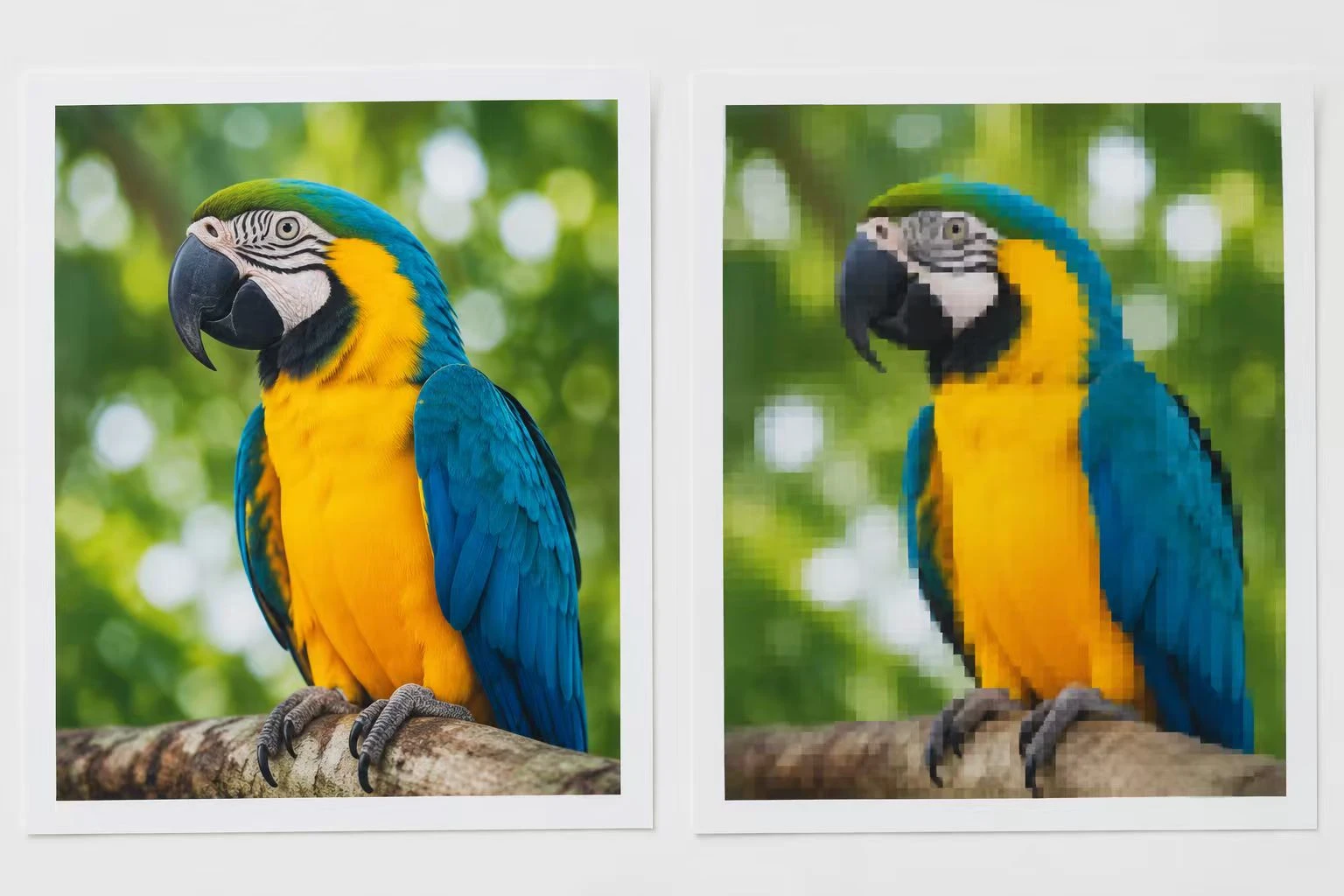
2.Frequent short runs with frequent plate changes: Small orders and multiple versions require re-calibration each time a plate or substrate is changed; traditional manual plate alignment is time-consuming and requires equipment to support rapid and automatic plate alignment.
3. Multi-color overprinting + fine dots: Food packaging requires small dots and gradients. Film stretching causes the dots to elongate and the margins to become blurred; both horizontal and vertical plate alignment must continuously compensate.
4. Continuous roll change (zero downtime) requirement: During roll change, the sudden stretching of the film causes a sudden waste of film, making the response speed of the plate servo extremely critical.
3. Challenges in adapting to rapid switching of multiple substrates
Customers now need to switch between printing various plastic films on a single central impression flexo printing machine: BOPP, PE, PET, and composite films. The characteristics vary greatly:
· PE: Soft, with high stretch and low surface energy;
· BOPP: Good tensile strength, but prone to static electricity;
· PET: Resistant to high temperatures, with low stretch, but high hardness;
Challenge:
1. Pressure adaptation: The indentations between the center press cylinder, the embossing roller, and the printing plate roller vary depending on the type of film. Different films require different pressures; excessive pressure can damage the film, causing orange peel effects, Insufficient pressure will lead to inaccurate results. Frequent material changes require quick pressure memory and independent servo pressure regulation.
2.Static Issues Plastic films are insulators.High-speed web travel builds up substantial static electricity, which attracts dust, creates ink specks and discharge pinholes, and presents fire hazards.PE and BOPP films suffer the most from static. Static eliminators shall be matched to film materials and line speeds.
3. Film surface flatness:The incoming film materials have uneven thickness and wavy edges. Although the center press cylinder of the CI Flexo printing machine supports the substrate,the defects in the incoming materials will magnify printing flaws.
4. Challenges in the drying/curing system, and eco-friendly inks are the biggest variable
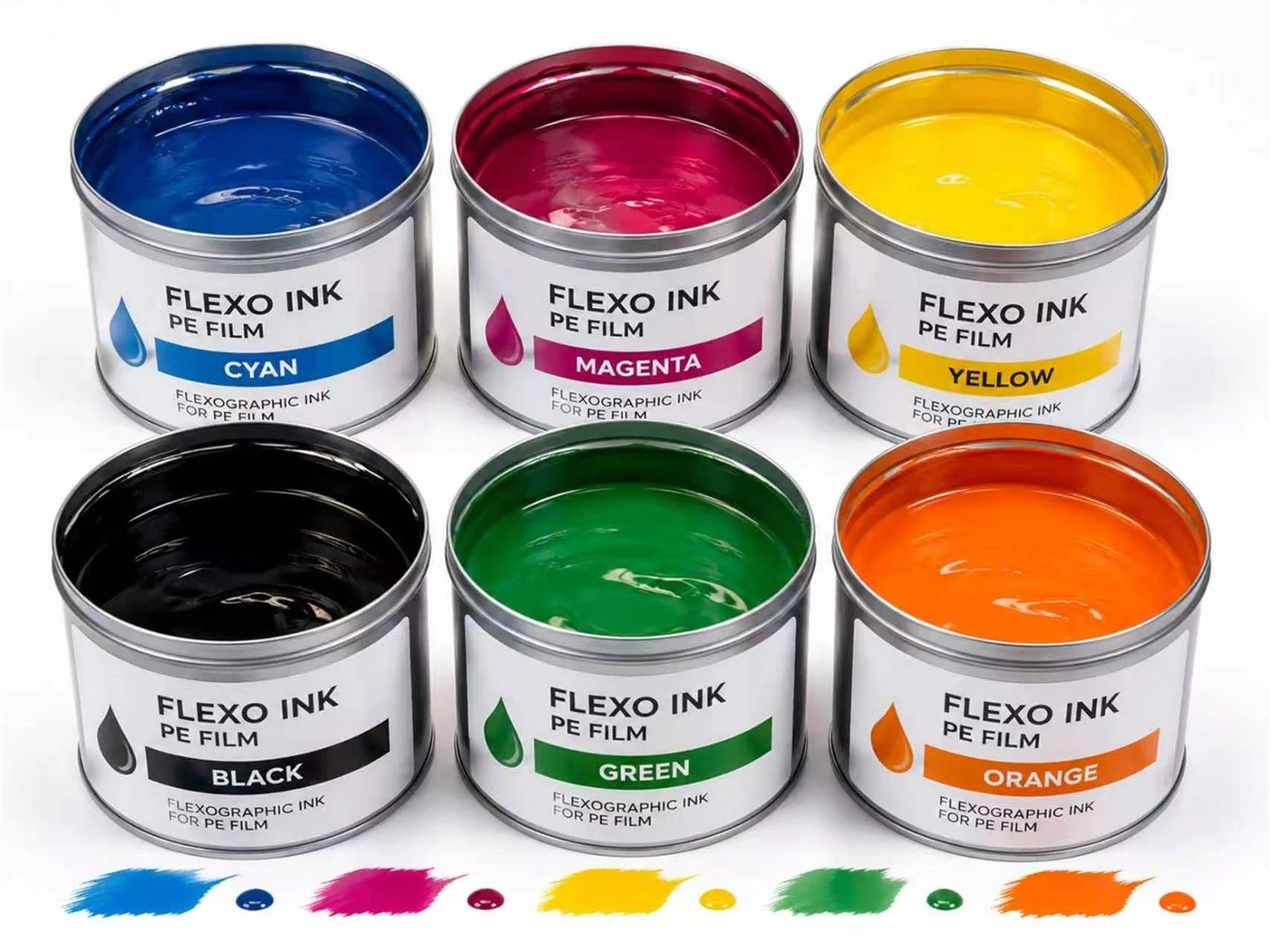
Plastic films have different levels of heat sensitivity and do not absorb ink like paper. Depending on the substrate and application, CI flexo printing machines can use solvent-based, water-based or UV/LED UV flexographic inks, so the drying or curing system needs to be carefully matched to the film and ink.
1.Water-based inks: They can only evaporate moisture through hot air. However, if the hot air temperature is too high → the PE film will shrink and deform; if the temperature is too low → the surface drying will be poor, and subsequent embossing, overprinting will cause dirtiness. Wind volume also needs to be controlled; strong wind will cause the film to shake, resulting in printing offset fluctuations.
2. LED UV inks: They have a fast curing speed, but the UV lamps generate heat and have uneven light intensity; for some plastic films (such as PE), after UV irradiation, the film will become brittle, the surface will crack, and contract; at the same time, ozone control is required, and the adhesion of the ink needs to be considered.
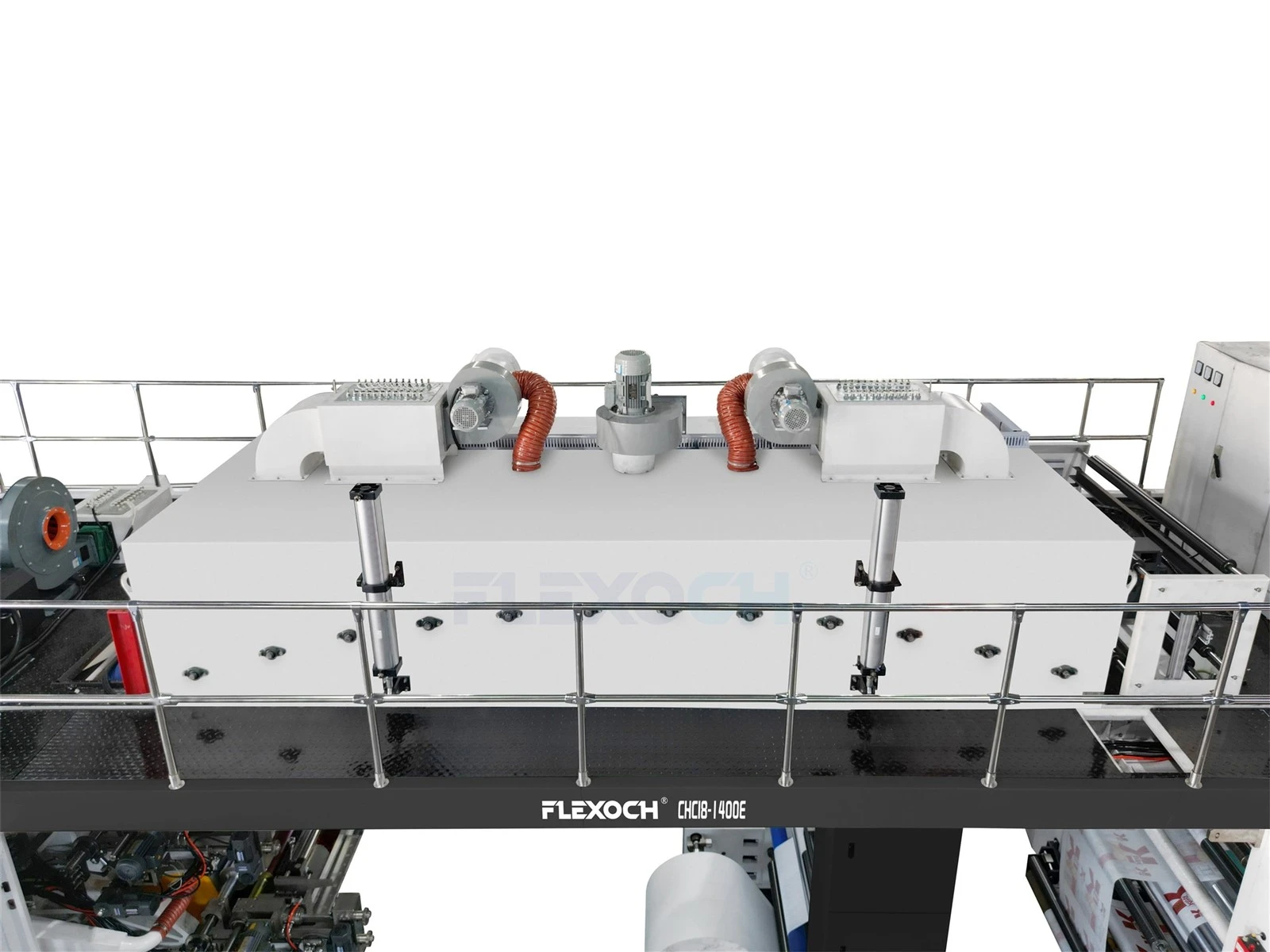
3. Mixed process: Some orders use a combination of water-based and UV inks for printing. The layout of the drying section and energy zoning control become more difficult.
4. Exhaust gas emission: Water-based inks produce a large amount of water vapor and VOCs. A ventilation system is required to match, and the airflow disturbance will affect the stable feeding of the film.
5. Corona and ink adhesion challenges
Plastics are non-polar materials, and it is difficult for inks to adhere:
1. Corona value attenuation: After BOPP/PE is treated with corona, it will attenuate over time; the incoming film's dielectric constant is unstable, and the dielectric value of the same roll of film fluctuates before and after, resulting in local ink loss.
2. On-machine corona requirements: Many customers require central impression flexo printing machine to be equipped with online corona, and secondary corona is added before printing. The difficulty lies in: the film passing through the corona frame at high speed is prone to shaking and breakdown, and the corona power needs to be automatically adjusted according to the speed; after corona treatment, the film surface temperature rises, causing problems of stretching and offset printing.
3. Ink formulation changes: Low migration, food-grade water-based flexo inks have significant differences in wetting properties. The same screen roller, different inks have different transfer amounts, and the equipment needs to have better compatibility with the screen roller and scraper system.
6. Mechanical and system challenges
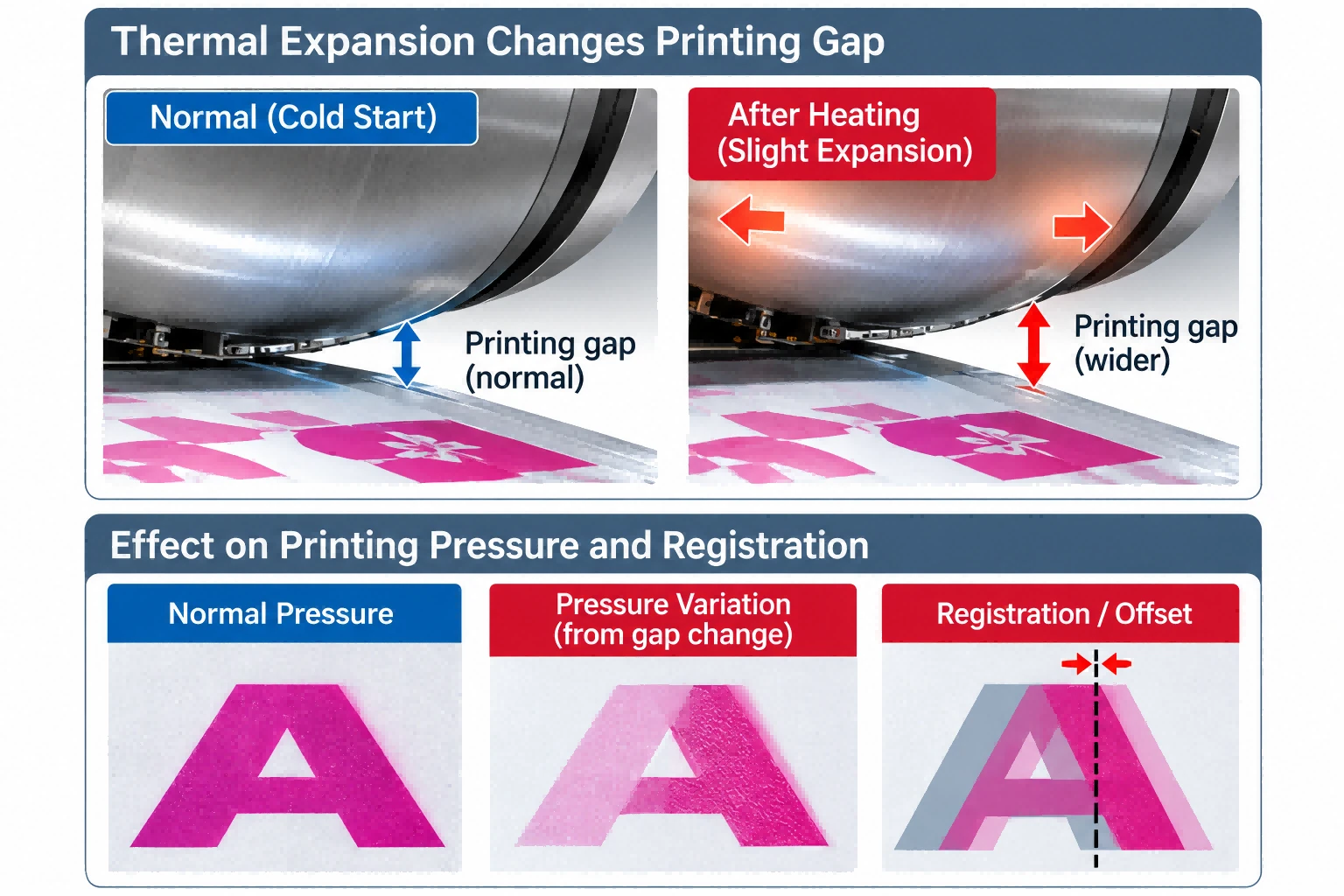
1. Center press cylinder accuracy and thermal deformation: The large press cylinder of CI flexo printing machines continuously heats up, and the slight thermal expansion of the cylinder body will change the printing gap, affecting pressure and offset; the cooling and constant temperature system for the press cylinder needs to be improved.
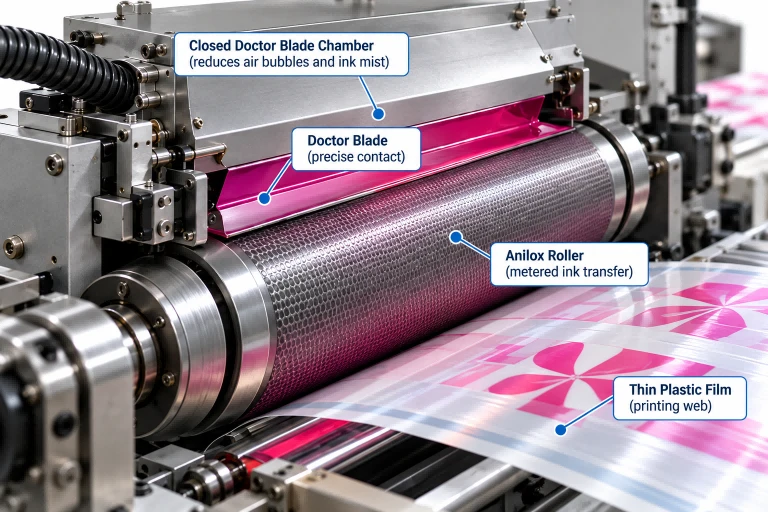
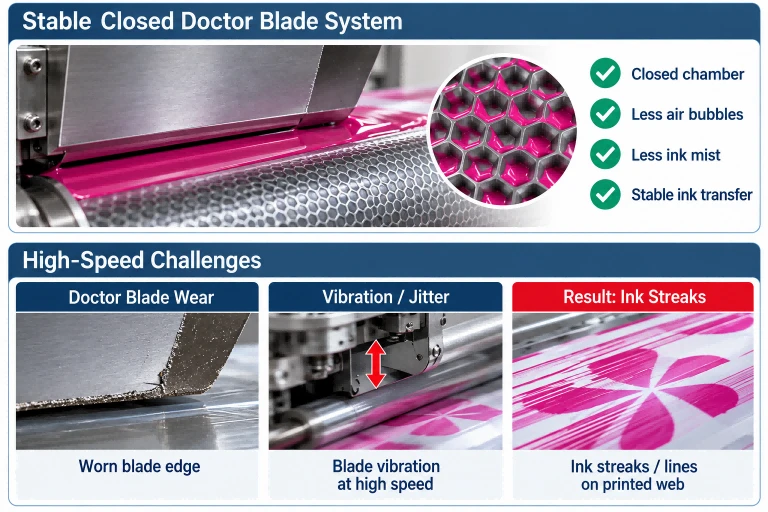
2. Doctor Blade and Anilox Roll System: For thin plastic films with shallow screen printing, a stable closed scrape knife is required to reduce air bubbles and ink mist; at high speeds, the doctor blade wear or vibration will cause ink streaks
7. New challenges brought by production mode (small batch, short delivery time)
1. Frequent color changes and roll changes for short orders: Cleaning the ink path, changing the screen roller, and changing the plate require time. The equipment needs to have quick disassembly of the ink chamber and rapid positioning of the plate holder.
2. Waste rate control: The price of plastic film raw materials is high, and customers require as little waste as possible from the initial film. The requirements for automatic offset, pre-offset, and fault detection (online inspection) are raised.
3. Online inspection integration: The central impression flexo printing machine has a compact space, and visual inspection needs to be added to monitor underprint, offset deviation, and ink spots; the detection signals need to be linked with servo for compensation.
8. Other derivative challenges
· Environmental temperature and humidity: Fluctuations in the temperature and humidity of the workshop directly affect the film's expansion, static electricity, and the drying of water-based inks, and the equipment performance will be affected by the workshop environment;
· Quality after compounding: After printing, the printed film needs to be compounded, and excessive residual solvents in the printing film will cause compound bubbles and insufficient peel strength, and the drying system not only needs to be surface dry but also needs to control residual solvents;
· Energy consumption and compliance: VOC emissions, energy consumption, and safety regulations are improved, and the energy consumption of drying, exhaust, and UV systems is high.
Summary
The main challenge of CI flexo printing on plastic films is maintaining stable web handling and consistent print quality while working with thin, stretchable and heat-sensitive substrates. Different films such as PE, BOPP and PET have different characteristics, which affect tension control, registration, drying and ink adhesion.
To meet these requirements, CI flexo printing machine need precise tension control, stable central impression cylinder temperature, optimized drying systems, effective corona and static control, and accurate printing pressure adjustment. These technologies help maintain stable registration, ink adhesion and production efficiency across different plastic film applications.
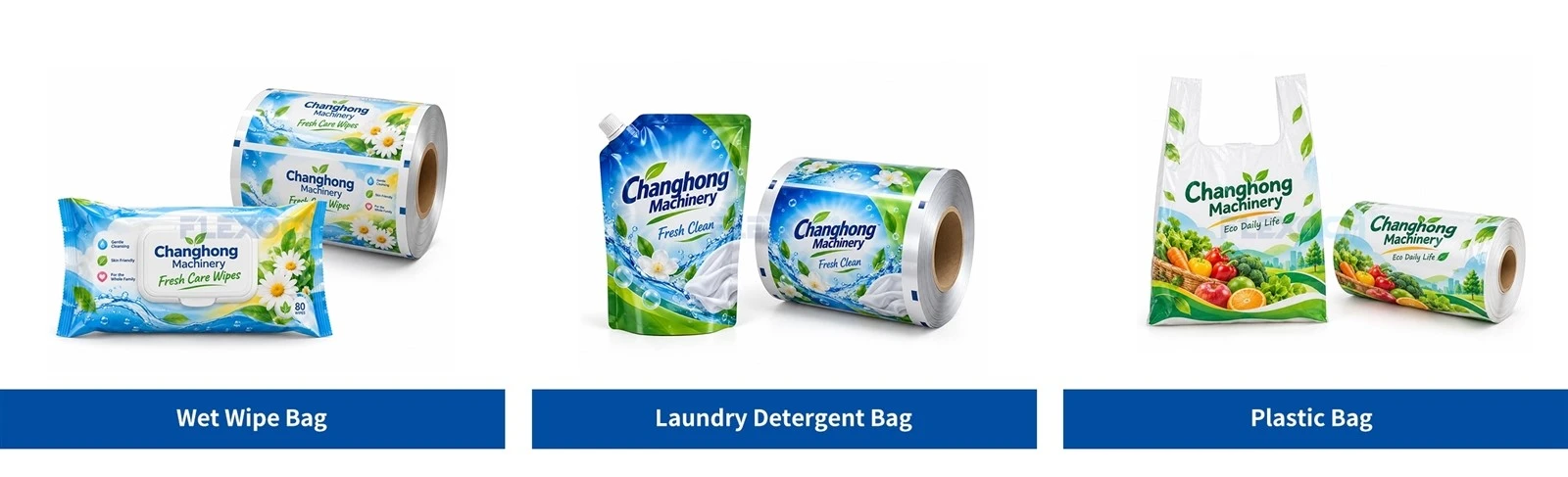
Changhong provides CI flexo printing machines for roll-to-roll printing on PE, BOPP, PET and other flexible packaging materials, with configurations customized according to substrate, printing width, color quantity and production speed.