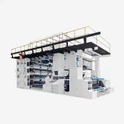
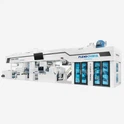
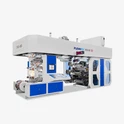
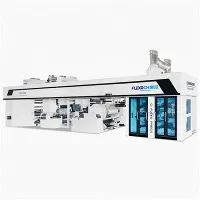
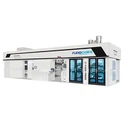
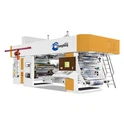
Amidst the wave of upgrades in the packaging and printing industry, ci flexo printing machines have become the preferred equipment for many companies due to their high efficiency, environmental friendliness, and wide applicability. However, faced with a wide array of models on the market, precise selection becomes a key issue for business decision-makers. Web width, color stack, speed, and configuration-four key technical factors-act like the four pillars that collectively determine the performance limits and application potential of a machine.


1. Web width: The foundation for determining production scope
Web width is the maximum width of substrates printed on a machine impression flexo and directly determines the machine's processing capacity and application range. When choosing a machine, consider the types of products you currently and may be working on in the future:
Regular web widths (e.g., 600mm-120mm) are suitable for most label and film packaging production;
Wide web widths (e.g., 1200mm-1700mm and above) are suitable for pre-printed cartons and large-format flexible packaging.
2. Number of Color Units: The Key to Matching Product Color Complexity
The number of color units in a central impression flexo printing machine determines the variety of colors it can print simultaneously. Common configurations include 4 to 8 color units:
Basic products may opt for 4–6 color units to meet needs such as four-color plus spot colors and white base.
For high-precision color reproduction or specialized processes, 8 or more color groups are required, leaving room for subsequent process upgrades.
Technical Specifications
The following are the technical specifications of the high speed CI flexographic printing press
|
Model |
CHCI8-600E-S |
CHCI8-800E-S |
CHCI8-1000E-S |
CHCI8-1200E-S |
|
Max. Web Width |
700mm |
900mm |
1100mm |
1300mm |
|
Max. Printing Width |
600mm |
800mm |
1000mm |
1200mm |
|
Max. Machine Speed |
350m/min |
|||
|
Max. Printing Speed |
300m/min |
|||
|
Max. Unwind/Rewind Dia. |
Φ800mm/Φ1000mm/Φ1200mm |
|||
|
Drive Type |
Central drum with Gear drive |
|||
|
Photopolymer Plate |
To be specified |
|||
|
Ink |
Water base ink or solvent ink |
|||
|
Printing Length (repeat) |
350mm-900mm |
|||
3. Printing Speed: A Key Indicator Affecting Production Efficiency
Maximum printing speed is a direct reflection of the production efficiency of a ci flexo printing machines . Currently, mainstream models can reach speeds of 200-350 m/min, while high-end models can reach 500 m/min. However, it is important to note that speed increases must be commensurate with system capabilities such as overprint accuracy and drying efficiency. Actual production speed is affected by factors such as material type, plate preparation, and operator skill. Focus should be placed on ensuring stability and scrap rate control at high speeds.
Video Introuction
4. Comprehensive Configuration: Laying the Foundation for Equipment Performance
In addition to the three core parameters, the following configuration aspects also play a key role in the actual performance of a flexographic printing press:
Register System: A high-precision automatic register system is essential for ensuring print quality, with particular attention paid to its response speed and web-correction accuracy.
Drying System: Select the appropriate drying method (such as UV, hot air, or infrared) based on the characteristics of the substrate and ink to ensure thorough drying of the ink without affecting the material's properties.
Tension Control: Fully closed-loop tension control effectively ensures registration accuracy and material flatness, especially at high speeds or when processing easily deformable materials such as film.
Intelligent Functions: The addition of features such as automatic registration, automatic cleaning, and intelligent presets significantly reduces setup time and manual operations, improving production efficiency.
Inspection and Maintenance: Integrated online visual inspection systems and predictive maintenance technologies enable real-time monitoring of print quality and proactive detection of potential failures, thereby reducing downtime and production losses.


Selecting the right ci flexo printing machines is a systematic decision that requires balancing technical parameters, budget constraints, production capacity needs, and future development. Only by combining precise technical parameters with practical production requirements can enterprises invest in a tool that enhances quality and efficiency, wins market competition, and truly achieves "Smart Printing for the Future."
Printing Sample