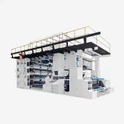
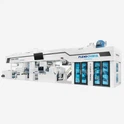
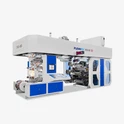
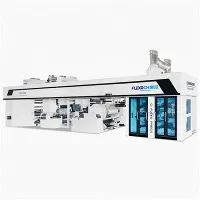
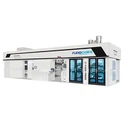
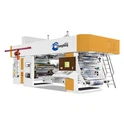
Roll to roll Stack flexo printing machine are highly sought after for their flexibility, fast changeovers, and wide media compatibility. However, how can we fully tap their potential and maximize production efficiency? The following systematically explores comprehensive methods for improving the production efficiency of stack flexo printing machine from four perspectives.


1.Technical Optimization: Laying the Foundation for High-Speed and Stable Operation
Equipment Upgrades and Automation: Introducing automatic registration systems, automatic tension control systems, and remote diagnostics Automatic registration significantly reduces startup waste and shortens machine adjustment time. Stable tension is the foundation for high-speed printing without misalignment or wrinkling. Remote diagnostics enable quick troubleshooting, minimizing downtime for stack type flexo presses.
Application of Preset Functions: Fully utilize the data storage capabilities of the control system. Pre-input parameters such as printing pressure, tension settings, and registration data for different orders into the system. During subsequent production, a single click can quickly adjust the equipment to near-optimal conditions, greatly reducing preparation time.
Matching High-Performance Peripheral Equipment: Production efficiency depends not only on the printing host. Upgrading to efficient anilox roller cleaning equipment, using high-quality ink circulation pumps, and viscosity controllers ensure stable ink transfer and quick color changes, reducing cleaning time and ink waste.


2.Process Innovation: Streamlining Workflows and Enhancing Quality
Standardized Operating Procedures: Establishing standard operating procedures for every step-from order receipt, material loading, plate mounting, and machine adjustment to cleaning-is essential for ensuring the efficient operation of stack flexo printing machine. Clear division of labor and standardized actions effectively reduce human errors and operational delays, making the entire production process as smooth and efficient as an assembly line.
Implementing the "Quick Mold Change" Concept: By preparing printing plates, anilox rollers, and inks in advance, using unified sleeve specifications, and optimizing tool placement, internal tasks can be converted into external tasks as much as possible, with the goal of achieving rapid job changeovers.
Optimized Selection of Materials and Consumables: Choose inks that dry quickly, plates with stable performance, and durable doctor blades. Using splicing machines to achieve non-stop roll changes avoids the need to stop and restart the machine for each roll change, effectively increasing continuous operation time.


3.Management Efficiency: People-Oriented and Data-Driven
Professional Skills Training and Incentives: Even the most advanced equipment requires skilled operators. Regularly provide systematic training for machine operators and technicians to ensure they not only know how to operate the machines but also understand the principles, can perform adjustments, and are proficient in maintenance.
Scientific Production Scheduling: The planning department should strive to schedule orders with the same substrate, width, or color series together whenever possible. This minimizes the frequency of substrate changes, ink tray cleaning, and anilox roller washing, maximizing efficiency through batch production.
Video Introduction
4.Predictive Maintenance: Preventing Issues and Ensuring Continuous Production
Establishing a Comprehensive Preventive Maintenance Plan: Strictly adhere to the equipment manual's requirements by regularly inspecting, lubricating, and maintaining key components such as gears, bearings, pneumatic systems, and electrical circuits. This is crucial for ensuring the stable operation of stack type flexographic printing press and avoiding production interruptions caused by sudden failures.
Condition Monitoring and Data Analysis: Sensors monitor equipment parameters such as vibration and temperature, regularly analyzing operating data to predict potential failure points. This shifts from "after-the-fact repairs" to "preemptive maintenance," eliminating unplanned downtime in the bud.


In summary, improving the productivity of stack type flexo presses is a systematic project. It doesn't rely on a single "magic technology" but rather requires the organic integration of advanced technical equipment, lean process flows, scientific management methods, and rigorous equipment maintenance. By continuously optimizing these four pillars, companies can significantly reduce production costs, shorten delivery cycles, and improve product quality, ultimately gaining a sustainable advantage in a rapidly changing market.
Printing Sample