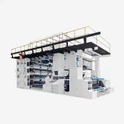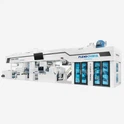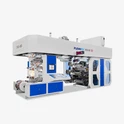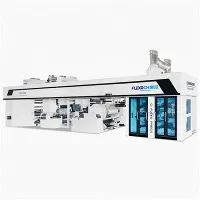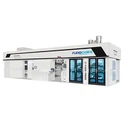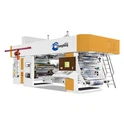
In the packaging and printing industry, register accuracy is a core quality indicator, directly impacting product yield and brand value. Micron-level deviations can overshadow exquisite graphics and lead to the scrapping of entire batches, resulting in lost time and money. Traditional flexographic printing presses have long been plagued by register deviation. However, the Gearless CI Flexo Printing Press, through its full-servo technology strategy, reshapes printing accuracy standards and achieves stable register.


I. Main Causes of Registration Deviations in Traditional Machines
Cumulative errors in the mechanical transmission chain: Traditional machines rely on a single mechanical mainshaft to drive all color units. Wear and deformation of components such as gears and linkages accumulate along the transmission chain, causing misregistration between color units. This error expands with the equipment's years of use.
- Limitations of gear meshing: Gears, as the core component of traditional transmission, inherently have unavoidable backlash issues. During equipment start-stop or direction changes, reverse idle travel easily occurs, causing a phase lag in the plate cylinder. Long-term use further wears down the gears, reducing transmission accuracy.
- Lag in compensation adjustments: Traditional registration adjustments are mostly manual or semi-automatic, with slow response and low accuracy. When registration deviations are detected, operators need to make repeated micro-adjustments based on experience, which is not only time-consuming and labor-intensive but also incapable of achieving "real-time correction" in high-speed production.


- Poor material adaptability: When the substrate expands or contracts due to temperature, humidity, or tension changes, traditional mechanical systems cannot quickly adjust parameters, passively accepting registration deviations.
It is precisely these inherent issues rooted in mechanical transmission principles that have catalyzed a paradigm shift in printing technology. The core advantages of the next-generation gearless all-servo technology are evident in the highly efficient and simplified transmission logic illustrated below:

Paper Gearless Flexo printing Press Material Feeding Diagram
- Decentralized Drive: Each unit is directly driven by an independent servo motor, physically eliminating "cumulative errors" and "gear backlash."
- Electronic Virtual Main Shaft: High-speed network communication replaces the traditional mechanical long shaft, achieving nanometer-level synchronization and laying the foundation for "real-time compensation."
- Digital Foundation: This architecture can directly respond to real-time data such as tension and material variations, enabling global adaptive control.
Thus, through fundamental architectural innovation, it becomes possible to comprehensively resolve registration deviations. The full benefits of this system will be elaborated in the following sections.
II. Core Solutions of Gearless All-Servo Technology
Full-Servo Gearless CI Flexo Printing Press completely abandon the traditional mechanical transmission system. Each printing unit is equipped with an independent high-precision servo motor, combined with an intelligent central control system, building a full-process accuracy assurance system of "prevention-control-correction." Its core strategies can be summarized into the following four points:
- Independent Servo Drive to Eliminate Mechanical Errors
The mechanical main shaft and transmission gears are eliminated. Each color station is directly driven by an independent servo motor (for both the plate roller and anilox roller). This physically avoids cumulative errors in the transmission chain and gear meshing issues, ensuring the operational independence of each color station.
<


- Full-Closed-Loop Synchronous Control
High-resolution encoders are used to real-time collect data on the position, speed, and phase of servo motors. The central controller replaces the mechanical main shaft with an "electronic virtual main shaft", achieving nanometer-level synchronous control and ensuring synchronized, delay-free operation of all color stations.
- Real-Time Detection and Adaptive Compensation
Equipped with high-definition cameras and an automatic registration system, it continuously monitors registration marks. Upon detecting a deviation, it drives the servo motor for fine adjustment within milliseconds. Meanwhile, it tracks changes in substrate expansion/contraction and automatically commands color stations to make synchronous adjustments to adapt to material characteristics.
- Precise tension control:
Independent servo control of the unwinding, rewinding, and traction rollers allows real-time adjustment of motor speed to maintain stable substrate transmission tension, avoiding registration deviations caused by tension fluctuations.


III. Comprehensive Benefits of Gearless CI Flexo Press
- Cost reduction and waste minimization: High initial registration accuracy shortens machine preparation time and reduces waste of substrate, ink, and other materials. The gearless structure lowers equipment failure rates and reduces maintenance costs by over 30%.
- Efficiency improvement: Automated operations reduce reliance on manual labor, increasing production speed by 15%-20% compared to traditional machines. Support for seamless diameter adjustments reduces job changeover time to one-third of that of traditional machines, enhancing order response speed.
- Quality assurance: Registration accuracy is consistently maintained within ±0.01mm, meeting the demands of high-end packaging and helping companies expand into premium markets while enhancing brand premium.
Video Introduction
Conclusion
The Gearless flexographic printing machine are not merely a technological iteration but a complete of traditional printing machinery principles. By addressing registration deviation issues through four core strategies, the Gearless CI Flexo Printing Press offer advantages in cost reduction, efficiency improvement, and quality enhancement. For modern printing enterprises, this technology is key to solving traditional challenges, achieving intelligent upgrades, and enhancing market competitiveness.
Printing Sample