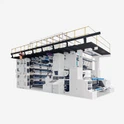
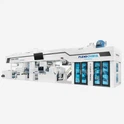
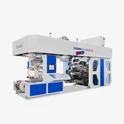
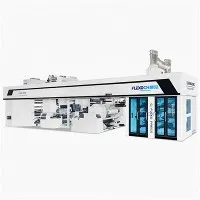
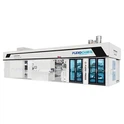
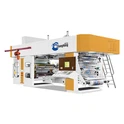
As environmental rules and food packaging safety standards keep getting stricter, flexible packaging producers need to look beyond print speed and image quality when investing in a new CI flexographic printing machine.
For snack packs, frozen food pouches, dairy packaging and other flexible food packaging jobs, equipment selection also needs to factor in ink compatibility, VOC control, drying performance, energy use and waste handling.
A CI flexo printing machine built for food flexible packaging must deliver consistent print results while supporting cleaner production, and keep material waste and energy consumption in check.
Thanks to its central impression cylinder design, steady web handling and multi-color printing capability, this type of press works well for films like PE, PP, PET and BOPP widely used in flexible packaging.

1.Pick a CI Flexographic printing machine That Works With Low-VOC Inks
Your ink choice makes a real difference when building sustainable food packaging print workflows. Old-school solvent inks release VOCs as they print and dry. Before you settle on a machine, double-check that it can run water-based, low-VOC or other specialty ink types you plan to use.
What to look for on the machine: Closed doctor blade assembly: Keeps ink sealed away from open air, slows solvent evaporation and stops ink from going to waste mid-run. Solid ink circulation: Feeds ink smoothly to the print station, so you do not throw away material caused by uneven ink laydown. Flexible ink supply design: Built to work with your chosen ink, your film stock, print method and daily output targets. Exhaust outlet for external treatment: Gives you a point to hook up VOC collection and filtration gear.

For food packaging runs, the closed doctor blade is well worth prioritizing. It keeps ink transfer consistent and cuts down on fumes inside the production space.
Do not make the common mistake: simply using low-VOC ink does not check all the boxes for food contact compliance. You still have to look at how the package is built, follow local rules, and account for how the printed surface will touch food.
2. Prioritize Reliable Drying and Low-Migration Print Processes
For food flexible packaging, ink drying is not just about speeding up output. It directly controls residual solvent levels, ink transfer and the risk of substance migration.
When comparing CI flexographic printing machine, pay close attention to how the drying system pairs with your chosen ink.
Recommended features:
- Independent drying zone controls: Let operators tune drying conditions for different ink types and film thicknesses.
- Adjustable hot air temperature and airflow: Delivers proper drying without wasting extra energy.
- Strong exhaust ventilation: Pulls solvent-laden air out of drying sections efficiently.
- Stable web tension control: Keeps film moving evenly through print and drying stations.
A properly sized drying system delivers consistent ink curing for PE, BOPP and PET films and prevents issues from under-drying.
Packaging producers also need to test residual solvents and migration risks from inks, adhesives and other packaging layers.
One important note: the press itself cannot guarantee low-migration or food-contact compliance. Final safety relies on the full packaging structure, ink formula, adhesive selection, curing settings and formal migration testing.


3. Go for Servo Drives and Automatic Register to Cut Material Waste
Material waste is a major concern for food packaging factories aiming for greener operations.
During multi-color runs, register drift, film stretch and frequent manual adjustments drive up consumption of PE, PET, BOPP and other packaging films.
A CI flexo printing machine with solid tension control and automatic register helps solve this problem.
Key features to check:
- Servo drive system: Enables precise motion and smooth, consistent printing.
- Automatic register control: Cuts film waste during startup and job adjustments.
- Closed-loop tension management: Maintains steady web tension and reduces substrate stretching.
- Rigid central impression cylinder: Supports the film through every print station and preserves register accuracy.
The central impression cylinder is one of the biggest advantages of CI flexographic printing machine.
As the film passes each print unit, it stays pressed against the same large impression drum. This design minimizes substrate movement and color-to-color dimensional shift.
Consistent web handling matters most for thin PE, BOPP and PET films used in food packaging, to hold uniform print quality.
If you run frequent job changes or multi-color orders, automatic register and servo control will slash startup waste and raise material utilization.


4. Select Energy-Saving Drying and Drive Packages
Energy use shapes both operating costs and the environmental footprint of flexible packaging print shops.
On a CI flexo printing machine, the biggest power consumers are the drive system, hot air dryers, exhaust fans and auxiliary components.
Instead of only focusing on the machine's top speed, assess its real energy consumption under your normal production conditions.
Recommended features:
- High-efficiency servo motors: Boost motion accuracy and cut power loss from mechanical transmission.
- Tunable drying layout: Adjust heat and airflow to match ink type and line speed.
- Optimized exhaust system: Sustains proper air circulation and drying conditions.
- Heat recovery options: Worth considering if your production schedule and local environmental codes allow it.
For long-running food packaging orders, fine-tuning drying temperature, airflow and exhaust volume helps avoid unnecessary energy draw.
You also need to balance line speed, drying capacity and substrate traits. A well-matched setup usually works better than simply buying the fastest press available.
5. Look at Automatic Cleaning and Waste Ink Management
Cleaning cycles and routine maintenance create waste ink, wash fluids and solvent-contaminated waste.
For shops pursuing cleaner production, cleaning functionality should be part of your purchasing checklist.
Recommended features:
- Automatic cleaning sequence: Reduces manual work and delivers more consistent cleaning results.
- Metered cleaning liquid supply: Prevents overuse of cleaning chemicals.
- Closed ink circulation design: Limits ink exposure and material loss.
- Easy ink recovery and collection: Simplifies proper handling of waste ink.
For water-based ink applications, wash wastewater still carries pigments, resins and other organic pollutants. It must be captured and treated following local environmental rules and cannot be discharged directly.
For solvent-based ink runs, waste solvents and contaminated materials require sorting and regulated disposal.
A good cleaning configuration helps maintenance teams work faster while cutting excess cleaning fluid consumption.
Video Introduction
6. Preferred CI Flexo Printing Machine Setup for Food Flexible Packaging
When you source a CI flexographic printing press for food packaging, align its configuration with your substrate types, ink systems, target speed and environmental compliance requirements.
Below is a quick reference for priority features:
|
Key Configuration |
Main Benefit |
|
Closed doctor blade system |
Reduces ink exposure and ink waste |
|
Servo drive system |
Improves motion control and print stability |
|
Automatic register |
Cuts startup waste and manual register tweaks |
|
Closed-loop tension control |
Keeps film transport stable |
|
Adjustable drying system |
Supports different inks and substrates |
|
Exhaust collection port |
Enables VOC capture and treatment |
|
Automatic cleaning system |
Boosts cleaning efficiency and limits cleaning fluid use |
If you mainly print PE, BOPP, PET and other roll films, a full-servo CI flexo printing machine is a strong option when you need tight register, flexible production and reliable high-speed runs.
For jobs with frequent design changes, thin films or multi-color food packaging, automatic register, precise tension control and a well-calibrated drying system are non-negotiable.
Your final setup should be based on your actual substrates, ink choice, production capacity and local environmental rules.
7. Critical Checks Before Buying a CI Flexo Press
- Substrate compatibility Can the press handle your materials, such as PE, BOPP, PET, CPP and laminated films?
- Ink compatibility Do the ink supply and print units support your chosen water-based, solvent-based or specialty inks?
- Drying performance Can the drying system deliver enough temperature, airflow and exhaust capacity for your ink and film?
- Print stability Does the machine offer dependable tension control, automatic register and consistent multi-color printing?

5.Environmental compliance Can the line connect to VOC capture, waste ink recovery and wastewater treatment equipment?
6.Future production flexibility Can the setup adapt to new packaging materials, artwork, speed targets and updated environmental rules?
Working through these checks helps you pick equipment that fits your long-term production and sustainability goals.
Conclusion: Find the Right CI Flexographic printing machine for Greener Food Packaging Production
Picking a suitable CI flexographic printing machine for food flexible packaging means you have to weigh print quality, ink compatibility, drying performance, power consumption and waste handling all together.
If you produce snack wrappers, frozen food bags, dairy packaging and other similar flexible food packs, these machine functions will bring you the greatest practical benefits:
- Closed doctor blade units to keep ink use well managed
- Servo drive setups for steady, accurate machine running
- Automatic register paired with tension control to cut film waste
- Versatile high-efficiency drying units that work with various inks
- Auto-cleaning functions to simplify regular upkeep
- Matching exhaust outlets to meet environmental compliance needs
Changhong manufactures CI flexographic printing press built for flexible packaging work. Our machines run roll materials such as PE, PP, PET and BOPP.
We offer configurable machines, so producers can select a print solution matching their material specs, print requirements, output volume and environmental management needs.
Get in touch with Changhong to talk through your food flexible packaging printing needs and configure a suitable flexo printing machine for your line.


Q1: Which materials can a CI flexographic printing machine print for food flexible packaging?
A: CI flexographic printing machine are commonly used for PE, PP, BOPP, PET, CPP and laminated flexible packaging films. The suitable machine configuration depends on material thickness, web width, printing colors and production requirements.
Q2: Is a gearless flexo printing machine suitable for food packaging production?
A: Yes. A full servo CI flexo printing machine is suitable for multi-color food packaging film printing, particularly when high registration accuracy, stable web tension and flexible production are required. Independent servo control also supports precise adjustment during different production runs.
Q3: How can a CI flexo printing machine reduce material waste?
A: Automatic registration, servo drive and closed-loop tension control help reduce startup waste, registration deviations and film stretching. The central impression cylinder structure also provides stable substrate support during multi-color printing.
Q4: What machine features help cut material waste in food packaging printing?
A: Automatic registration, servo drives and closed-loop tension control reduce startup waste, registration errors and substrate stretching during multi-color printing.
Q5: What helps these presses bring down VOC emissions?
A: Closed doctor blade assemblies, low-VOC inks, effective exhaust capture and compatible VOC treatment equipment work together to reduce VOC emissions during printing.