PP Woven bags serve as the primary packaging for bulk materials including grain, fertilizer, building materials and animal feed, with steady global market demand. Even so, many packaging manufacturers struggle with persistent printing challenges. PP woven substrates feature high tensile strength and porous, uneven surfaces, which often trigger registration shift, insufficient ink coverage, ink bleeding and poor colour fastness.
Many orders require graphics and markings on both sides of the bag. Traditional single-sided flexo printing demands a second run through the press. This process drives up labour costs and material waste. More importantly, stretching errors introduced during the second pass raise scrap rates significantly. Meanwhile, today's orders trend toward small batches and diverse designs. Slow job changeover and unstable equipment performance directly squeeze profit margins.
Many buyers only compare price and maximum speed when shopping for a 4-color flexo printing machine. They overlook core evaluation criteria: substrate compatibility, tension management, double-sided printing capacity and long-term operational stability.
For PP Woven bag manufacturers that frequently receive orders requiring double-sided 4-color graphics, a 4+4 color flexo printing machine is the preferred solution. It supports standalone single-sided 4-color production as well as simultaneous front-and-back 4+4 printing, and is engineered specifically for PP woven substrates.

I. Core Selection Criteria for PP Woven bag Flexo Printing machine
PP woven fabric behaves very differently from conventional flexible packaging films. It is elastic and porous with an irregular surface. Selection criteria for general soft-packaging flexo printing machine cannot be applied directly. A qualified 4 color flexo printing machine for PP Woven bags must meet four critical requirements:
- Stable registration performance The substrate is prone to elongation. Stack presses feature a long web path, making multi-colour registration vulnerable to deviations caused by speed fluctuations. A central impression (CI) cylinder design delivers the most reliable solution for PP Woven bag printing. The web runs tightly against the large central drum, limiting substrate stretch and minimising registration errors.
- Double-sided printing capability A machine limited to single-sided 4-color printing has narrow application. An increasing number of fertilizer sacks, grain bags and valve bags require printed markings on both faces. The 4+4 configuration completes front 4-color and back 4-color printing in a single pass, eliminating rewinding and reprinting.
- Tension control and ink compatibility The system must include segmented closed-loop tension control, paired with corona pre-treatment and hot-air drying modules. This addresses common woven-fabric issues: excessive ink penetration, weak ink adhesion, slow drying and blocking after winding.
- Efficient job changeover and low maintenance cost Factories handling small, scattered orders need servo synchronisation, recipe memory and quick-change structures to reduce makeready time for operators. Standardised spare parts and responsive after-sales support are also essential for manufacturers serving both domestic and export markets.
Many buyers ask: Can a cheaper standard 4 colour flexo printing machine work? If all your orders are single-sided, high-volume and fixed designs, a stack press can meet basic requirements. But once you take double-sided jobs, variable specifications or high-quality orders, the accumulated losses from extra labour, scrap and downtime for reprinting will far exceed the price difference between equipment models.

II. Changhong 4+4 Color Flexo Printing Machine for PP Woven Bag Printing
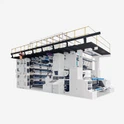
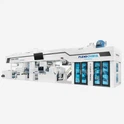
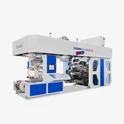
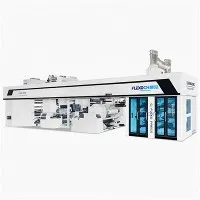
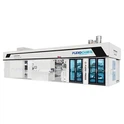
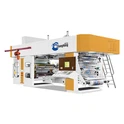
Our 4 colour flexo printing machine adopts the proven CI central impression architecture. Eight colour stations surround the central drum, with independent control for the front four colours and reverse four colours. One machine can run single-sided 4-color jobs, or activate the web turning mechanism to complete 4+4 double-sided printing in one pass. This dual-purpose design supports flexible order switching.
1. Stable Registration with CI Architecture
The rigid central impression cylinder keeps PP woven fabric close to the drum surface, reducing web stretching and registration errors. Combined with independent servo drives and closed-loop registration control, the machine maintains accurate overprinting during high-speed operation and acceleration or deceleration. The one-pass 4+4 process also avoids registration errors caused by secondary feeding.
2. Improved Ink Adhesion and Drying
The inline corona treatment improves surface energy and ink adhesion, helping reduce ink penetration. Independent segmented hot-air drying channels allow each colour station to adjust airflow and temperature separately. The system supports water-based flexo inks and produces durable prints with better resistance to fading and scuffing.

3. Multi-Zone Tension Control for Consistent Printing
Closed-loop tension control monitors the unwinding, printing, turning and rewinding sections independently. Floating rollers compensate for tension changes, helping prevent wrinkles, stretching and inconsistent bag lengths. Recipe storage, ceramic anilox rolls and quick-change plate bases simplify repeat orders and reduce changeover time.
4. Flexible Configuration for Different Production Needs
The Changhong 4-color flexo printing machine supports customized working widths for different PP woven bag sizes. Optional non-stop dual-station unwinding/rewinding and inline vision inspection help reduce downtime and manual inspection. Modular construction, standardized spare parts, remote commissioning and online operator training support overseas customers.


III. Selection Guide: When to Choose the Changhong CI Flexo Printing Machine
Best suited for:
- Regular production of double-sided PP woven bags, such as fertilizer bags, valve bags, seed sacks and feed bags, as well as single-sided printing jobs
- Manufacturers who need one machine for both single-sided and double-sided printing
- PP woven fabric printing where registration accuracy and colour consistency are important
- Production involving frequent design changes and different bag specifications
- Domestic and export orders using water-based inks
A standalone single-sided flexo printing machine may be more suitable if:
- All orders involve single-sided printing
- Production mainly consists of large batches with fixed designs
- There is no current requirement for double-sided printing and investment cost is a major consideration
|
Item |
CI Flexo Printing Machine |
Stack Flexo Printing Machine |
|
Drive System |
Central drum with Gear drive |
Servo / Synchronous Belt Drive |
|
Double-sided Registration Accuracy |
±0.1 mm |
±0.15 mm |
|
Running Speed |
Up to 350 m/min, depending on configuration |
Up to 200 m/min |
|
Initial Investment |
Higher |
Lower |
|
Suitable Orders |
Double-sided PP woven bags requiring consistent registration and print quality |
General PP woven bags and multi-specification printing jobs |

Q1: Can a CI flexo printing machine print both sides of PP woven bags?
A: Yes. A CI flexo printing machine equipped with a web turning system can print both sides of PP woven fabric in one pass. This allows manufacturers to complete front-side and reverse-side printing without a separate second printing run, helping reduce labour costs and material waste.
Q2: What materials can Changhong flexo printing machines print on?
A: Changhong flexo printing machine are designed for a wide range of roll materials, including PE, PP, BOPP, PET and CPP films, paper, nonwoven fabrics, aluminium foil, PP woven fabric and laminated materials. Machine configurations can be customised according to substrate properties, printing requirements and production applications.
Q3: How do I choose the right 4 Color Flexo Printing Machine for my factory?
A: Choosing the right 4 color flexo printing machine depends on your printing materials, working width, production speed, printing quality requirements and order volume. A CI flexo printing machine is suitable for applications requiring stable substrate support and consistent registration, while a stack flexo printing machine offers a flexible solution for general printing applications. Buyers should also consider future production needs and machine automation when making an investment decision.
Q4: What factors affect the printing quality of a flexo printing machine?
A: Printing quality depends on several factors, including colour registration, ink compatibility, anilox roll selection, printing pressure, substrate tension control and drying performance. Matching these parameters to the printing material helps achieve consistent colour reproduction, clear graphics and stable printing results.
Q5: Does Changhong provide technical support and after-sales service for overseas customers?
A: Yes. Changhong provides remote technical support, online commissioning guidance and operator training for international customers. Spare parts support and technical assistance are also available to help customers maintain equipment performance and production stability.
Conclusion
Choosing the right flexo printing machine for PP woven bags requires more than comparing printing speeds and equipment prices. Buyers should consider print quality, registration accuracy, material handling, production efficiency and the types of orders they plan to handle.
For manufacturers focused on single-sided printing, a standard 4 color flexo printing machine may be sufficient. However, for businesses handling both single-sided and double-sided printing orders, a 4+4 CI configuration provides greater flexibility by supporting both processes on one machine.
Changhong's CI flexo printing machine is designed for PP woven bag printing, combining a central impression cylinder structure, stable tension control, corona treatment and an efficient drying system. These features help maintain consistent print quality and support flexible production requirements.
Contact Changhong to discuss your PP woven bag printing needs and find a machine configuration suited to your materials, printing requirements and production plans.