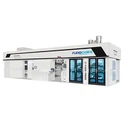
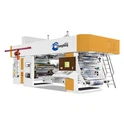
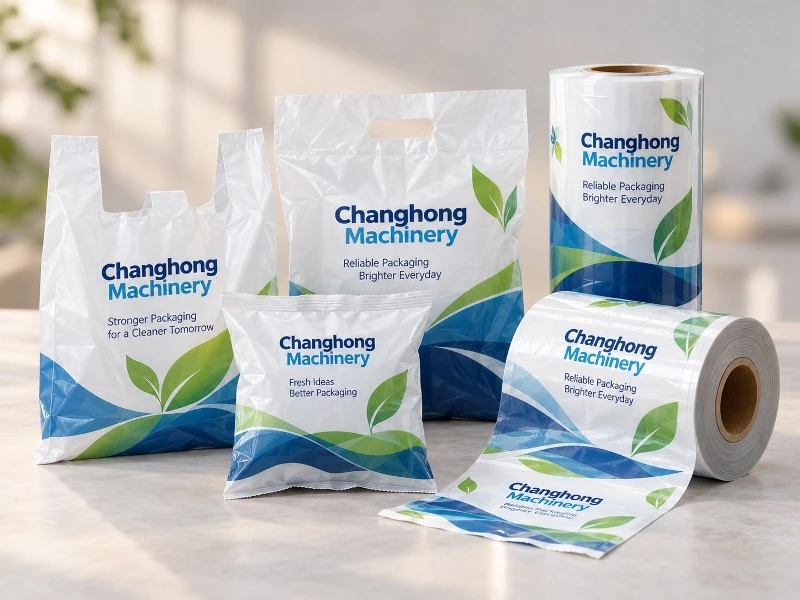
LDPE and HDPE films are among the most common flexible packaging materials in the plastic packaging industry. You'll find them everywhere - trash bags, shopping bags, food packaging, industrial sacks, liners, and a range of other plastic products. For manufacturers that need text, patterns, brand marks, or multi-color designs printed on these films, a stack flexographic printing machine offers a proven and adaptable solution.
A stack flexo printing machine can handle roll-to-roll flexo printing across different film thicknesses, widths, and print requirements for LDPE, HDPE, and other plastic films. By matching the unwinding, printing, drying, pulling, and rewinding systems properly, you get stable film transport and uninterrupted printing - enough to cover the common print jobs in plastic bag and flexible packaging production.
1.What Is a Stack Flexographic Printing Machine?
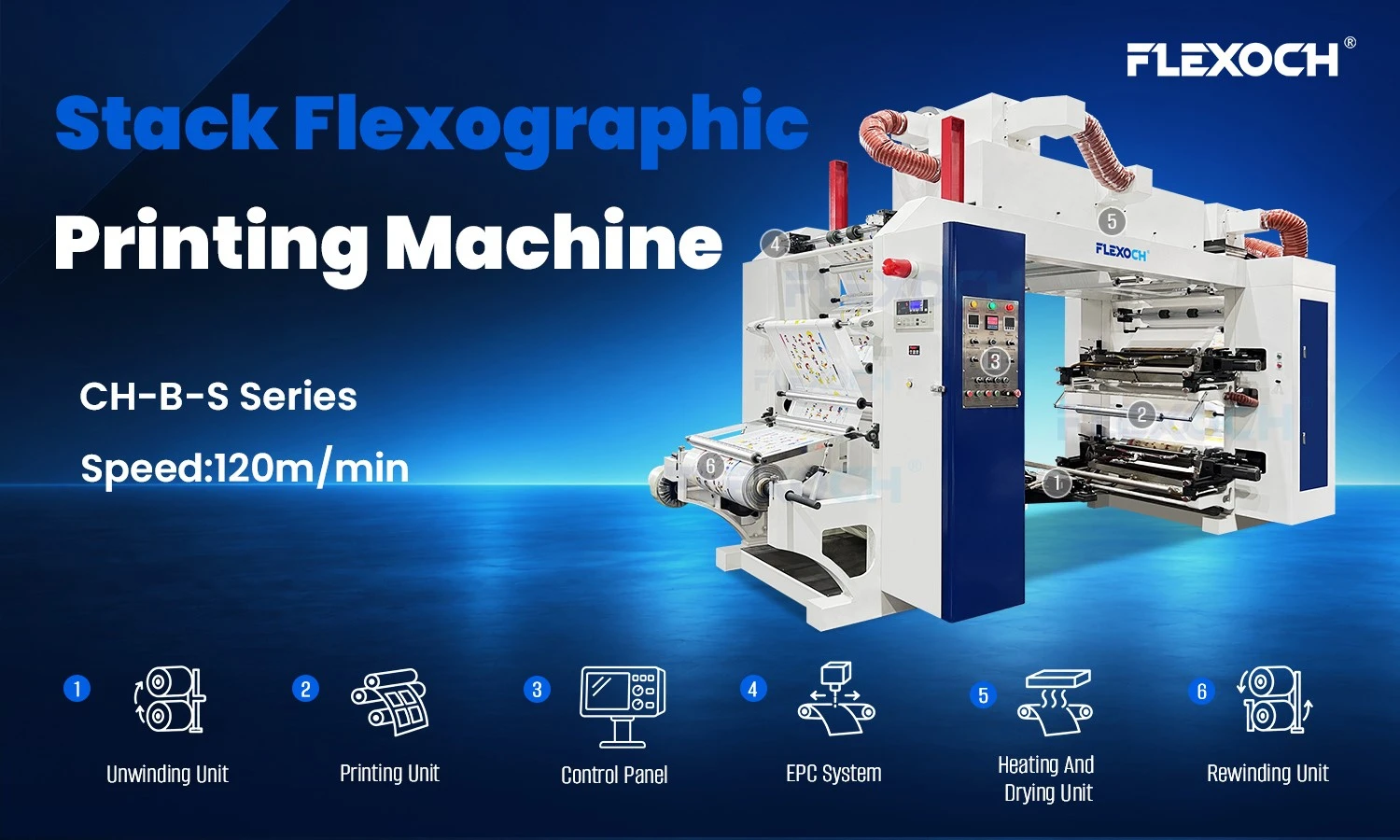
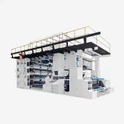
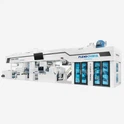
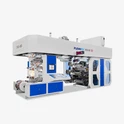
A stack flexographic printing machine uses multiple printing units arranged vertically in a stack. Each unit typically handles one color, and the number of color decks can be configured to match the product.
Compared to gravure printing, a stack flexo press stands out for its flexible structure, easy plate changes, and the broad range of materials it can accept. For packaging companies that switch products often and print different film specs, the stack layout delivers good production flexibility.
In LDPE and HDPE printing, the film feeds from the unwinder into the printing units, passes through the color stations one by one to build the design, then winds up into printed reels.
Because it works roll-to-roll, this setup suits continuous production well. It pairs naturally with downstream steps like bag making, lamination, and slitting.
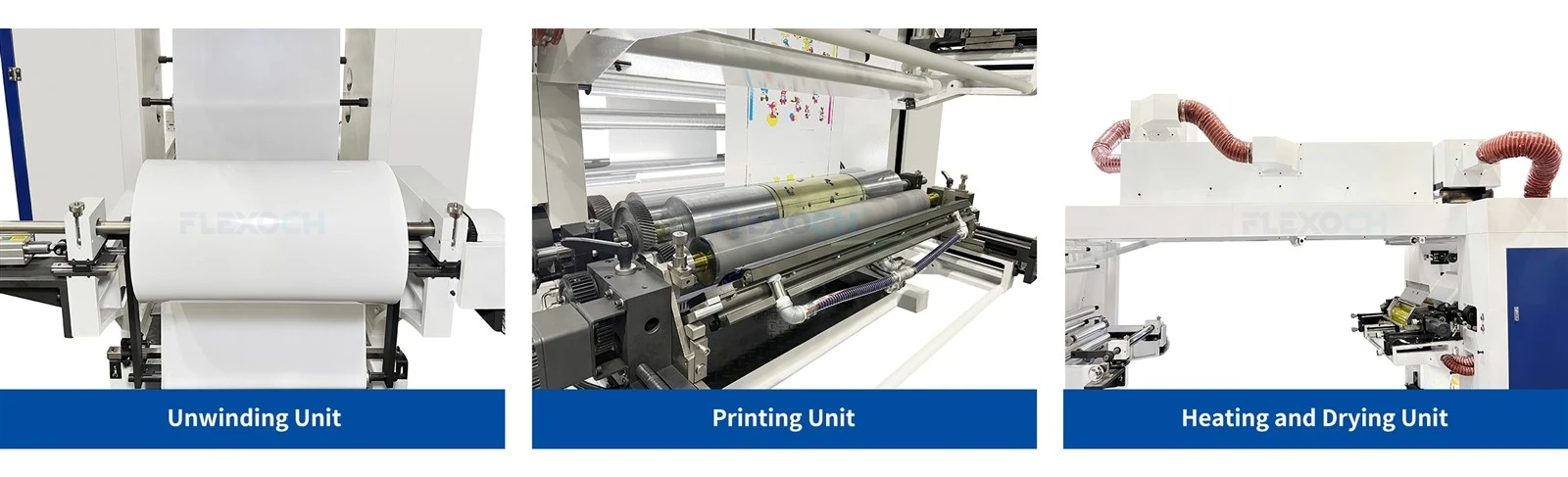
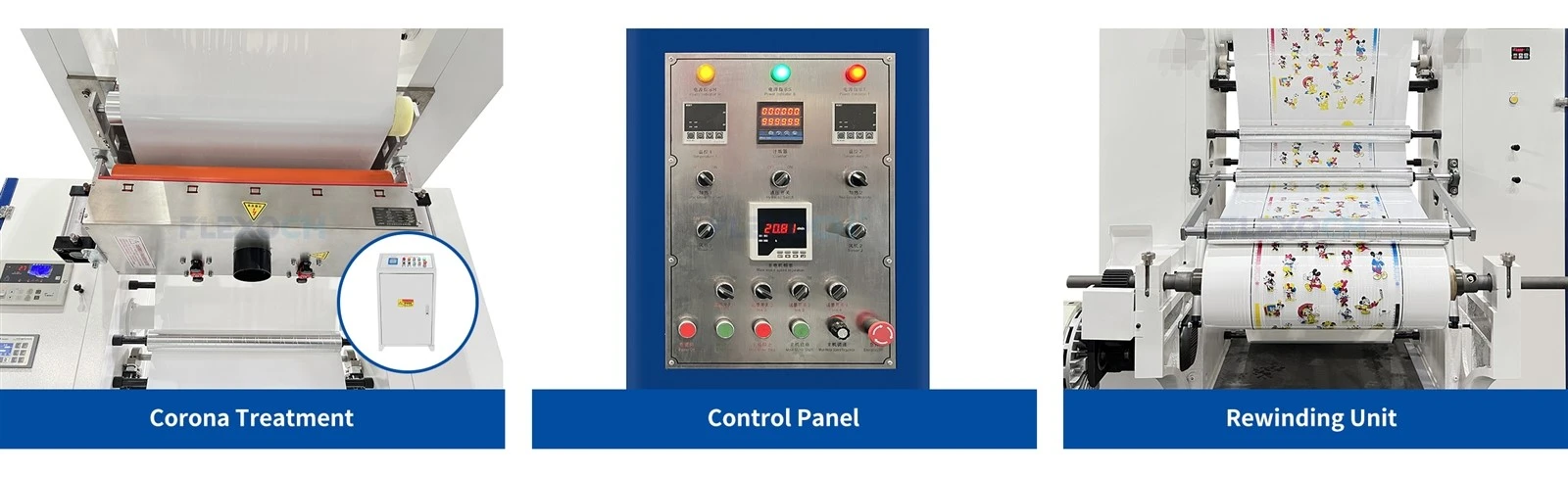
Detail Image
2. Can a Stack Flexo Machine Print LDPE Film?
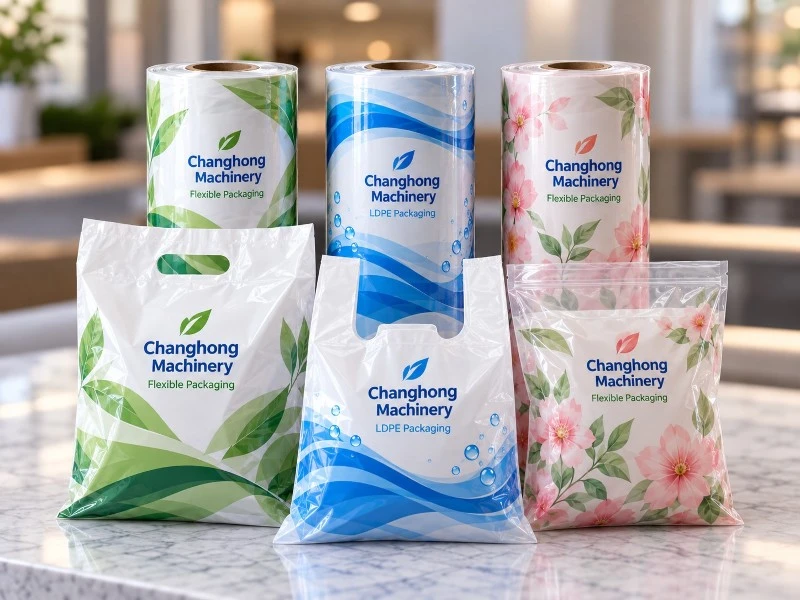
Yes. LDPE (Low Density Polyethylene) is one of the most common materials run on stack flexographic printing machine.
LDPE film is soft and stretches easily, which is why it's used for trash bags, shopping bags, packaging bags, liners, and assorted flexible packaging.
That softness is exactly what you have to manage during printing. Tension control and web tracking matter most here. A stack flexo press uses its tension system, pull rollers, and print pressure settings to keep the film stable even at higher speeds.
For different LDPE thicknesses, the print pressure, tension parameters, drying capacity, and the plate and anilox roll setup all need adjusting to match the material.
So when you're choosing an LDPE flexo machine, don't just compare color count and top speed. Look at film thickness, print width, ink type, and the end product together before deciding on a configuration.
3. Can a Stack Flexo Machine Print HDPE Film?
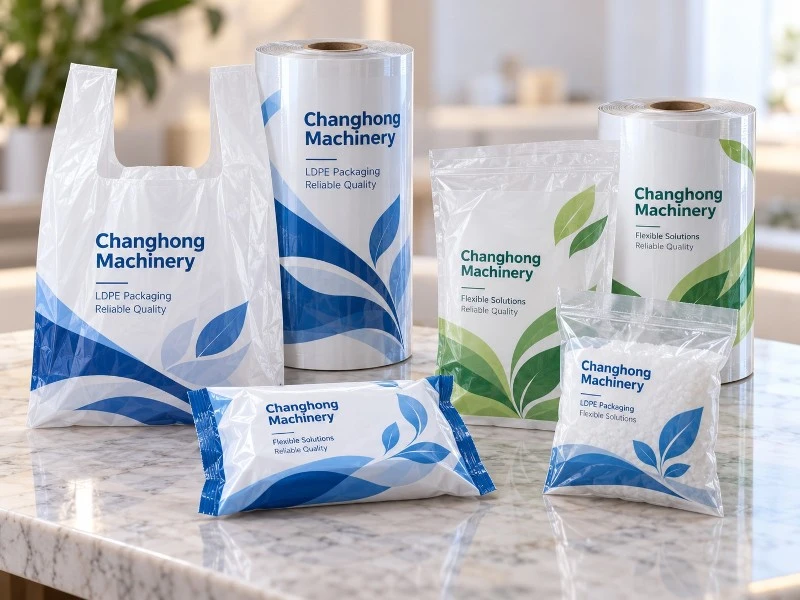
It can, and it's a common application too. HDPE (High Density Polyethylene) is another standard material for stack flexo printers.
Compared to LDPE, HDPE film is stiffer and stronger, so it shows up in shopping bags, trash bags, packaging bags, industrial sacks, and various film products.
Stable web handling and controlled tension are just as critical here. This is especially true for wider films and multi-color jobs - if tension drifts, you risk registration errors and a poor final result.
A stack flexo printing machine can be set up with the right unwinding, pulling, and rewinding systems for HDPE's specific behavior, and you adjust print pressure, tension, and drying parameters to suit different HDPE products.
That's why an HDPE flexo printing machine is a standard piece of equipment across the plastic packaging industry.
4. What's Different About Printing LDPE vs. HDPE?
Both are polyethylene, but their physical properties differ, so the settings need tuning for each material.
|
Item |
LDPE Film |
HDPE Film |
|
Material name |
Low density polyethylene |
High density polyethylene |
|
Softness |
Softer |
Stiffer |
|
Elongation |
Higher |
Relatively lower |
|
Flexo suitability |
Good |
Good |
|
Common print method |
Roll-to-roll flexo |
Roll-to-roll flexo |
The machine itself doesn't necessarily need a completely different structure for the two. In practice, you adjust parameters based on film thickness, width, surface treatment, and the ink system you're running.
5. Why Use Flexo Printing on LDPE and HDPE?
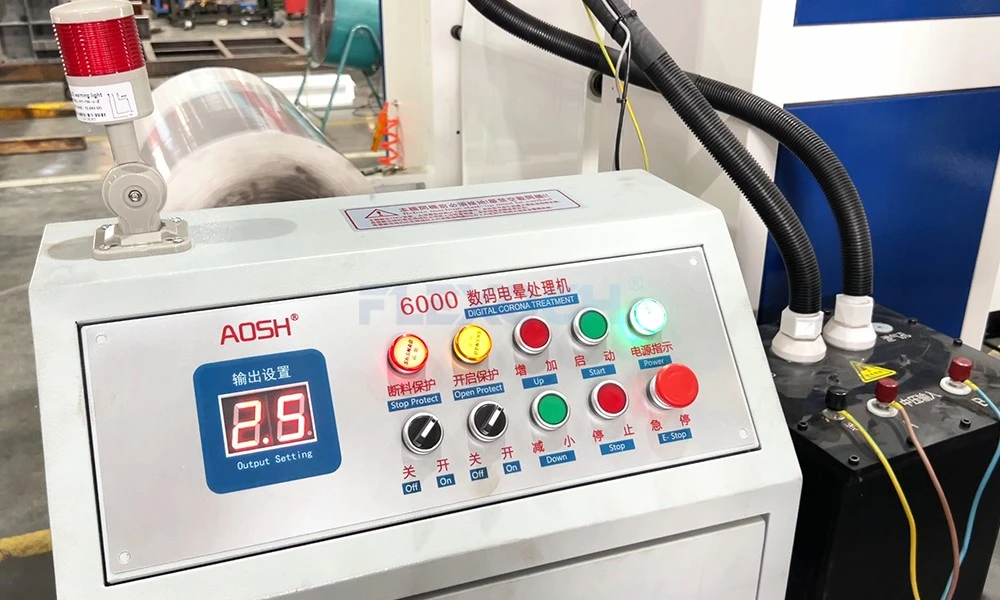
Plastic films generally don't hold ink well on their own. That's why many go through corona treatment before printing.
Corona treatment raises the film's surface tension, which lets the ink form a steadier bond on the surface.
For PE films like LDPE and HDPE, the final print quality depends on more than just the press. These factors all play a part:
- Surface treatment of the film
- Film thickness
- Ink type
- Ink adhesion
- Print pressure
- Print speed
- Drying temperature an
-
Plate and anilox roll configuration
So when picking an LDPE/HDPE flexo machine, treat the material and the printing process as one package. Comparing machine specs in isolation won't get you there.
7. Key Advantages of Stack Flexo for LDPE/HDPE
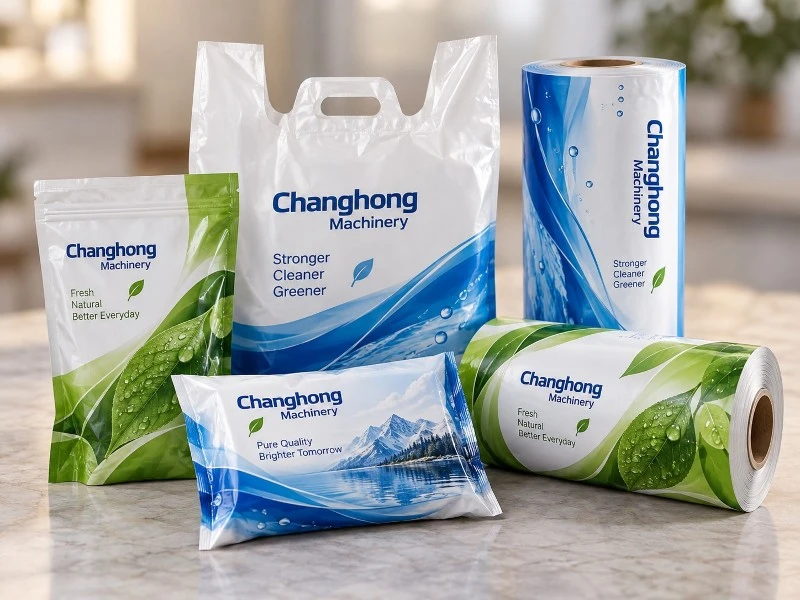
1. One machine, many films. A stack flexo printing machine handles LDPE and HDPE, and depending on the configuration it can also run PE, LLDPE, PP, BOPP, CPP, PET, and other web materials. That makes it a fit for producing a mix of flexible packaging.
2. Multi-color printing. You can add print units to match the product, so complex designs and brand marks on shopping bags, trash bags, and packaging bags are well within reach.
3. Roll-to-roll continuous production. LDPE and HDPE usually arrive as rolls. A flexo machine keeps the process roll-to-roll, cutting out extra material handling in between and boosting continuous output.
4. Flexible machine structure. The stack layout can be built around your material, print width, color count, and target speed. That's useful for companies running several plastic film products.
5. Adaptable to different production scales. If you make trash bags, shopping bags, packaging bags, and industrial films at the same time, a stack flexo press can shift parameters to suit each product line.
Video Introduction
8. Changhong Stack Flexographic Printing Machine
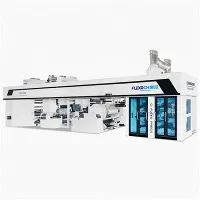
Changhong stack flexographic printing machine are built for continuous flexo printing on roll-fed plastic films, paper, nonwoven fabrics, and other flexible materials.
For LDPE and HDPE films, the equipment is configured around your material thickness, print width, color count, and production needs. With stable unwinding, tension control, printing units, drying, and rewinding, it covers the common printing requirements of plastic bag and flexible packaging production.
For packaging companies that run LDPE, HDPE, PE, PP, BOPP, and other materials in one plant, the stack layout offers real flexibility. If you also need two-side printing, multi-color work, dual unwind/rewind stations, or corona treatment, these can be added to match your actual production.


FAQ
1.Can LDPE and HDPE run alternately on the same machine?
Yes. With the right configuration and process settings, one stack flexo printing machine can handle different PE films. When you switch materials, you adjust tension, print pressure, and related settings according to the film's thickness, width, and characteristics.
2. Does PE film thickness affect flexo print quality?
Yes. Thickness changes how the film runs, how much tension it can take, and the pressure you set at the nip. A thicker film pulls differently than a thin one, so the settings that worked last time usually won't hold. Expect to re-tune tension and pressure when you switch.
3. What does a wider print width demand from a stack flexo printing machine?
The wider the web, the harder it is to keep flat and on track - drift gets worse across a bigger width. So match the machine width to the films you actually run, not the other way around.
4.Can printed LDPE/HDPE film go straight to the bag-making step?
Usually yes. Printed roll film can move on to bag making. The exact flow depends on the end product - some products may need lamination, slitting, or other finishing first.
5.What information should I provide before buying a PE flexo printing machine?
Material type, film thickness range, print width, number of colors, target speed, and the final product type. If you have existing print samples, pictures help too - they make it easier to configure the right machine for your production.