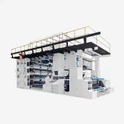
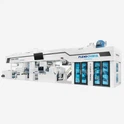
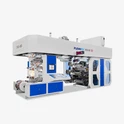
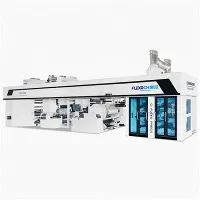
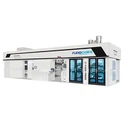
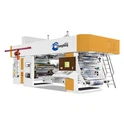
Amid the ongoing segmentation and upgrading of the packaging printing industry, customers' demands for printing equipment are no longer limited to color count and printing accuracy. Instead, greater focus is placed on the equipment's adaptability when switching between different materials. From ultra-thin plastic films and relatively thick paper to various composite materials, the diverse demand for material thickness has made "whether the equipment can stably process materials of different thicknesses" one of the core criteria for enterprise equipment selection. 4-color, 6-color, and 8 color stack flexographic printing machine has precisely responded to this industry trend. With their structural and technological advantages, they demonstrate strong overall competitiveness in multi-material processing.
I. Stack Structure: Advantages in Multi-Thickness Adaptability
Stack flexo printing machines adopt an independently stacked printing unit structure, where each color station operates independently while being uniformly controlled by the overall system. This structure not only greatly improves space utilization but, more importantly, provides flexible running paths and adjustment space for materials of different thicknesses. Materials experience more uniform stress during conveyance in the equipment, effectively reducing instability issues such as deviation and shaking caused by thickness differences.
Compared with other machine models,stack flexo printing machine does not require major adjustments to the overall structure when coping with changes in material thickness; adaptation can be completed merely through local parameter optimization. This flexibility serves as the core foundation for its capability in multi-material printing.

CH-S-S 8 Color Servo Stack Flexographic Printing Machine 200 m/min
II. Tension Control System: The Core Determinant of Material Adaptability
One of the key differences between materials of different thicknesses lies in their distinct requirements for printing tension. Ultra-thin film materials are highly sensitive to tension; improper tension control can easily lead to tensile deformation, deviation, or even breakage. In contrast, thicker paper and composite materials require stable tension support to ensure flatness and positioning accuracy during conveyance and avoid overprinting deviations.
Currently, mainstream 4/6/8 color stack type flexo printing machines are equipped with fully automatic tension control systems, which dynamically adjust tension based on actual material thickness and properties to keep materials in an optimal stress state at all times. Whether it is lightweight BOPP film, rigid cardboard, or composite non-woven fabric, the materials can run stably within a reasonable tension range, guaranteeing continuous and consistent printing quality.

Tension Control

Guide controller
III. Precise Pressure Adjustment: Ensuring Printing Effects for Different Thicknesses
Variations in material thickness directly affect the suitability of printing pressure. If pressure cannot be accurately adjusted according to thickness, problems such as blurred patterns, uneven ink transfer, and material damage are highly likely to occur. Particularly for thin materials, excessive pressure causes tensile breakage, while insufficient pressure for thick materials compromises ink adhesion.
Modern 4/6/8 color stack type flexographic printing machines are generally equipped with refined pressure adjustment systems, enabling quick adjustment of the pressure between the printing plate and impression roller for materials of different thicknesses. This ensures clear patterns and uniform ink transfer while avoiding damage to the materials. Such adjustability allows a single machine to easily cover diversified printing needs ranging from ultra-thin films to medium-thick materials.

Pressure control

Pressure control
IV. Anilox Roller and Printing Plate System: Enhancing Adaptability and Flexibility
In flexographic printing, ink transfer relies heavily on anilox roller settings. Materials with different thicknesses need matching ink volumes: thin materials need limited ink to avoid penetration and smudging, while thick materials need enough ink for even patterns and full color saturation.
Stack flexo presses adjust ink supply precisely by switching anilox rollers with different line counts and volumes, along with changing plate hardness and thickness. This flexible setup boosts print quality across materials, broadens compatibility with various thicknesses, and handles more demanding printing tasks.

V. Unwinding and Rewinding System: Ensuring Stable Operation of Multiple Materials
In actual production, materials of different thicknesses exhibit distinct characteristics during the unwinding and rewinding stages. Thin materials are susceptible to tension fluctuations, leading to wrinkling and deviation; thick materials impose higher requirements on the power output and stability of the drive system. An unstable unwinding and rewinding system can cause overall production downtime and increased scrap rates, even with high-performance printing units.
4/6/8-color stack type flexographic printing machines are typically configured with high-performance unwinding and rewinding systems. Combined with automatic deviation correction and closed-loop tension control technology, these systems ensure stable feeding and rewinding of materials of different thicknesses, minimizing tension fluctuations and deviation issues. This not only boosts production efficiency but also reduces scrap losses caused by inadequate material adaptation.
Detail Image


VI. Different Color Station Configurations: Differentiated Performance in Adaptability
4-color, 6-color, and 8-color stack type flexographic printing machine has different adaptability to printing materials, which can meet the diverse production needs of different enterprises:
- 4-color flexo printing machine: They mainly meet basic printing requirements, with a simple overall structure and convenient operation. When dealing with single-type materials with small thickness changes (such as conventional paper and ordinary films), their operation is stable and they have obvious cost-effective advantages.
- 6-color flexo printing machine: They balance color performance and material adaptability well, can present richer color effects, and have flexible parameter adjustment functions. They are suitable for mixed production of various types and thicknesses of materials (such as food packaging and daily chemical packaging).
- 8-color flexo printing machine: The configuration is more complex, the control accuracy is higher, and it is equipped with complete tension, pressure and overprint control systems. When processing multi-layer composite materials and materials with large thickness differences (such as heavy cardboard and composite non-woven fabrics), they have stronger adaptability and better printing quality.


VII. Technological Upgrades: Driving Iteration of Multi-Thickness Adaptability
With the integration of automation and intelligent technologies, the new generation of stack type flexo printing machine has better multi-material adaptability. Servo drive systems ensure more accurate and stable operation, reducing overprinting errors caused by thickness changes. Automatic overprinting systems quickly correct material conveyance deviations to boost printing precision. Intelligent control systems allow presetting multiple material parameters, enabling fast switching between different thicknesses and materials without much manual adjustment.
These technological integrations let the equipment achieve "efficient switching and stable output" for different thickness materials, greatly improving production efficiency and product qualification rates.
Video Introduction
VIII. Wide Application: Practical Verification of Multi-Thickness Adaptability
Thanks to their excellent adaptability to materials of different thicknesses, stack type flexographic printing machine is widely used in food packaging, pharmaceutical packaging, daily chemical product packaging, non-woven fabric products, express packaging, and other industries. These industries use materials with significant thickness differences-from ultra-thin food packaging films of thick cardboard and composite packaging materials . The equipment maintains stable printing output across all these applications, serving as direct practical proof of its multi-thickness adaptability.
Printing Sample


Conclusion: One Machine, an Efficient Solution for Multi-Material Printing
In short, 4/6/8-color stack flexographic printing machine work well with different material thicknesses. With right settings and smart tech, they run everything from ultra-thin films to medium-thick substrates. They don't just fit many materials-they keep high-quality, efficient printing when you switch types.
For printing enterprises aiming to expand their business scope, enhance production flexibility, and reduce equipment investment costs, choosing a stack flexo printing press with multi-thickness material adaptability is undoubtedly a practical and long-term valuable investment, helping enterprises boost their core competitiveness in segmented markets.