Hey there! As a supplier of stack flexo printing machines, I get asked a lot about what the resolution of stack flexo printing actually is. So, I thought I'd take a few minutes to break it down for you.
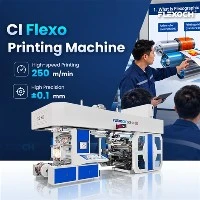
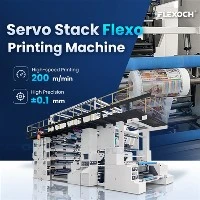
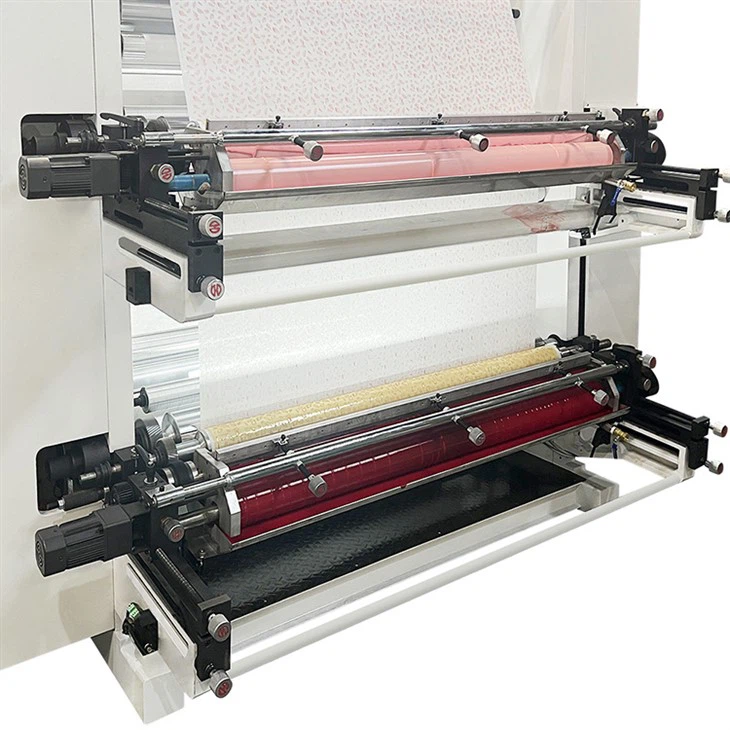
First off, let's talk about what stack flexo printing is. Stack flexo printing is a popular printing method used in a variety of industries, including packaging, labels, and more. It uses flexible printing plates wrapped around cylinders to transfer ink onto a substrate. The "stack" part refers to the way the printing units are arranged vertically, one on top of the other. This setup allows for multiple colors to be printed in a single pass, making it a fast and efficient printing method.
Now, let's get to the main question: what is the resolution of stack flexo printing? Well, resolution refers to the level of detail that can be reproduced in a printed image. It's typically measured in dots per inch (DPI). The higher the DPI, the more detail can be printed, and the sharper and clearer the image will appear.
In stack flexo printing, the resolution can vary depending on a few factors. One of the main factors is the type of printing plate used. There are different types of flexo printing plates, each with its own capabilities in terms of resolution. For example, digital flexo plates are known for their high resolution and ability to reproduce fine details. These plates are made using digital imaging technology, which allows for more precise control over the image on the plate.
Another factor that affects the resolution is the quality of the ink. High-quality inks are able to hold their shape better on the printing plate and transfer more accurately to the substrate, resulting in a higher resolution print. The type of substrate also plays a role. Smooth substrates like certain plastics and coated papers can support higher resolutions compared to rough or porous substrates like untreated cardboard.
Generally speaking, stack flexo printing can achieve resolutions ranging from around 150 DPI to 300 DPI. This is sufficient for a wide range of applications, including most packaging and label printing. For simple designs with large areas of color and basic graphics, a lower resolution like 150 DPI may be perfectly adequate. However, for more detailed images, such as photographs or intricate patterns, a higher resolution of 300 DPI or even more may be required.
It's important to note that while stack flexo printing may not reach the extremely high resolutions of some other printing methods like offset lithography, it has its own advantages. One of the biggest advantages is its speed and efficiency. As mentioned earlier, the stack configuration allows for multiple colors to be printed in a single pass, which can significantly reduce production time. This makes it a great choice for high-volume printing jobs.
Another advantage is its versatility. Stack flexo printing machines can handle a wide variety of substrates, from thin films to thick cardboard. This means that they can be used for a diverse range of products, from food packaging to shopping bags.
At our company, we offer a range of stack flexo printing machines to meet different needs. Our Stack Press is a popular choice for many customers. It's designed for high-speed, high-quality printing and can handle a variety of substrates. We also have the Non Woven Bag Flexo Printing Machine, which is specifically designed for printing on non-woven bags. And for those who need to print on PP woven bags, our Pp Woven Bag Printing Machine is the perfect solution.
If you're in the market for a stack flexo printing machine, we'd love to hear from you. Whether you're a small business looking to expand your printing capabilities or a large corporation in need of high-volume production, we have the expertise and the machines to meet your requirements. We can provide you with detailed information about our products, help you choose the right machine for your specific needs, and offer after-sales support to ensure that your printing operations run smoothly.

So, if you're interested in discussing your printing needs or learning more about our stack flexo printing machines, don't hesitate to reach out. We're here to help you take your printing to the next level.
References
- Smith, J. (2020). Printing Technology Handbook. London: PrintPress Publications.
- Johnson, A. (2019). Flexographic Printing: Principles and Applications. New York: PrintTech Books.