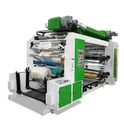
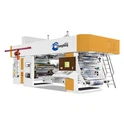
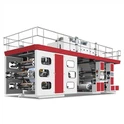
Alright, folks! As a supplier of flexo printing presses, I often get asked about how cost - effective these machines are compared to other printing methods. So, I thought I'd sit down and break it all down for you.
Let's start by understanding what flexo printing is. Flexography is a form of relief printing. It uses flexible relief plates made of rubber or photopolymer. These plates are wrapped around cylinders on the printing press. Ink is transferred from an anilox roller to the raised areas of the plate, and then onto the substrate. This method is used for printing on a wide variety of materials, like paper, cardboard, plastic films, and even non - woven fabrics.
Now, let's talk about cost - effectiveness. Cost - effectiveness isn't just about the upfront price of the machine. It also includes things like running costs, maintenance, and the quality of the output over time.
Upfront Costs
When it comes to buying a printing press, the initial investment can be a big deal. Flexo printing presses can vary in price depending on their size, features, and capabilities. For example, a basic Flexo Printing Machine For Paper Cup might be more affordable for small - scale operations. These machines are designed specifically for printing on paper cups and are often more streamlined in terms of functionality.
On the other hand, something like the Double Station Non - stop CI Flexographic Printer is a more advanced and complex piece of equipment. It has a higher upfront cost, but it offers features like double - station operation and non - stop printing. This means less downtime and increased productivity in the long run.
Compared to other printing methods, like offset printing, the upfront cost of a flexo press can be a bit more forgiving. Offset presses usually require a larger initial investment, especially for high - quality, large - format machines. Digital printing presses, which are great for short - run jobs, can also be quite expensive, especially if you're looking for a machine that can handle high - volume printing.
Running Costs
Running costs are a major factor in determining the cost - effectiveness of a printing press. Flexo printing has some advantages here.
Ink Costs: Flexo printing uses different types of inks, such as water - based, solvent - based, and UV - curable inks. Water - based inks are generally more cost - effective and environmentally friendly. They're also easier to clean up, which can save on labor and cleaning supplies. Compared to offset printing, which often uses oil - based inks, flexo printing can be more economical in terms of ink consumption. Digital printing, on the other hand, can have high ink or toner costs, especially for large - scale projects.
Substrate Compatibility: Flexo presses can print on a wide range of substrates. This means you can choose the most cost - effective material for your project. For example, if you're printing packaging, you can use cheaper cardboard or plastic films. Digital printing, although versatile, may not be as cost - effective when printing on certain substrates. It may require special coatings or treatments to achieve good results, which can add to the cost.
Energy Consumption: Flexo printing presses are generally designed to be energy - efficient. They don't require as much energy as some offset presses, which often have large drying systems and complex mechanical components. Digital presses can also consume a significant amount of energy, especially if they have high - speed printing capabilities and advanced imaging systems.
Maintenance Costs
Maintenance is another area where flexo printing can shine.
Plate Replacement: The flexo printing plates are relatively inexpensive to replace compared to the printing plates used in offset printing. Flexo plates can be made quickly and easily, and there are many suppliers who offer affordable plate - making services. This means less downtime when a plate needs to be replaced, and lower overall maintenance costs.
Machine Maintenance: Flexo printing presses are generally less complex than offset presses. They have fewer moving parts, which means there's less that can go wrong. This results in lower maintenance costs over time. Digital presses, on the other hand, are often filled with high - tech components that can be expensive to repair or replace if they break down

Quality and Productivity
When it comes to cost - effectiveness, you also need to consider the quality of the output and the productivity of the machine.
Print Quality: Flexo printing can produce high - quality prints. With advancements in technology, flexo presses can now achieve sharp images, vibrant colors, and consistent print quality. This is especially important for industries like packaging, where the visual appeal of the product is crucial. Offset printing is known for its high - end print quality, but flexo printing is closing the gap, and for many applications, the difference in quality isn't significant enough to justify the additional cost. Digital printing can also produce good quality prints, but it may struggle with large - scale jobs in terms of maintaining consistent quality over time.
Productivity: Flexo printing presses are designed for high - volume production. They can print at high speeds, and machines like the Double Station Non - stop CI Flexographic Printer can keep running without much downtime. This means you can produce more prints in less time, which is a major advantage in terms of cost - effectiveness. Digital printing is better suited for short - run jobs, as it can be time - consuming to set up for large - volume production.
Specialized Applications
Flexo printing also has some great specialized applications. Take the Non Woven Flexo Printing Machine for example. Non - woven fabrics are used in many industries, such as hygiene products, medical supplies, and geotextiles. A flexo printing press designed for non - woven fabrics can print high - quality patterns and designs on these materials. Other printing methods may not be as suitable for non - woven fabrics, as they may require special handling or may not adhere well to the material.
Bottom Line
So, is flexo printing cost - effective compared to other printing methods? In most cases, the answer is yes. The upfront costs can be more manageable, the running costs are often lower, the maintenance is easier and cheaper, and the presses can offer high - quality output and high productivity.
Whether you're a small business looking for an affordable way to print on paper cups or a large - scale manufacturer in need of a high - volume, non - stop printing solution, a flexo printing press could be the right choice for you.
If you're interested in learning more about our flexo printing presses or want to discuss your specific printing needs, don't hesitate to reach out. We're here to help you find the most cost - effective printing solution for your business.


References
- Last Name, First Initial. (Year). "Title of the Book". Publisher.
- Last Name, First Initial. (Year). "Title of the Article". Journal Name, Volume(Issue), Page numbers.