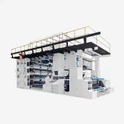
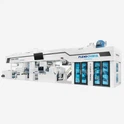
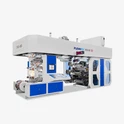
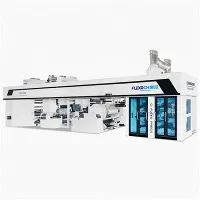
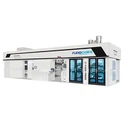
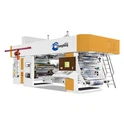
As the global packaging market increasingly demands greater diversity in materials - from the traditional BOPP and PET films, to kraft paper used for LLDPE stretch film, non-woven fabrics, melt-blown fabrics, and antibacterial plastic films flexo printing machine is undergoing a technological route differentiation from "Stack type flexo printing machine" to "CI flexo printing machine". The two structures have their own applicable scenarios, and what truly determines the competitiveness of the equipment is its ability to adapt to a variety of materials.
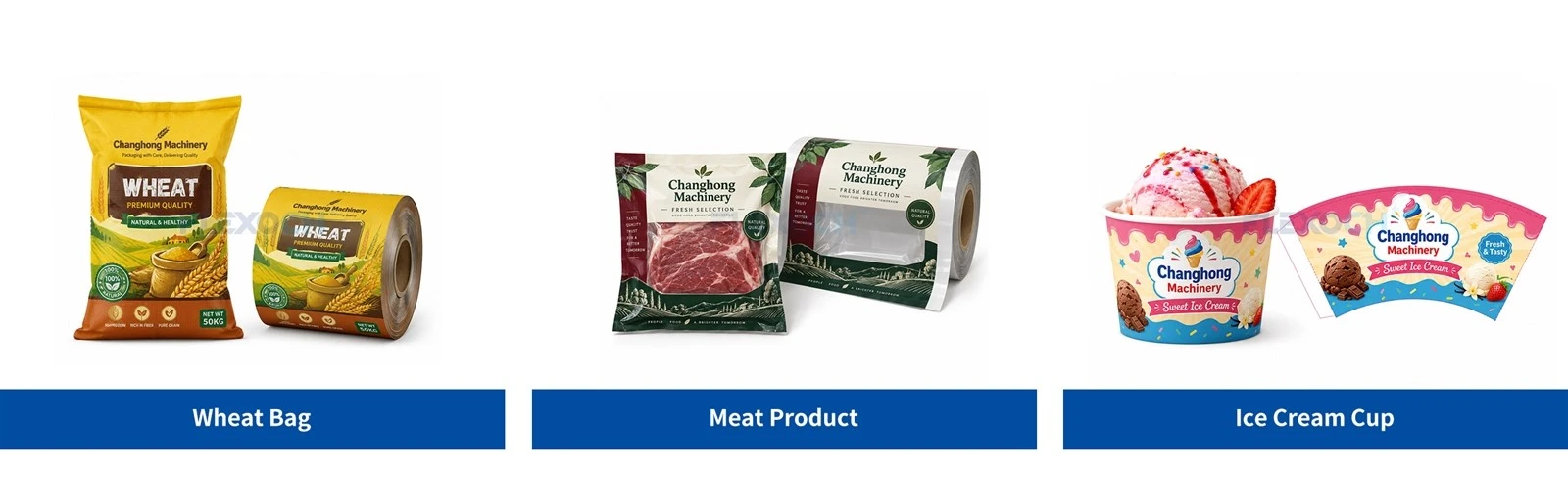
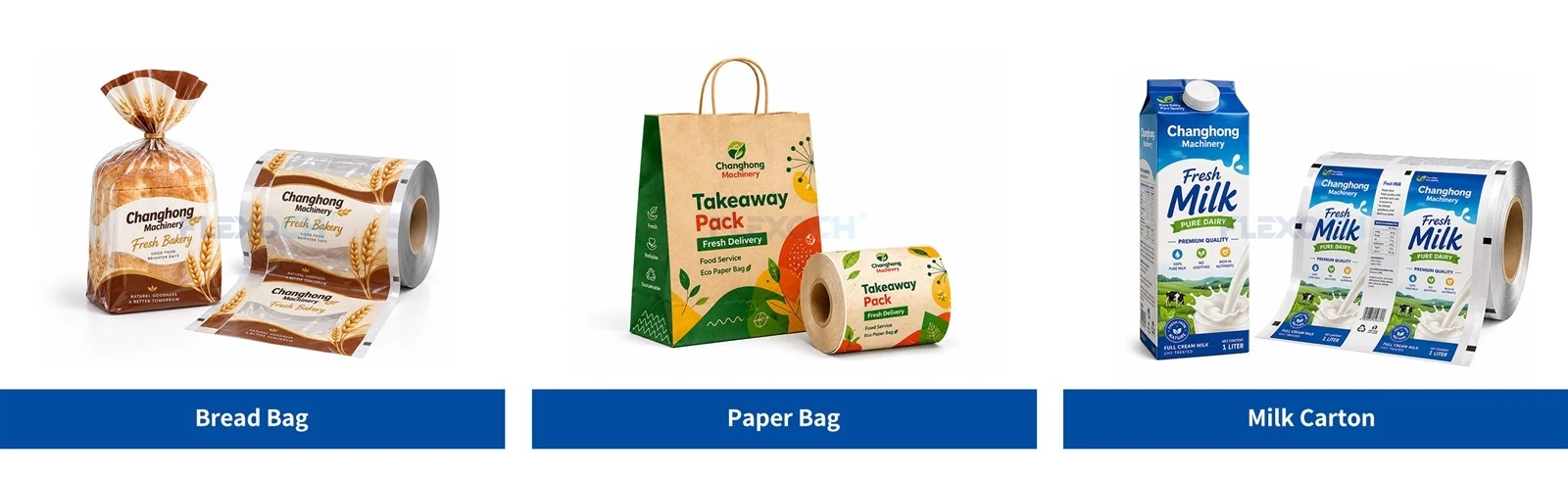
I. Substrate Diversity: The "New Normal" in the Flexo Industry
In the past, the main battlefield of flexo printing was concentrated on paper packaging and conventional plastic films. Now, the explosive growth of downstream application scenarios has completely changed this situation.
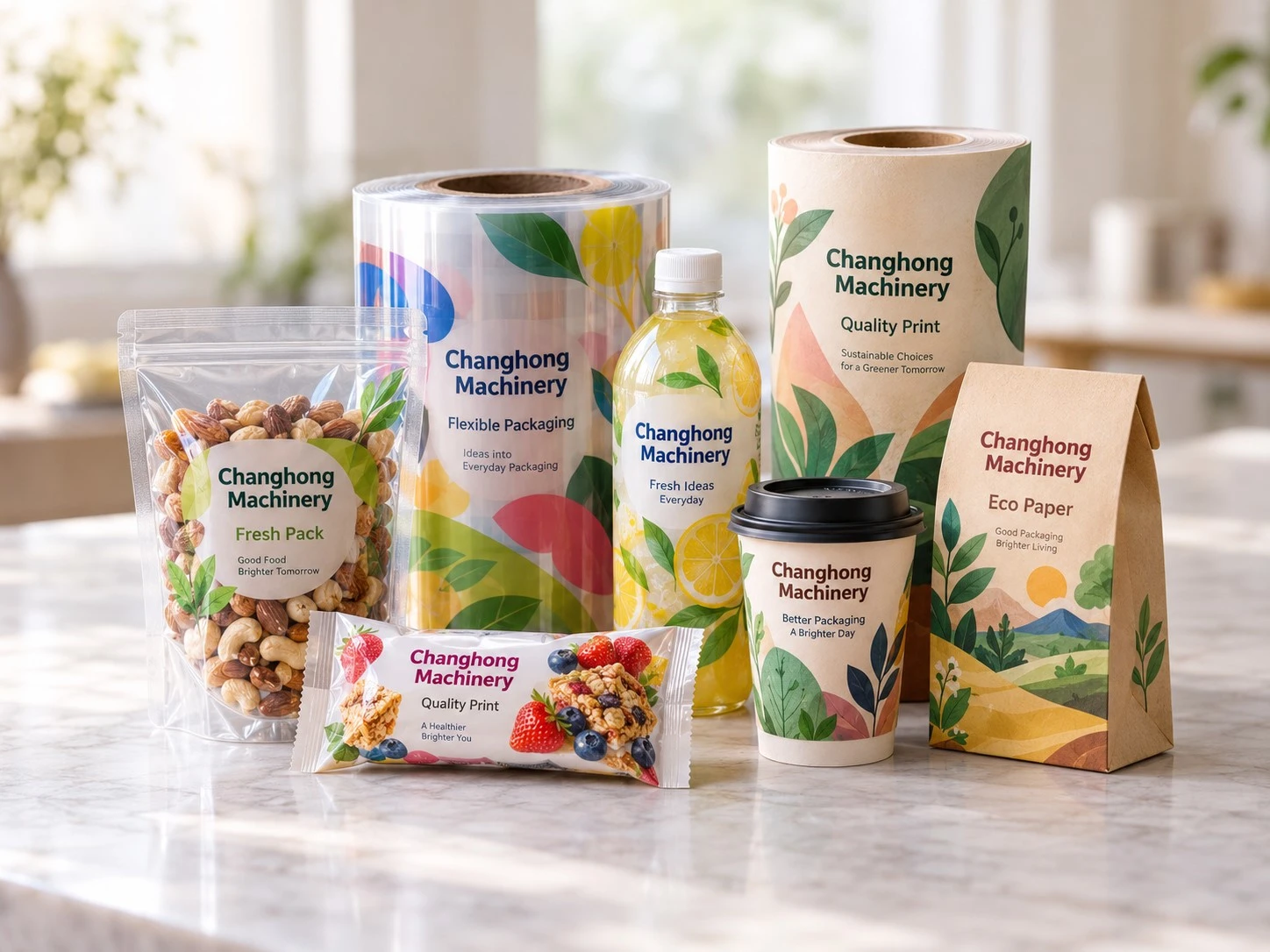
- Food packaging: chocolate packaging, snack bags, paper cups and bowls, with strict requirements for ink adhesion and food safety standards;
- Agricultural chemicals and chemicals: NPK fertilizer bags, chemical packaging bags, with thick base materials and high weight, requiring equipment to have a strong conveying system;
- Environmental protection materials: paper-plastic composite materials, prone to deformation when heated, posing new requirements for temperature control and tension management;
- Hygiene and medical: non-woven fabric, melt-blown fabric, antibacterial plastic films, with thin base materials and easy stretching, with print accuracy and conveying stability being the core pain points.
The era of single machine and single parameter has come to an end. Printing enterprises need a set of equipment combination solutions that can cover multiple base materials and multiple scenarios.
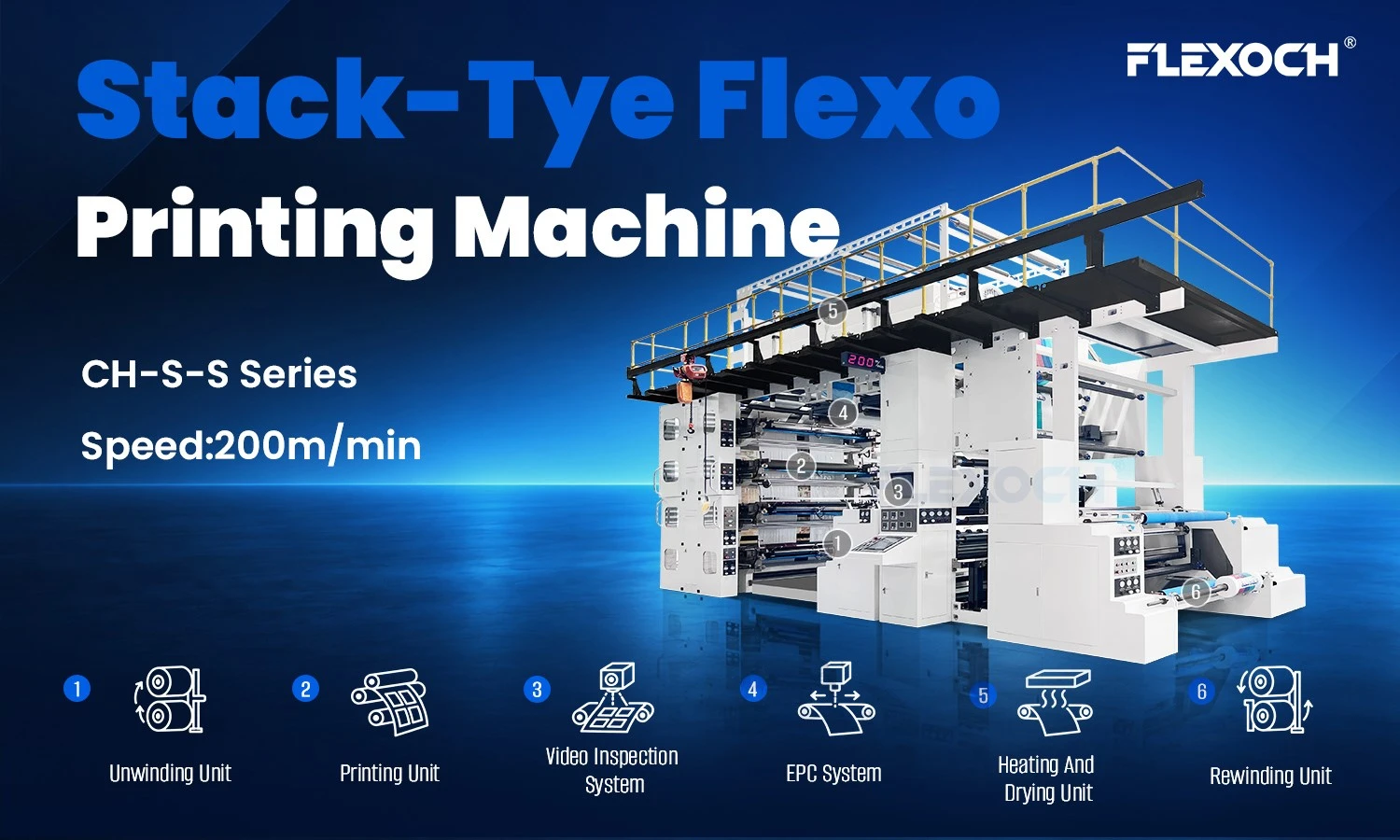
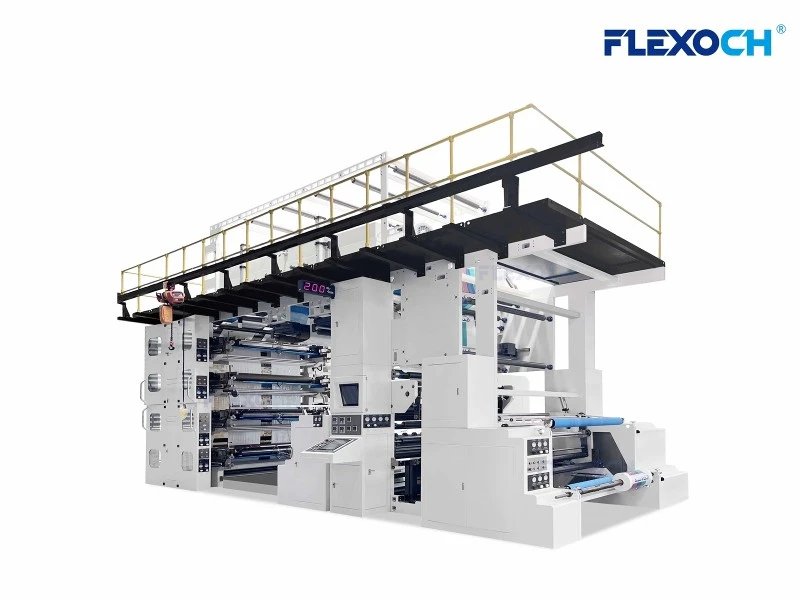
Stack-Type Flexo Printing Machine: Versatile, Flexible, and Efficient
The printing units of the stack type Flexo printing machine are arranged vertically in layers, and each color group operates independently without interfering with each other. This architecture endows it with inherent flexibility.
Material compatibility advantages:
- Wide width and weight range: From 20g thin films to 400g thick cardstock, the stack-type equipment can achieve stable printing by adjusting the pressure of the impression cylinder and the feeding path;
- Quick change of plates: The independent color group design enables a significant reduction in the time required for changing plates, inks, and substrates, making it particularly suitable for multi-variety and small-batch order structures;
- Strong scalability: It can be flexibly increased or decreased in the number of color groups according to production needs, and it is also convenient to install additional processes such as cold stamping, die-cutting, and lamination, enabling one machine to be used for multiple purposes.
For small and medium-sized printing enterprises with a wide variety of substrates and frequent order changes, stack flexo printing machine is often the most cost-effective choice. It has already achieved very mature performance on conventional substrates such as paper, labels, and flexible packaging, and can also well accommodate lightweight substrates such as non-woven fabric and thin paper.
CI Flexo Printing Machine: Synonymous with High Precision and Registration Stability
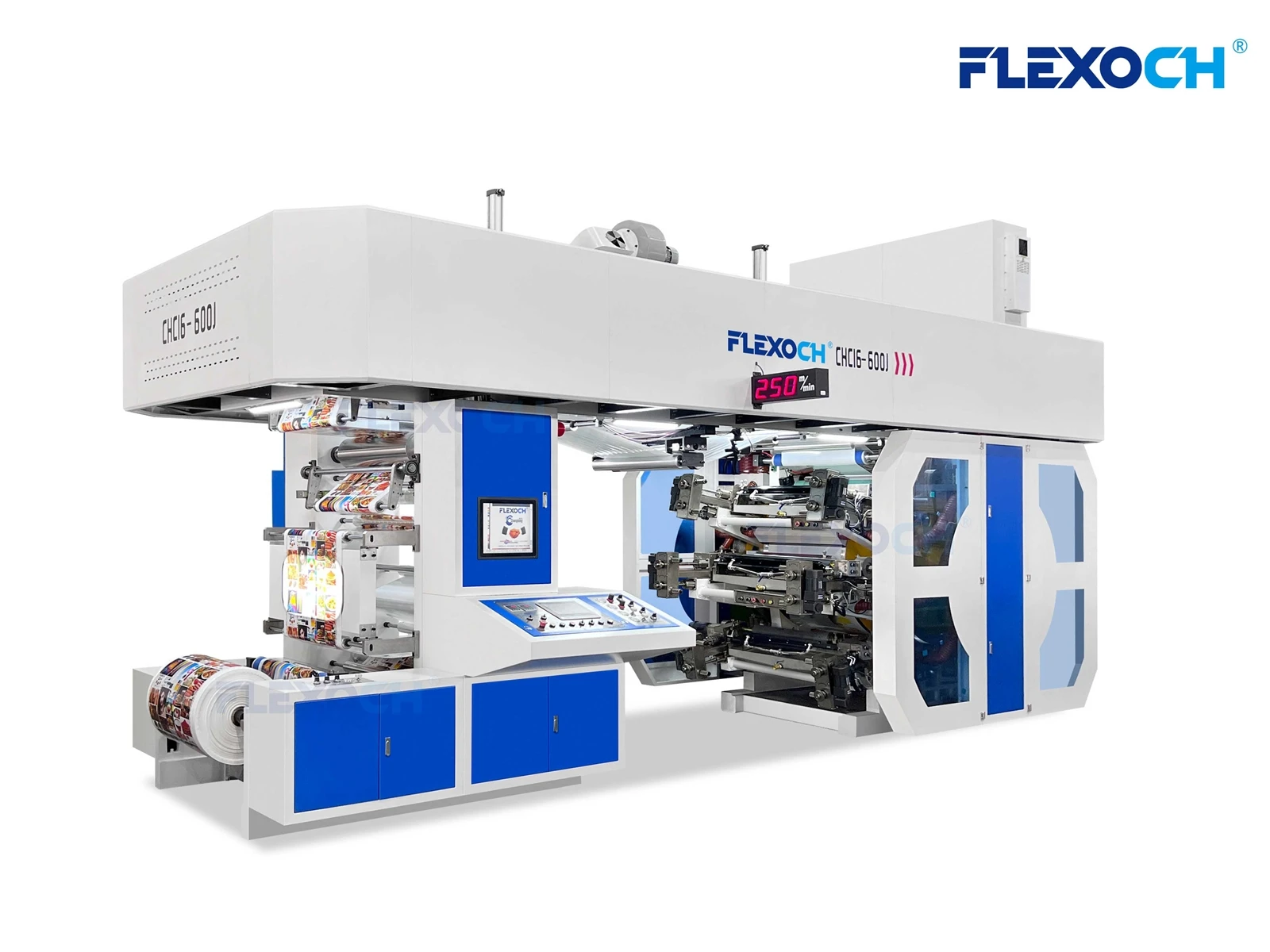
The CI Flexo printing machine is named so because all the printing color groups share a central impression cylinder. The printing substrate is pressed against the surface of the cylinder to complete multi-color registration, fundamentally reducing the displacement and stretching of the substrate between color groups.
Advantages of substrate compatibility:
- Ultra-high registration accuracy: The design of sharing a central cylinder enables the registration error between each color group to be controlled within ±0.1mm, even under high-speed printing, which is crucial for fine graphics and multi-color overprinting;
- Friendly to thin and lightweight substrates: PLA degradable films, non-woven fabrics, melt-blown fabrics, etc., which are easily stretchable, have a shorter feeding path and smaller tension fluctuations on the satellite equipment, effectively avoiding pattern deformation and inaccurate registration;
- High-speed production capacity: The mechanical structure of the CI Flexographic printing machine is more rigid, usually capable of achieving a printing speed of over 300m/min, suitable for efficient production of large quantities and long-run orders;
- Wide-width compatibility: CI Flexographic printing machine usually support wider printing widths, having a natural advantage in printing on wide substrates such as fertilizer bags and large industrial packaging.
For enterprises mainly producing soft packaging and film products, or those with strict requirements for registration accuracy, satellite equipment is the better solution. Especially in the current era where degradable materials and ultra-thin substrates are gradually becoming popular, the market share of CI models is continuously increasing.
Selection Key: Your substrate determines your model
Stack type flexo printing machine and CI Flexo printing machine are not simply a matter of "high" and "low" options; they represent different technical routes for different application scenarios. When making a selection.

II. multi-color printing
This structure brings High printing accuracy, with minimal film expansion between color groups, suitable for high-precision color printing
Stable tension control, adaptable to non-woven fabrics, melt-blown fabrics, etc., which are easily extensible or non-continuous base materials
Wide format and high speed, suitable for food packaging, etc., large wide-format and large-batch orders.
Compatible with thick materials, with stronger adaptability to kraft paper, composite films, etc.
Therefore, the CI Flexographic printing machine is rapidly replacing the layering style and some intaglio equipment in fields such as fertilizer packaging, food packaging, and environmentally friendly biodegradable packaging.
III. Diversified Base Material Compatibility: The True Divide of Equipment Competitiveness
Whether it is the Stack type flexo printing machine or the CI Flexo printing machine, the core indicators determining its market performance have shifted from "how many colors can be printed" to "how many types of base materials can be printed". Current downstream demand presents three major trends:
Environmental base material explosion: The demand for paper-plastic composite, non-woven fabrics, etc., has an annual growth rate of over 20%, requiring equipment to have low tension, non-contact drying, etc.
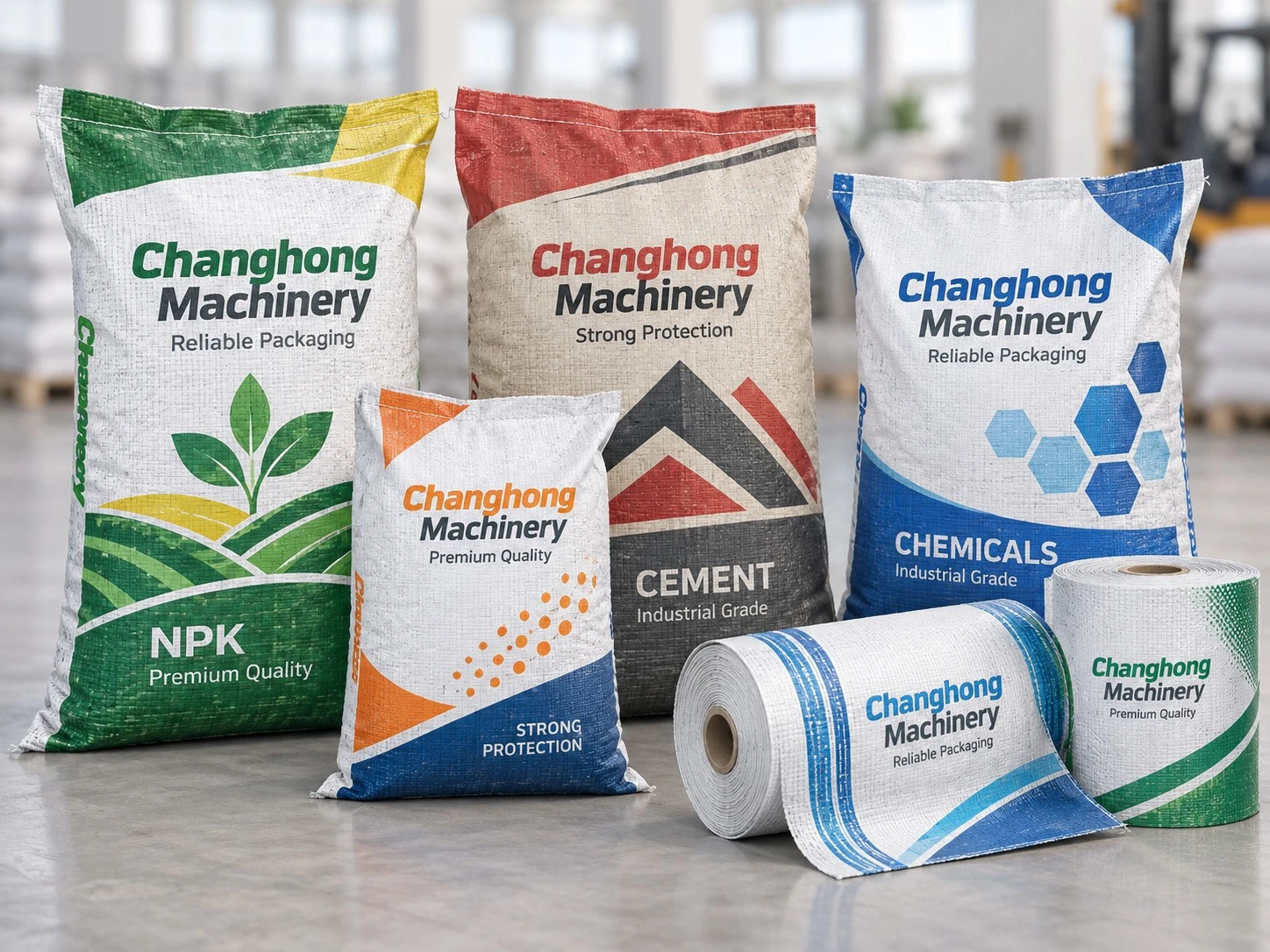
Industrial packaging heavy base materialization: cement bags, chemical packaging bags, etc. are developing towards higher strength and thicker weights, posing higher requirements for the feeding stability and pressing force of the equipment;
Functional film diversification: Antibacterial plastic films, oxygen-blocking films, aluminum foil composite films, etc., require the equipment to not damage the functional layer of the materials during printing.
IV. Technical Upgrade Direction: Full Servo control system + LED UV + Continuous Roll Change
To address these trends, leading flexographic printing machine manufacturers are concentrating their efforts in three directions:
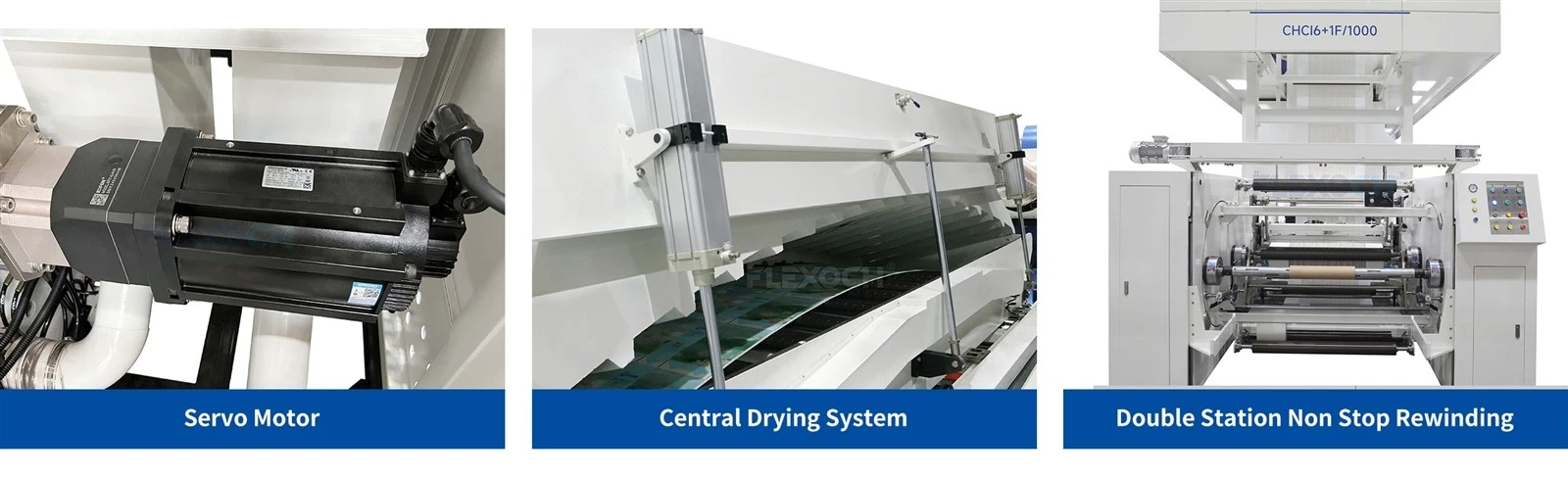
Full servo control system: Independent servo drives each color group and the feeding rollers, with tension control accuracy improved to micrometer level, fundamentally solving the offset printing problem for easily extensible base materials;
LED UV curing system: Low-temperature curing, does not damage PLA and other heat-sensitive base materials, with low energy consumption, no ozone, and in line with overseas environmental protection regulations;
Dual-station non-stop roll change: Achieves zero-stop material feeding, significantly improving the production efficiency of large-batch orders and reducing the scrap rate
V. Adaptability to Diverse Substrates: The True Differentiator of Equipment Competitiveness
Whether for stack type Flexo printing machine or CI Flexo printing machine, the core metric determining market performance has shifted from "how many colors can be printed" to "how many types of substrates can be printed."
The current downstream demand shows three major trends:
- Environmental base material explosion: The demand for environmentally friendly materials such as aper-plastic composites, and non-woven fabrics has grown at an annual rate of over 20%, requiring equipment to have low tension, non-contact drying capabilities, etc.;
- Industrial packaging heavy base materialization: NPK fertilizer bags, cement bags, chemical packaging bags, etc. are developing towards higher strength and thicker weight, which puts higher requirements on the feeding stability and pressing force of the equipment;
Diverse functional films: Antibacterial plastic films, oxygen-blocking films, aluminum foil composite films, etc., require the equipment to not damage the functional layers of the materials during printing.
Practical recommendations
- If your order primarily consists of paper packaging, labels, or short-run quick turnaround items, the stack Flexo printing machine is a more economical choice.
- If your core business involves flexible packaging, film printing, or biodegradable materials-and you require high registration precision and production capacity-a CI Flexographic printing machine is a more worthwhile investment;
- For large printing enterprises with diversified operations, a combination of stack-type and CI printing machines allows for coverage across all substrate types; this enables precise allocation of different orders to the most suitable equipment, maximizing overall capacity and profit margins.

Q1: How to choose between CI and stack flexo printing machines?
A: The CI satellite type is suitable for thin plastic soft films (BOPP, PET, PE, snack composite roll films), has a short path for the film and stable tension, high printing accuracy at high speed, is suitable for multi-color fine patterns, and is the first choice for export food soft packaging orders. The stack type is more suitable for thick paper, woven bags, and thick films. It is easy for thin soft films to drift during high-speed printing; the equipment purchase cost is lower.
Q2: How many colors is flexo printing suitable for?
A: The mainstream is 6-8 colors, and it can be done to 10 colors as needed;
Q3. Can UV and LED UV curing be done?
An LED UV curing unit can be added for special inks / pre-coating curing; food packaging is preferred with water-based inks to meet EU food contact requirements.
Q4: Do you provide overseas installation, commissioning and training for overseas customers?
A: Changhong Machinery provides on-site installation, commissioning and on-site operation training; at the same time, it provides remote technical support and a spare parts warehouse to ensure the supply of easily damaged parts.
Q5: What are the wear parts of the equipment?
A: The main wear parts are: scraper, mesh roller, rubber roller, sensor; Changhong flexo printing machine provide a one-year replacement service for wear parts.
Conclusion
From the Stack-type Flexo printing machine to the CI Flexo printing machine, this is not only the evolution of equipment structure, but also the response of the flexo printing industry to the market proposition of "diversification of substrates". In the future, equipment that can simultaneously cover thin films, thick industrial packaging paper, degradable environmental materials, and functional membrane materials will occupy a more favorable position in the global packaging printing market.
Whether you are a start-up company just entering the flexo printing field or a mature manufacturer seeking capacity upgrade and substrate expansion, Changhong can provide one-stop services from equipment selection, process debugging to after-sales support.