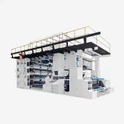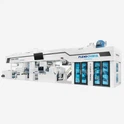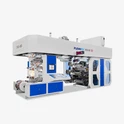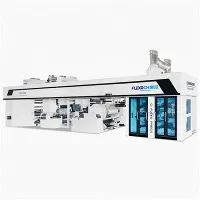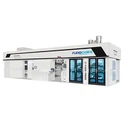
In the printing process, if the flexographic printing machine has ink flying, it may affect the normal printing. Therefore, it is very important to find out the problem in time and solve it. So how about the flying ink problem of the flexographic printing machine? Solve it?
The phenomenon of small droplets of ink scattered in the air is called "flying ink", also known as ink mist dispersion, which is the most common fault of high-speed rotary letterpress printing machines. To slow down the "flying ink" phenomenon, you can increase the humidity in the printing room and use conductive inks such as water-based inks.
During the printing process, the paper is not easy to separate, the paper on the delivery table is unevenly collected, or the paper on the delivery table is skewed and the overprinting is not accurate, etc., which may be caused by static electricity. To eliminate printing static electricity, a static eliminator is generally installed on the printing press to ionize the air around the printing press, thereby neutralizing the positive and negative static electricity on the paper. You can spray an appropriate amount of water mist around the printing press or behind the impression cylinder to eliminate static electricity on the paper. In addition, increasing the humidity in the printing workshop is conducive to the elimination of static electricity.
Bleed-through of ink refers to the phenomenon that the front imprint can be seen on the back side of the printed sheet. To prevent the through-printing of the ink, you can choose a paper with high tightness for printing, or you can increase the viscosity of the ink, and appropriately reduce the printing pressure.