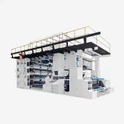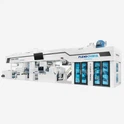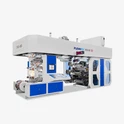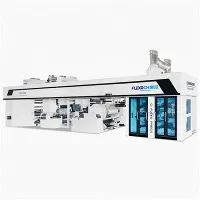
In the packaging printing industry, "high-end printing results" are often associated with high costs. However, the emergence of economic CI flexo printing press has broken the stereotype that "high quality must come at a high price". Many enterprises wonder: can such cost-effective presses truly deliver the texture and precision of high-end printing?Absolutely. Nail down core strategies, understand your equipment's traits and master practical techniques, and these presses become a go-to tool for SMEs to cut costs, boost efficiency and up their competitiveness.
1. What is an Economic CI Flexo Printing Press
To determine whether an economic CI flexo printing machine can achieve high-end printing, we first clarify its core definition and positioning. It is not a low-end machine, but a cost-effective model that retains the core advantages of CI (Central Impression )flexo printing press while optimizing configurations and simplifying non-essential functions to control costs, without compromising printing quality and productivity.
A CI flexo press's key feature is its large central impression cylinder, with all printing units set around it. The substrate clings tightly to the cylinder for one-pass multi-color printing, boosting registration accuracy and cutting material deformation-laying the groundwork for high-quality printing.
Built on this structure, economic central impression flexo press cut redundant functions of high-end versions, optimize frame design and reduce procurement and operation costs, while keeping core components to ensure printing precision and stability.
Versus high-end CI flexo machine, economic models deliver solid cost performance:
- Far lower procurement and maintenance costs
- Meets most high-end packaging printing needs
- with a broad range of substrates
- A low-cost, high-quality solution for SMEs.

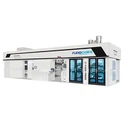
CHCI-J-S 4 Colour Economic Central Impression flexo press 250 m/min
2. Key Strategies for High-Quality Output (Core Focus)
Strategy 1: Choose the Right Consumables for Better Printing Quality
Go for mid-to-high-end consumables for your printing jobs:
- Use eco-friendly inks with strong color and low viscosity to keep patterns sharp and colors bright.
- Adopt high-resolution photopolymer plates for clear, fine printing details.
- Pick flat, smooth substrates to reduce registration errors and uneven color lay.
Strategy 2: Adjust Process Parameters for Better Equipment Performance
Focus on these three key settings:
- Registration: Balance pressure and tension between color stations to align multi-color printing and avoid ghosting.
- Drying speed: Set proper temperature by material and ink to prevent blocking or cracking.
- Printing pressure: Use light-pressure printing, tweak slightly by plates and substrates to stop distortion and uneven ink coverage.
Strategy 3: Follow Standard Operations to Reduce Mistakes
Consistent working steps help maintain stable print quality:
- Pre-press: Check machine cleanliness and install plates correctly.
- During printing: Watch color and alignment in real time and adjust settings as needed.
- Post-printing: Inspect samples regularly to find and fix problems early.
Strategy 4: Do Regular Maintenance for Stable Performance
Routine upkeep keeps your press running reliably:
- Clean the central impression cylinder to avoid dirt buildup and wear.
- Check doctor blades and anilox rolls, and replace worn parts on time.
- Inspect the electrical system to prevent unexpected downtime or parameter errors.


3. Functional Comparison of Economic CI Flexo Printing Machine
Many enterprises worry that economic CI flexo printing machine lack functions for high-end applications. The comparison below highlights their core advantages and dispels misunderstandings.
|
Functional Dimension |
Economic CI Flexo Press |
High-End CI Flexo Press |
Conventional Flexo Press (Non-CI) |
|
Core Structure |
Central impression cylinder, compact structure |
Central impression cylinder, precision structure, high automation |
No central impression cylinder, independently arranged units |
|
Registration Accuracy |
High precision, meets basic high-end requirements |
Ultra-high precision, for ultra-fine printing |
Average accuracy, prone to ghosting and misalignment |
|
Color Performance |
Full and uniform color, supports multi-color printing |
Extremely high color reproduction, supports multi-color printing |
Uneven color, easy to show color difference |
|
Printing Speed |
Moderate, suitable for small-to-medium runs |
Fast, suitable for mass production |
Slow, suitable for small batches |
|
Procurement & Operation Cost |
Low cost, high cost-performance |
High cost, suitable for large enterprises |
Low procurement cost but high operation cost, unstable quality |
|
Application |
SMEs, medium-to-high-end packaging |
Large enterprises, ultra-high-end printing |
Small enterprises, low-end printing |
The comparison shows that economic CI flexographic printing machine are close to high-end models in core functions, with only minor compromises in printing speed. They fully satisfy most enterprises' high-end printing needs. Compared with conventional CI flexo press, they have obvious advantages in precision, color and stability, making them the optimal choice balancing cost and quality.
Video introduction
4. Practical Tips for Immediate Quality Improvement
If your business uses economic central drum flexo printing machine, these tips will get print quality up to high-end levels-no extra cost.
Tip 1: Pre-Press Optimization to Cut Batch Defects
- Tweak design files so patterns are sharp, text smooth and gradients natural.
- Get consumables ready: stir ink thoroughly, adjust substrates to workshop temp/humidity, cut static.
Tip 2: Fine-Tune Registration to Avoid Ghosting and Misalignment
Do a test print first, then tweak parameters to get registration right.
Tip 3: Control Ink Volume for Better Color Texture
- Stick to "small volume, frequent feeding".
- Tweak ink supply by pattern density and doctor blade angle for even coverage.
- Write down special color formulas to keep matching consistent.
Tip 4: Post-Press Treatment to Boost Product Grade
Cheap post-press steps will make appearance better:
- Transparent lamination protects patterns and adds shine.
- Local UV coating highlights key areas and adds 3D look.
Tip 5: Daily Minor Maintenance for Stable Performance
- Wipe plates down before starting up.
- Save leftover ink after production.
- Clean central cylinder and units weekly to cut down on waste.
Detail Image




5. Frequently Asked Questions (FAQ)
Q1: Can economic CI flexo printing machines really achieve high-end printing results? Will color deviation or misregistration occur?
A:1 Yes, they can. Color deviation and misregistration are mostly caused by unsuitable consumables, improper parameters or incorrect operation. With matched consumables, optimized parameters and standardized operation, precise registration and full color can be consistently achieved.
Q2: Are consumable costs high? Will using mid-to-high-end consumables offset the cost-performance advantage?
A2: Consumable costs are manageable. Although mid-to-high-end consumables are recommended, the press features high ink utilization and does not require frequent part replacement.
Q3: Is operation difficult? Can ordinary operators master it quickly?
A3: Operation is user-friendly. Ordinary operators can get started after short-term training. Complex functions are simplified, and basic automated design makes core operations easier. The structure is also easy to maintain with strong stability.
Q4: What products and substrates are suitable for economic CI flexo presses?
A4: They have a wide application range, ideal for food packaging, daily necessities packaging, gift boxes, labels, etc., capable of high-end gradients and fine text printing. Compatible substrates include film, paper, non-woven fabric, aluminum foil and more.
Q5: How to solve problems like blurry patterns or ink streaks?
A5: Targeted solutions:
- Blurry patterns: reduce ink volume, replace high-resolution plates, adjust pressure.
- Ink streaks: replace or adjust the angle of the doctor blade.
- Color deviation: stir ink, adjust drying temperature or use matched ink.
- Misregistration: adjust parameters and check substrates.
6. Conclusion
In summary, economic Ci Type flexo printing machines can fully achieve high-end printing results. They are not low-end equipment, but the optimal solution for SMEs pursuing low-cost, high-quality printing.
Thy focus on enterprises' core printing needs, delivering reliable quality at a reasonable cost with simple operation, without imposing excessive financial pressure or requiring extensive professional operator training.
As the flexographic printing market grows steadily, packaging quality has become core competitiveness. Many SMEs face a common pain point: they cannot afford high-end presses, yet conventional flexo machines fail to meet high-end packaging requirements, often leading to lost orders due to poor quality.
It fill this gap perfectly. They help enterprises control costs, reduce waste, and enhance product competitiveness with stable, high-end printing performance. More than just a printing machine, they are a practical partner for SMEs to reduce operational risks, expand markets and achieve steady development, turning every investment into real returns.
Other products