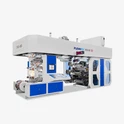
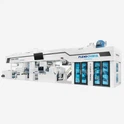
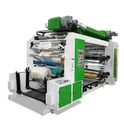
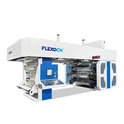
The plastic film printing industry is a dynamic and competitive sector, where the quality and efficiency of printing processes are paramount. As a leading supplier of plastic film printing machines, we understand the intricacies of these machines and the crucial role that various components play in achieving optimal results. Among these components, impression pressure control stands out as a fundamental factor that significantly influences the printing outcome. In this blog post, we will delve into the role of impression pressure control in a plastic film printing machine, exploring its importance, mechanisms, and impact on the final print quality.
The Basics of Impression Pressure in Plastic Film Printing
Impression pressure refers to the force applied between the printing plate cylinder and the impression cylinder during the printing process. This pressure is essential for transferring the ink from the printing plate to the plastic film substrate. In a plastic film printing machine, the impression pressure must be precisely controlled to ensure consistent and high - quality printing.
When the impression pressure is too low, the ink transfer may be incomplete, resulting in faint or patchy prints. The image on the plastic film may lack sharpness and clarity, and some areas may not receive enough ink to form a proper image. On the other hand, if the impression pressure is too high, it can cause several problems. Excessive pressure can lead to the deformation of the printing plate, which may result in distorted images. It can also cause the ink to spread beyond the intended areas, leading to blurry prints and a loss of fine details. Additionally, high impression pressure can put extra stress on the plastic film, potentially causing it to stretch or tear, especially in thinner or more delicate films.
Importance of Precise Impression Pressure Control
Print Quality
The most obvious benefit of precise impression pressure control is improved print quality. By maintaining the right amount of pressure, we can ensure that the ink is transferred evenly and accurately from the printing plate to the plastic film. This results in sharp, clear, and vibrant prints with well - defined edges and consistent color density. Whether printing simple text or complex graphics, precise impression pressure control is essential for achieving professional - looking results.


Plate Longevity
Another important aspect is the longevity of the printing plates. Printing plates are expensive components of the printing machine, and excessive impression pressure can cause premature wear and tear. When the pressure is too high, the plates are subjected to more stress, which can lead to abrasion and damage. By controlling the impression pressure, we can reduce the stress on the plates, extending their lifespan and reducing the frequency of plate replacement. This not only saves costs but also minimizes downtime associated with plate changes.
Substrate Compatibility
Different types of plastic films have different physical properties, such as thickness, flexibility, and surface smoothness. Precise impression pressure control allows the printing machine to adapt to these variations in substrates. For thicker and more rigid films, a higher impression pressure may be required to ensure proper ink transfer. Conversely, for thinner and more delicate films, a lower pressure is needed to prevent damage. By being able to adjust the impression pressure according to the substrate, we can achieve high - quality printing on a wide range of plastic films.
Mechanisms of Impression Pressure Control in Plastic Film Printing Machines
In modern plastic film printing machines, there are several mechanisms used to control the impression pressure.
Mechanical Adjustment
One of the most common methods is mechanical adjustment. This involves using screws, levers, or other mechanical devices to change the distance between the printing plate cylinder and the impression cylinder. By adjusting this distance, the operator can increase or decrease the impression pressure. Mechanical adjustment is relatively simple and cost - effective, but it requires manual intervention and may not provide the highest level of precision.
Hydraulic or Pneumatic Systems
Hydraulic or pneumatic systems are also widely used for impression pressure control. These systems use fluid or air pressure to apply and adjust the force between the cylinders. They offer greater precision and control compared to mechanical adjustment. Hydraulic systems can provide a high level of force and are suitable for applications where large amounts of pressure are required. Pneumatic systems, on the other hand, are more responsive and are often used in applications where rapid adjustments are needed.
Electronic Control Systems
Advanced plastic film printing machines are increasingly equipped with electronic control systems for impression pressure control. These systems use sensors to measure the actual impression pressure and compare it with the set value. Based on the difference between the measured and set values, the system automatically adjusts the pressure to maintain the desired level. Electronic control systems offer the highest level of precision and consistency, and they can also integrate with other machine functions for more efficient operation.
Impact on Different Printing Technologies
The role of impression pressure control varies depending on the printing technology used in the plastic film printing machine.
Flexography
In flexography, which is a popular printing method for plastic films, impression pressure control is crucial. Flexographic printing uses flexible printing plates made from rubber or photopolymer materials. The proper impression pressure is necessary to ensure that the raised areas of the printing plate make contact with the plastic film and transfer the ink effectively. Too much pressure can cause the plates to compress and distort the image, while too little pressure may result in poor ink transfer.
Gravure Printing
Gravure printing, which involves engraving the image onto a copper - plated cylinder, also relies on accurate impression pressure control. The ink is held in the engraved cells, and the impression pressure is used to transfer the ink from these cells to the plastic film. Precise pressure control is essential to ensure that the correct amount of ink is transferred, resulting in consistent color and sharp images.
Real - World Applications and Examples
Let's consider a scenario where a packaging company is using our plastic film printing machine to print labels on thin polypropylene films. The company experiences issues with the print quality, such as blurry images and uneven color distribution. After a thorough inspection, it is found that the impression pressure is too high. By adjusting the impression pressure using the electronic control system of our machine, the company is able to achieve sharp and clear prints with consistent color density. This improved print quality not only enhances the appearance of the packaging but also boosts the brand image of the products.
Conclusion and Call to Action
In conclusion, impression pressure control plays a vital role in a plastic film printing machine. It is essential for achieving high - quality prints, protecting the printing plates, and adapting to different substrates. As a leading supplier of plastic film printing machines, we are committed to providing our customers with state - of - the - art machines equipped with advanced impression pressure control systems. Our stack type flexo printing machine, Non Woven Bag Flexo Printing Machine and Stack Press are designed to offer precise and reliable impression pressure control, ensuring that our customers can meet the highest standards of print quality.
If you are looking to upgrade your plastic film printing capabilities or are in the market for a new printing machine, we encourage you to contact us for a detailed consultation. Our team of experts will be happy to discuss your specific requirements and recommend the best solution for your business.
References
- Smith, J. (2018). Printing Technology: An Introduction. Publisher.
- Johnson, A. (2020). Advanced Techniques in Plastic Film Printing. Journal of Printing Research, 15(2), 56 - 67.
- Brown, R. (2019). The Role of Pressure in Printing Processes. International Printing Journal, 8(3), 23 - 34.