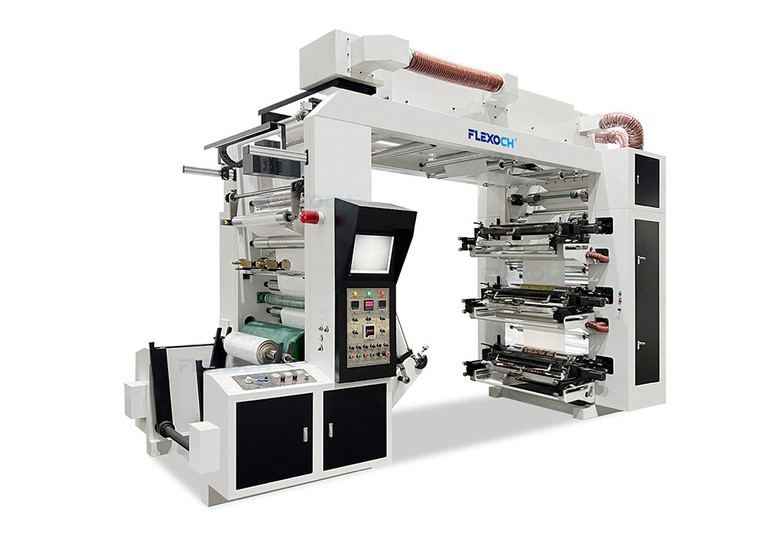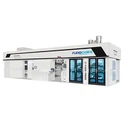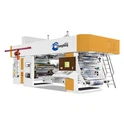
The main difference between a 4-color flexographic printing press and a 6-color flexographic printing press lies in the ink colors used by the two machines and the printing effects that can be achieved.
Ink colors:
A 4-color flexographic printing press uses four colors of ink, usually cyan, magenta, yellow, and key/black, referred to as CMYK. These four colors can be printed in various colors through different combinations and proportions.
A 6-color flexographic printing press adds two colors to the 4 colors, usually light cyan and light magenta, and sometimes other specific colors may be included to expand the color gamut. In this way, a 6-color printing press can use six colors of ink when printing.


Printing effect:
Because the 6-color flexographic printing press uses more colors, the color expression is more delicate and rich. It can better express the gradient and transition of colors, making the printed images or patterns softer, more natural, and more reductive in color.
For some industries with high requirements on color and image, such as printing of mobile phone cases, toys and other products, 6-color printing presses can provide higher color quality and visual effects.
Applicable scenarios:
4-color flexographic printing presses are usually suitable for printing scenarios that do not require particularly high color, such as packaging boxes, labels, advertising materials, etc.
6-color flexographic printing presses are more suitable for scenarios with high requirements on color, such as high-quality picture printing, artwork reproduction, high-end packaging, etc.