Printing on non-porous substrates with stack flexo technology presents a unique set of challenges and opportunities. As a stack flexo supplier, I have witnessed firsthand the increasing demand for high-quality printing on materials such as plastics, metal foils, and laminates. In this blog post, I will explore the solutions available for achieving optimal results when printing on non-porous substrates using stack flexo technology.
Understanding Non-Porous Substrates
Non-porous substrates are materials that do not allow ink to be absorbed into the surface. Instead, the ink sits on top of the material, which can make it more difficult to achieve good adhesion and print quality. Common non-porous substrates used in flexo printing include polyethylene (PE) film, polypropylene (PP) film, aluminum foil, and various types of laminates. These materials are widely used in packaging applications due to their durability, barrier properties, and visual appeal.


Challenges in Printing on Non-Porous Substrates
When printing on non-porous substrates with stack flexo, several challenges need to be addressed to ensure successful results. One of the primary challenges is ink adhesion. Since the ink does not penetrate the substrate, it is essential to use inks that are specifically formulated for non-porous surfaces. These inks typically contain additives that promote adhesion and improve the bond between the ink and the substrate.
Another challenge is achieving consistent ink coverage. Non-porous substrates have a smooth surface, which can cause the ink to slide or spread unevenly during the printing process. This can result in inconsistent colors, missing details, or a blotchy appearance. To overcome this challenge, it is crucial to optimize the printing pressure, anilox roll selection, and ink viscosity to ensure uniform ink transfer.
Printing on non-porous substrates also requires careful consideration of drying and curing processes. Since the ink does not absorb into the substrate, it needs to be dried or cured quickly to prevent smudging or smearing. This often involves using specialized drying equipment, such as infrared heaters or ultraviolet (UV) lamps, to accelerate the drying process and ensure a fast and reliable cure.
Solutions for Printing on Non-Porous Substrates
Ink Selection
The choice of ink is critical when printing on non-porous substrates. As mentioned earlier, it is essential to use inks that are specifically formulated for non-porous surfaces. These inks typically have a higher solids content and contain additives that enhance adhesion and flexibility. Some common types of inks used for non-porous substrates include solvent-based inks, water-based inks, and UV-curable inks.
Solvent-based inks are known for their excellent adhesion and fast drying properties. They are suitable for a wide range of non-porous substrates and can provide high-quality prints with vibrant colors and sharp details. However, solvent-based inks also have some limitations, such as potential environmental concerns and the need for proper ventilation during the printing process.
Water-based inks are a more environmentally friendly alternative to solvent-based inks. They are low in VOCs (volatile organic compounds) and offer good adhesion and print quality on non-porous substrates. Water-based inks are also easier to clean up and can be dried using conventional drying methods, making them a popular choice for many printers.
UV-curable inks are another option for printing on non-porous substrates. These inks are cured instantly using UV light, which results in fast production speeds and excellent adhesion. UV-curable inks also offer high chemical resistance and durability, making them suitable for demanding applications. However, the initial investment in UV curing equipment can be significant, and proper safety precautions need to be taken when working with UV light.
Surface Treatment
Surface treatment is an essential step in preparing non-porous substrates for printing. By treating the surface of the substrate, the ink can achieve better adhesion and print quality. There are several surface treatment methods available, including corona treatment, flame treatment, and plasma treatment.
Corona treatment is the most commonly used surface treatment method in flexo printing. It involves passing the substrate through a high-voltage corona discharge, which creates a rough surface and increases the surface energy of the substrate. This allows the ink to wet and adhere to the surface more effectively.
Flame treatment is another surface treatment method that can be used to improve ink adhesion on non-porous substrates. It involves passing the substrate through a flame, which oxidizes the surface and increases its surface energy. Flame treatment is particularly effective for polyethylene and polypropylene films.
Plasma treatment is a more advanced surface treatment method that uses a high-energy plasma to modify the surface of the substrate. It can be used to improve ink adhesion, printing clarity, and surface wettability. Plasma treatment is often used for high-end packaging applications where the highest level of print quality is required.
Printing Process Optimization
In addition to ink selection and surface treatment, optimizing the printing process is crucial for achieving excellent results when printing on non-porous substrates. This includes adjusting the printing pressure, anilox roll selection, and ink viscosity to ensure uniform ink transfer.
The printing pressure should be carefully adjusted to ensure that the ink is evenly distributed on the substrate without causing excessive squeezing or spreading. The anilox roll plays a critical role in the ink transfer process, and the correct anilox roll selection is essential for achieving the desired ink coverage and print quality. The ink viscosity also needs to be carefully controlled to ensure that the ink flows smoothly through the printing system and adheres to the substrate properly.
Drying and Curing
As mentioned earlier, drying and curing are crucial steps in the printing process when working with non-porous substrates. The choice of drying and curing method will depend on the type of ink used and the specific requirements of the application.
For solvent-based inks, hot air drying is the most commonly used method. It involves passing the printed substrate through a drying oven, where the solvent is evaporated, leaving behind the ink film. The temperature and airflow in the drying oven need to be carefully controlled to ensure complete drying and prevent the ink from re-dissolving.
Water-based inks can be dried using a combination of hot air drying and infrared heating. Infrared heaters are particularly effective at removing moisture from the ink film, while hot air drying helps to further dry the ink and improve its adhesion.
UV-curable inks are cured instantly using UV light. This allows for fast production speeds and eliminates the need for lengthy drying times. However, the UV curing process requires specialized equipment and proper safety precautions to ensure that the operators are protected from the UV radiation.
Video Introduction
Our Stack Flexo Solutions
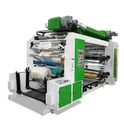
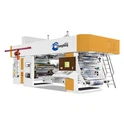
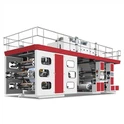
As a stack flexo supplier, we offer a range of solutions for printing on non-porous substrates. Our PE Film Printing Machine is specifically designed for printing on polyethylene films, providing high-quality prints with excellent adhesion and color consistency. Our Slitter Stack Type Flexo Printing Machine offers a combination of printing and slitting capabilities, making it ideal for producing narrow width labels and packaging materials. And our Film Flexo Printing Machine is suitable for printing on a variety of non-porous films, including PP, PET, and PVC.
We also provide comprehensive technical support and training to our customers to ensure that they can achieve the best possible results when using our equipment. Our team of experts can help you select the right ink, surface treatment method, and printing process parameters to meet your specific requirements.
Contact Us for Printing Solutions
If you are looking for high-quality stack flexo printing solutions for non-porous substrates, we invite you to contact us. Our experienced team can provide you with detailed information about our products and services and help you find the best solution for your business. We are committed to providing our customers with the highest level of quality, reliability, and customer service.


References
[1] Smith, J. (2020). Flexographic Printing: Principles and Practices. Taylor & Francis.
[2] Jones, A. (2019). Printing on Non-Porous Substrates: Challenges and Solutions. Packaging World.
[3] Brown, S. (2018). Surface Treatment for Printing on Non-Porous Materials. Flexo Magazine.